Brick Painting
Brick around Chester County ranges from soft 19th century brick in the borough rows of West Chester and Phoenixville to the veneer fronts on 1990s...
Brick chimneys, fieldstone foundations and older masonry walls around Exton take a beating from wind-driven rain and freeze-thaw winters. We fix the mortar first, then apply breathable silane or siloxane water repellents that keep rain out while letting the wall dry, rather than glossy sealers that trap moisture inside.
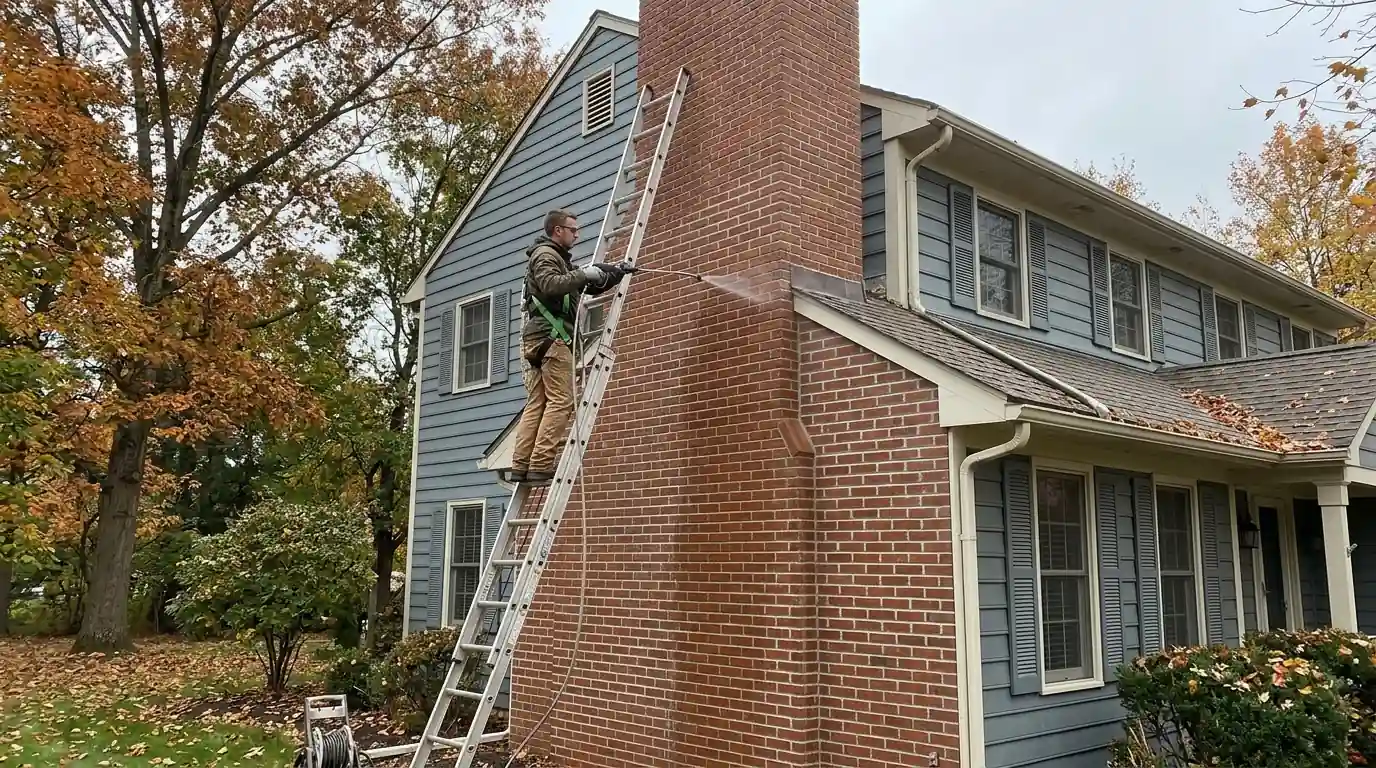
Brick sealing means cleaning the masonry, repairing cracked or missing mortar, letting the wall dry, then applying a clear breathable water repellent, usually a silane or siloxane, that soaks into the brick without leaving a film. Around Exton and Chester County, treating a chimney typically costs $385 to $815, and a full brick front runs $965 to $1,935.
Masonry around here has to survive a lot of water. Rain soaks brick and stone walls through the spring and fall, and in winter that water freezes inside the pores, expands, and pops off the face of the brick. Chimneys get it worst, exposed on every side above the roofline. Old fieldstone foundations under farmhouses and borough homes deal with damp soil on the outside and a cool basement on the inside.
A good water repellent can help a great deal, but the wrong product makes problems worse. Many off-the-shelf sealers leave a shiny film that blocks water vapor. Moisture that gets in through cracks or from the ground then can't get out, and the brick spalls or the coating turns cloudy and peels. We treat masonry with breathable products, and only after the mortar is sound.
Silane and siloxane water repellents soak into the brick and line its pores with a water-shedding layer, but they don't close the pores. Rain beads and runs off, while water vapor from inside the wall still escapes. Film-forming sealers, such as acrylic coatings and many glossy products, sit on top and act like a raincoat with no vents. On masonry, that trapped moisture leads to spalling, darkened patches and peeling. We use clear, breathable repellents matched to the brick or stone.
Most water gets into a brick wall through the joints, not the brick itself. Cracked, sandy or missing mortar lets rain run straight in, and no repellent can bridge a gap. So we repoint failed joints first with a mortar compatible with the masonry, using softer lime-rich mixes on old soft brick and stone, and let it cure fully before treating the wall. Sealing over bad mortar just hides the problem for a season.
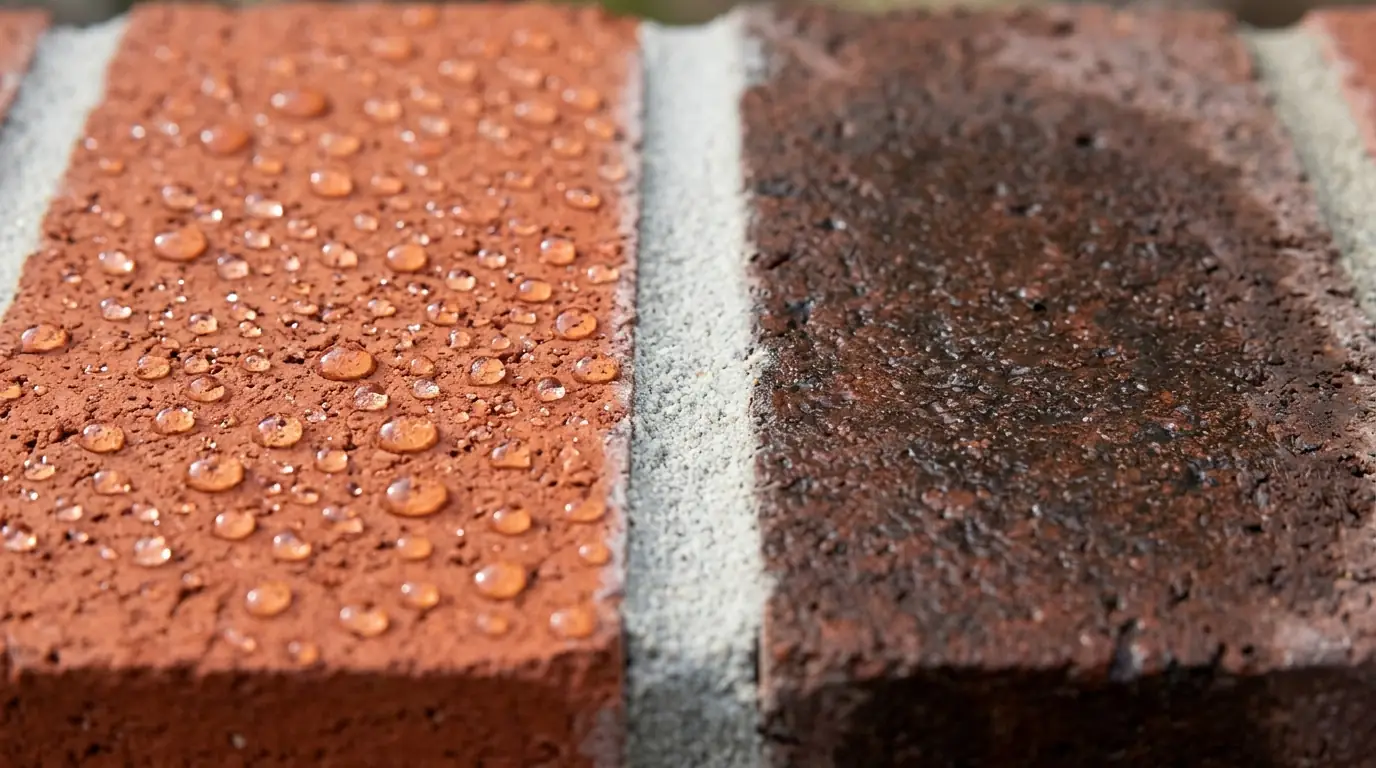
The white, powdery deposit that shows up on brick and foundations is efflorescence, salts carried to the surface by moving water. It's a sign that moisture is getting in somewhere: from the ground, a leaking gutter, a failed chimney crown or open joints. We brush and clean it off, look for the water source, and wait for the wall to dry before applying any repellent. Sealing a wall that's still pushing out salts can trap them under the face and break it apart.
Chimneys get the most exposure and usually benefit most from a repellent, along with a sound crown and cap. Brick fronts on 1960s to 1990s homes often just need a cleaning, a few joints repointed and one breathable coat. Fieldstone and serpentine stone foundations are different. They need to breathe from both sides, so we focus on drainage and mortar and treat above-grade stone only when it makes sense. Below-grade waterproofing is excavation work, which isn't something we do.
Spalling, where the surface of a brick flakes or breaks away, shows water is freezing inside. It's common on chimneys and on walls that stay damp.
Efflorescence on brick or foundation stone means water is moving through the wall. Find and fix the source before thinking about a repellent.
Walls that stay dark for days after a storm are absorbing more water than they should, often through open joints or porous older brick.
If you can scrape mortar out with a key, the joints are letting water in. Repointing comes first, and a repellent can follow once it cures.
Water marks on a wall or ceiling next to a chimney can mean rain soaking through the masonry. A chimney inspection and a repellent may solve it.
Whitish, peeling or blotchy film on brick is usually a failed non-breathable sealer. It has to come off before a proper repellent is applied.
We look at mortar joints, chimney crowns, flashing, gutters, downspouts and grading near the foundation. A repellent only helps when the main leaks are addressed first.
Dirt, moss and efflorescence come off with low-pressure water and masonry-safe cleaners, and old failed sealers are stripped. Our power washing uses gentle settings on brick so the face isn't eroded.
Cracked and missing mortar is raked out and refilled with a compatible mix. On old soft brick and stone, we use lime-based mortar so the joint stays weaker than the brick.
Repellents need dry masonry to soak in properly, so we wait for new mortar to cure and for the wall to dry out after rain, which usually takes several days.
A clear silane or siloxane goes on by low-pressure sprayer or brush, flooded so it soaks in, working from the bottom up. Glass and trim are protected from overspray.
Once cured, we mist the wall with water to confirm it beads up evenly across the treated area, then re-treat any spots that still darken and absorb.
Brick sealing costs depend on how much masonry is treated, how high it is, how much repointing comes first, and whether an old sealer has to be stripped. A chimney on a two-story colonial needs roof access and careful setup, while a ground-level brick front is quicker. These are typical 2026 ranges for homes around Exton and Chester County, confirmed when we see the masonry.
| Job | Typical range |
|---|---|
| Chimney cleaning and water repellent | $385 to $815 |
| Brick front, cleaning and repellent | $965 to $1,935 |
| Repointing, per 10 square feet | $145 to $315 |
| Fieldstone foundation above grade, repellent | $545 to $1,185 |
| Strip old film sealer, added | $465 to $1,065 |
Planning ranges for 2026, not quotes. The written price comes from a walkthrough. See every service side by side on the painting costs page.
We take on brick sealing & waterproofing in these towns across Chester, Delaware, Montgomery and Bucks counties. ZIP codes shown for each.
A breathable silane or siloxane repellent soaks into the masonry and dries clear, so the brick keeps its natural color and texture. Some products darken the surface slightly while wet. Glossy film sealers are what create that wet, shiny look, and we avoid them on masonry.
Quality silane and siloxane products keep working for several years, often longer on sheltered walls. We check by spraying water on the wall: if it soaks in and darkens instead of beading, it's time to re-treat. Chimneys usually need it sooner than walls.
No. Water repellents stop limewash from soaking in and bonding. If you're considering a softer look, do the limewash or German smear first and treat afterward only if needed. Limewash itself sheds some water while letting the wall breathe.
Not usually. Basement leaks in fieldstone and block foundations come from groundwater and soil pressure, which a surface repellent above grade can't fix. Gutters, downspout extensions and grading do more. True below-grade waterproofing involves excavation and drainage, which is outside painting work.
With the right product, generally yes. Soft historic brick and lime mortar need to breathe even more than modern masonry, so we use only breathable repellents, test a small area first, and skip treatment when the wall doesn't need it. Film sealers on historic brick can cause serious spalling.
Brick around Chester County ranges from soft 19th century brick in the borough rows of West Chester and Phoenixville to the veneer fronts on 1990s...
Green streaks on the north side of a vinyl-sided house, black mildew on a cedar deck, a gray film on fieldstone: Chester County's humid summers grow...
Red brick ranches, 1990s colonials with brick fronts and old fieldstone walls across Chester County can all take on a softer, older look without...
Chester County has an unusual number of old houses: fieldstone farmhouses, bank barns, Federal and Victorian homes along borough streets in West...
A lot of brick around Chester County went under paint decades ago, from borough twins in West Chester to 1960s ranch homes outside Exton. Getting it...
Call any time. We will ask a few questions and set up a walkthrough at your home.