Trim & Baseboard Painting
We repaint baseboards, door and window casings, crown molding and wainscoting in homes around Exton. Every joint is caulked, every nail hole filled...
We paint and refinish staircases in homes around Exton, from two-story foyer stairs with oak rails and white spindles to short split-level runs and steep farmhouse stairs. The work is planned so you can still get up and down while the paint cures.
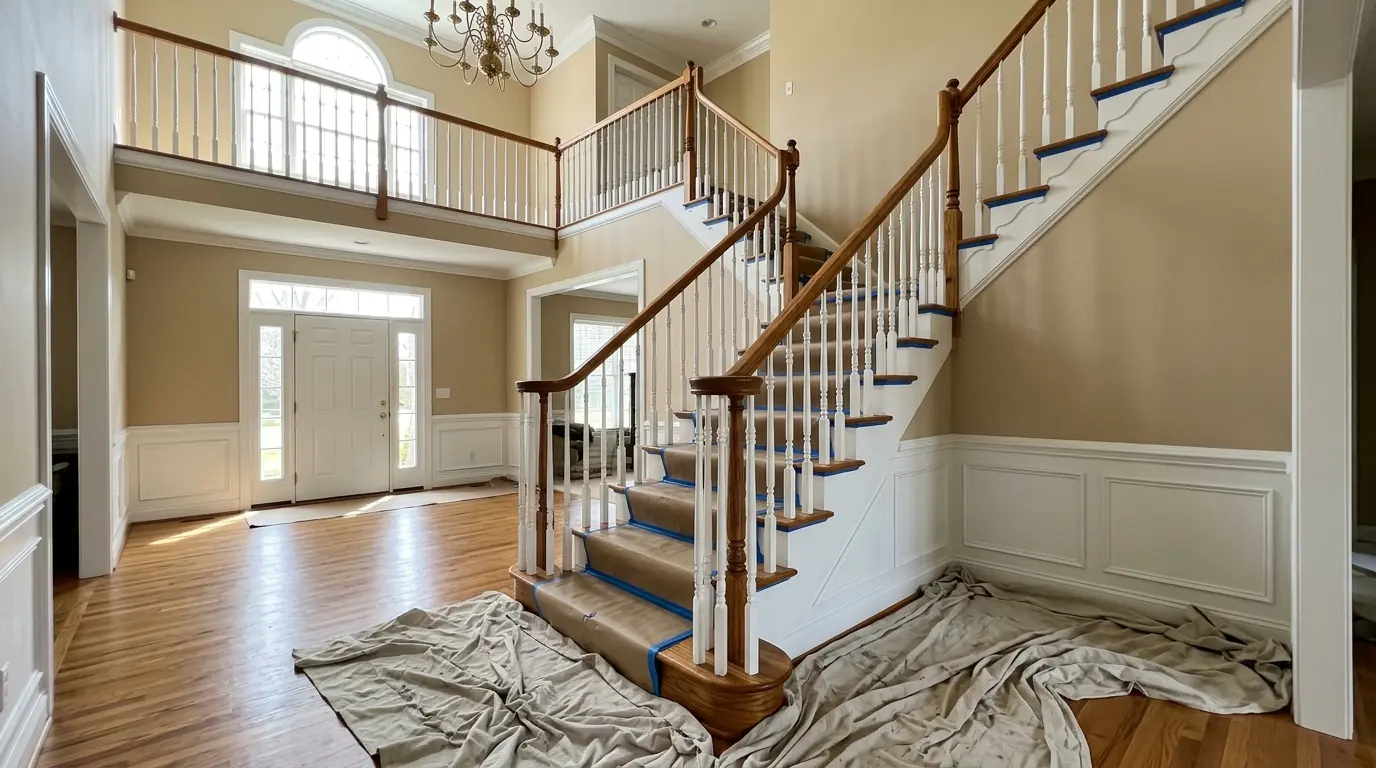
Staircase painting means degreasing the rail, sanding, filling and caulking, priming, then painting balusters, risers, stringers and newels, and finishing treads in two rounds so the stair stays usable. Around Exton a full foyer staircase with all parts runs about $1,385 to $2,870, and a handrail and newel repaint alone usually costs $315 to $645.
A two-story foyer with an open staircase is the first thing you see in many 1990s and 2000s homes around Exton. Most were built with red oak treads, an oak handrail and newel posts, and white painted balusters. Twenty-five years later the orange oak looks dated, the rail is worn gray where hands slide along it, and the spindles are chipped from vacuums and laundry baskets.
Other homes bring different stairs. Split-levels have several short runs between floors, each with its own railing. Old farmhouses may have a steep, closed staircase with painted pine treads worn down in the middle. Plenty of homeowners pull up stair carpet and find pine or poplar treads that were never meant to show. We look at what you have and give a plan for each part of the stair.
Stairs are often the only way to the bedrooms, so we never close a staircase for days. Treads get painted in two rounds, every other step first. Once those cure enough to walk on, the remaining steps get done. Balusters, risers and stringers are painted from the side, which doesn't block foot traffic. If the house has a second staircase, we use it for heavier work and leave the main one open for you.
A handrail gets more hand contact than any surface in the house, and the oils from those hands are what make a rail feel tacky after a cheap paint job. We degrease the rail thoroughly, sand it, and use a hard enamel or a clear polyurethane that cures fully. If you want to keep the warm oak rail and newel while painting the spindles white, we restain or refresh the clear coat on the rail and paint everything below it.
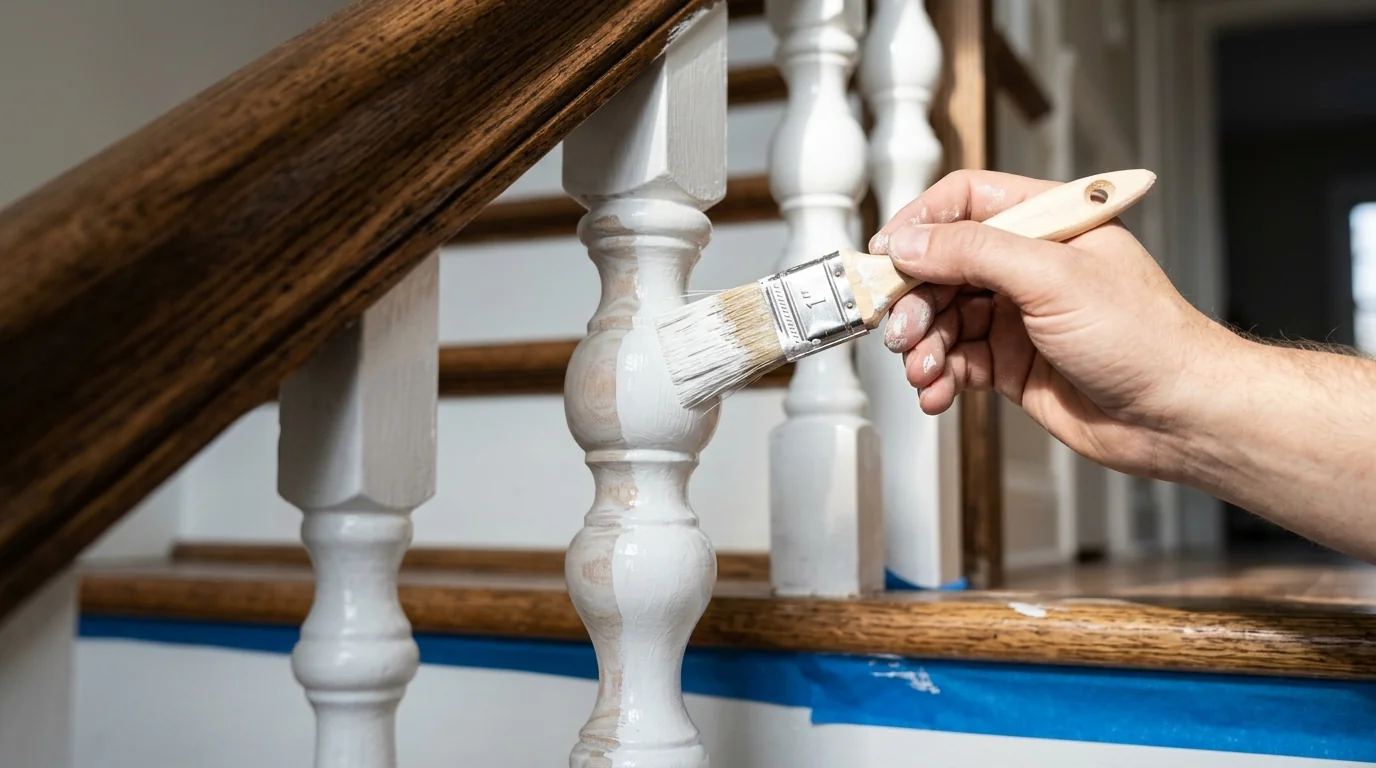
Turned balusters take the longest of any part of the stair, because every curve has to be brushed by hand. Skirt boards along the wall usually have gaps and scuffs that need caulk and filler, the same prep we use for baseboard work. When carpet comes off, the treads often have tack strip holes, staples and adhesive residue. We pull every staple, fill holes and sand, then either paint the treads with a durable floor enamel or finish them clear if the wood is good enough.
Farmhouse and pre-1978 colonial staircases often carry many layers of paint on the balusters, newel and skirt boards, and some of those layers contain lead. Sanding them creates dust that settles everywhere in a stair hall and drifts upstairs. We test before disturbing old paint, and if lead is present we follow lead-safe practices, with plastic containment, wet scraping and a HEPA cleanup before the stair reopens.
When the finish on the rail has worn through to bare gray wood where hands slide, the oak is absorbing oils and needs sanding and a new coat.
Spindles on busy foyer stairs get knocked by vacuums and laundry baskets, leaving chips that show the wood or primer underneath.
Red oak treads and rails from the 1990s yellow over time and clash with the modern gray or white floors many homeowners put in later.
Pulling up stair carpet often reveals pine treads with staple holes and glue, which need prep and a durable finish before daily use.
Shoe marks on risers and scuffs along skirt boards make the whole stair look tired, even when the rail and spindles are in decent shape.
If painted treads feel slick in socks, they were likely done with ordinary trim enamel, and a floor-grade coating with fine grit is safer.
We look at how your family uses the stairs, whether there's a second staircase, and what each part needs. The written price spells out which surfaces get paint and which get stain.
Floors at the top and bottom are covered, walls along the stair get masking film, and anything hanging in the foyer comes down before sanding starts.
Handrails, newels and balusters are scrubbed with degreaser to remove years of hand oils. This step decides whether the paint stays smooth or turns sticky later.
Every surface is scuff-sanded, dents and staple holes are filled, and gaps where risers, skirt boards and treads meet are caulked with a flexible sealant.
Balusters, risers, stringers and newels get a bonding primer and two coats of enamel, brushed carefully so the turned profiles don't collect drips.
Alternating treads are finished first, then the rest once the first set has cured enough to walk on, using a floor-grade coating with optional grit.
Masking comes down, the stair hall is vacuumed, and we walk the staircase with you, checking every rail joint and baluster for misses.
Staircase prices around Exton depend on how many balusters you have, whether treads are painted or stained, and the condition of the rail. A short split-level run with simple square spindles goes fairly quickly. A curved two-story foyer stair with turned balusters takes several days. These ranges reflect typical 2026 jobs in Chester County homes. See our price guide for other interior work.
| Job | Typical range |
|---|---|
| Risers and stringers only, one flight | $465 to $835 |
| Handrail and newel repaint or restain | $315 to $645 |
| Balusters, per flight of 14 to 18 spindles | $585 to $1,065 |
| Full foyer staircase, all parts | $1,385 to $2,870 |
| Treads after carpet removal, prep and coating | $735 to $1,285 |
Planning ranges for 2026, not quotes. The written price comes from a walkthrough. See every service side by side on the painting costs page.
We take on staircase & banister painting in these towns across Chester, Delaware, Montgomery and Bucks counties. ZIP codes shown for each.
It can be, if you use a floor-grade enamel and expect some wear on the most-used steps. Painted treads in busy homes need touch-ups every few years. Stained or clear oak treads with painted risers is the most common choice around Exton, since it holds up better and still looks fresh.
Painted treads can take light foot traffic in socks after about a day, and normal shoes after two or three days. Full cure takes a few weeks, so we suggest holding off on runners or rugs for about a month and keeping pet nails trimmed in the meantime.
Yes, and it's one of the most requested looks. We mask the underside of the rail, paint the balusters and newel base white or a soft color, then refresh the rail's clear coat or restain it a deeper tone. The contrast between warm wood and painted spindles looks clean and current.
Short split-level stairs often sit in a narrow, dim space between floors. A light warm white on risers and spindles reflects more light, while a darker tread color hides wear. Painting the skirt boards to match the trim ties it all together and makes the run feel wider.
We can. Carpet removal is quick, but the tack strips, staples and padding underneath need careful prep. Once the treads are cleaned up, we'll show you the condition of the wood, and you can decide between painting, staining or putting down a new runner.
We repaint baseboards, door and window casings, crown molding and wainscoting in homes around Exton. Every joint is caulked, every nail hole filled...
We repaint the inside of homes around Exton room by room, fixing nail pops, cracked plaster and scuffed builder paint before any color goes on. You...
If your house was built before 1978, there's a good chance some of its paint contains lead. That covers stone farmhouses, borough twins and many...
We repaint ceilings in homes around Exton, from eight-foot bedroom ceilings in split-levels to vaulted family rooms and two-story foyers. Stains are...
Call any time. We will ask a few questions and set up a walkthrough at your home.