Lead-Safe Painting
If your house was built before 1978, there's a good chance some of its paint contains lead. That covers stone farmhouses, borough twins and many...
Chester County has an unusual number of old houses: fieldstone farmhouses, bank barns, Federal and Victorian homes along borough streets in West Chester and Phoenixville, and Doylestown's older blocks. Painting them well means gentle prep, primers that work with old oil layers, and colors that suit the house.
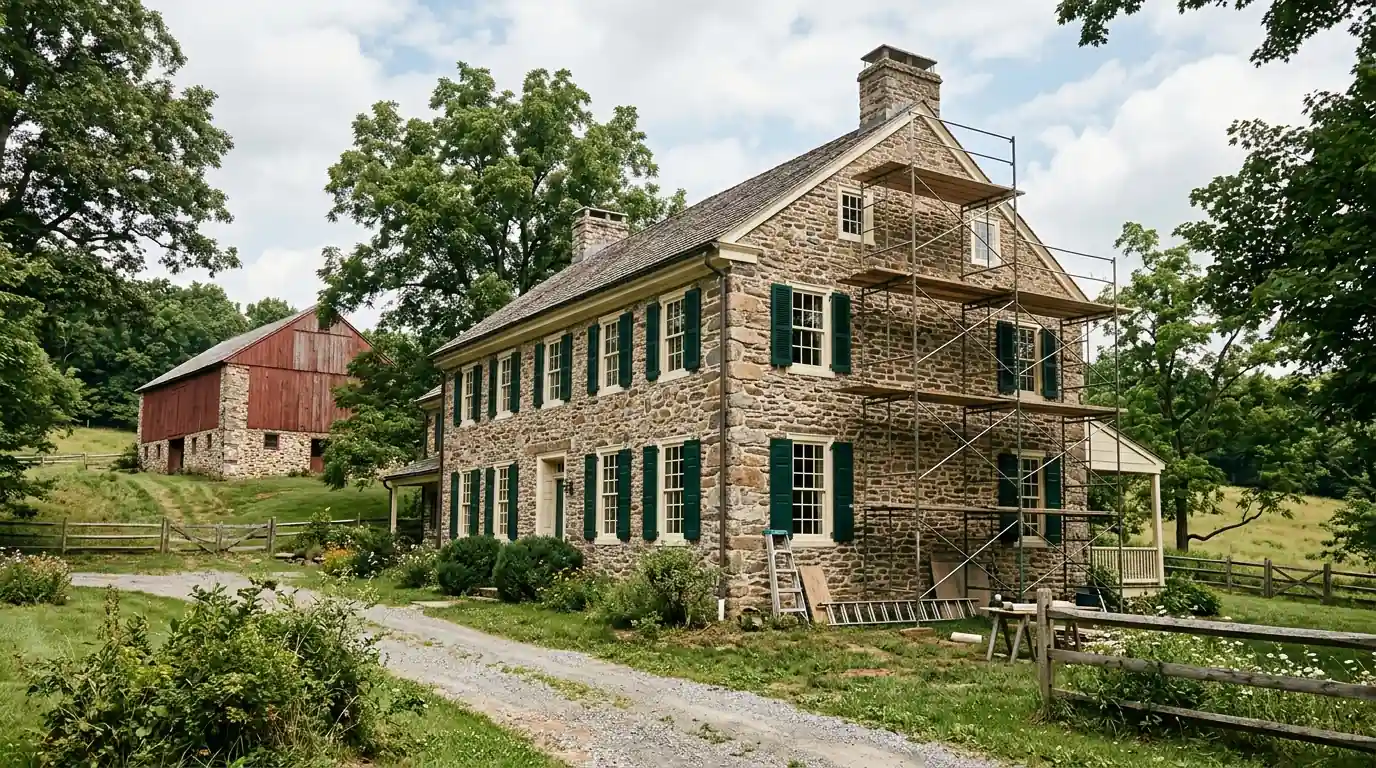
Historic home painting means careful prep of original wood, plaster and masonry, primers compatible with old oil and lead layers, and colors suited to the house's era. In a borough historic district, it can also mean checking with the borough before exterior changes. Around Exton, a historic farmhouse exterior typically runs $9,640 to $21,370, and a borough twin front $4,185 to $8,935.
Old houses tell you how they were built if you look closely. Many farmhouses here started as one stone section in the 1700s or early 1800s, then grew with a frame or stucco addition. That means one house might have fieldstone, old stucco, wood siding and original windows all on a single side. Each material moves and breathes differently, and the paint plan has to account for all of them.
Most historic homes around Exton also carry lead paint somewhere under their newer coats, so lead-safe practices are part of nearly every project we do on them. Interiors often have horsehair plaster, original doors with heavy layers and window sashes that haven't moved in decades. We repair before we paint, because a fresh coat over a failing surface only lasts until the next winter.
West Chester, Phoenixville and Doylestown each have historic districts, and each borough has a board that reviews exterior changes to buildings within them. What counts as a change, and whether paint color falls under it, varies from borough to borough. We don't guess at those rules. Before an exterior project in a historic district, we ask you to check with the borough office, and we'll gladly share our scope and colors so you have what you need.
Homes outside a district, like many farmhouses in the surrounding townships, usually have more freedom. Still, if you live in an HOA community, the association may keep its own approved color list. Our post on painting in a historic borough goes through the questions worth asking before you choose colors or set a start date. A quick call to the borough early on can save weeks later.
Different eras used different palettes. Early farmhouse trim was often kept simple, with white, cream or muted colors against the stone. Victorian homes leaned toward three or more colors, picking out trim, sash and accent details in deeper tones. Before choosing, we look at the stone, the roof and any original paint we can find under later coats, sometimes by carefully scraping a small stack of layers. Our color consultation can build a full scheme around those clues.
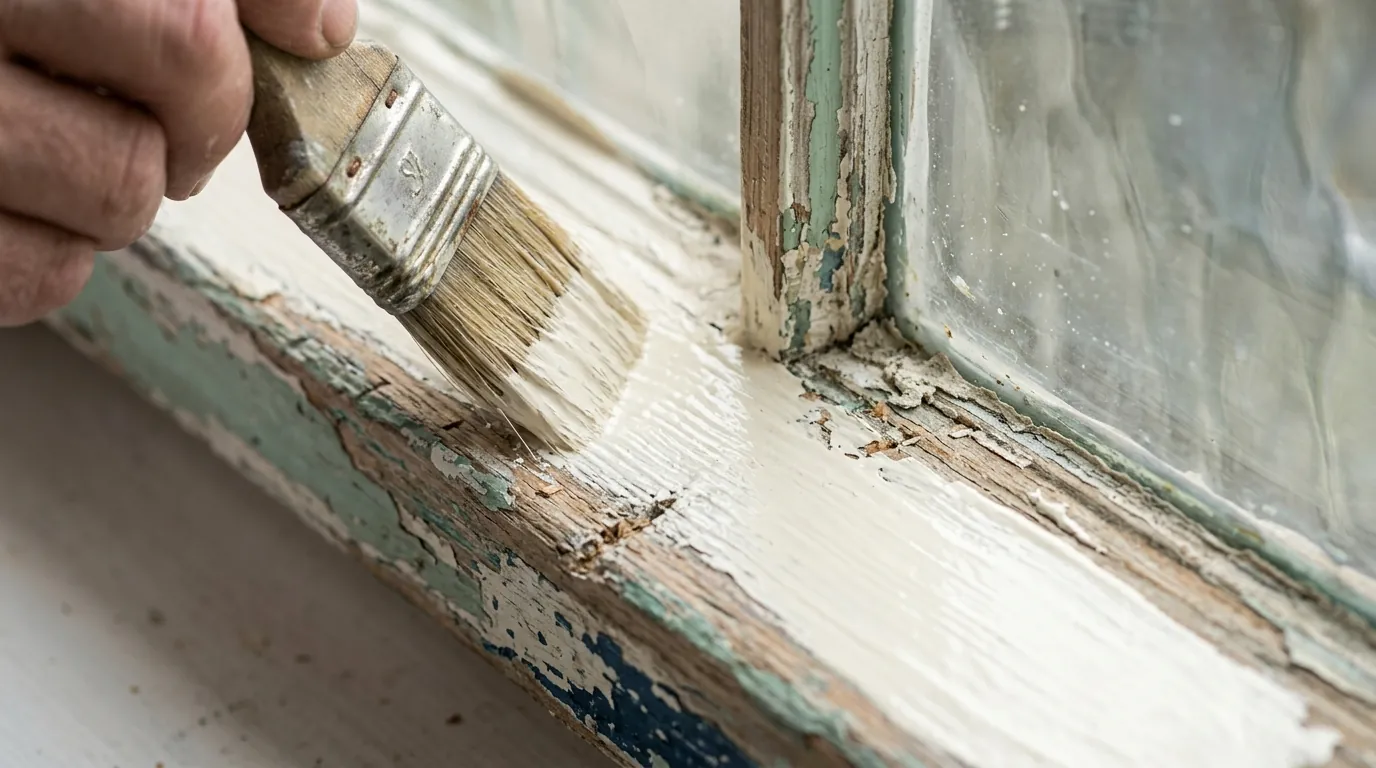
Old wood is often drier and more brittle than new lumber, and old glass is thin and wavy. We hand-scrape rather than power-strip, use heat only at controlled low temperatures, and protect glazing while working around sashes. Loose plaster is reattached or patched rather than torn out. Where old oil paint sits under newer latex, we use primers designed to grip both. On fieldstone and serpentine stone walls, we avoid sealing in moisture, since old stone needs to breathe.
Many farm properties around Exton, Malvern and Downingtown still have bank barns, springhouses and carriage sheds. These buildings often have rough-sawn siding and decades of old paint or stain, and they deserve the same care as the house. We match the approach to the wood, sometimes choosing a stain that soaks in rather than a film-forming paint. Our barn and outbuilding work covers those structures in more detail.
Cracking and alligatoring on old trim usually means stacked layers that have lost their flexibility. Careful prep now protects wood that can't easily be replaced.
If your home sits in a West Chester, Phoenixville or Doylestown historic district, check with the borough before exterior changes. We'll help you gather the details.
Old sashes with wavy glass are worth saving. They need careful scraping, reglazing and paint that keeps them working rather than sealing them shut.
Paint peeling off fieldstone often means trapped moisture. Old stone usually needs breathable treatments, or sometimes no coating at all.
Old plaster walls with cracks or loose areas need repair before paint. Patching them properly keeps them from failing again in a year.
New owners of an old house often want a plan before repainting. A walkthrough helps you see what needs work now and what can wait.
We look at materials, additions, paint layers and condition, ask what you know about the house's age, and test for lead before we plan anything.
If the house is in a borough historic district, we remind you to check with the borough first and give you a written scope and colors to share.
Rotted wood gets consolidated or patched, plaster is reattached, loose glazing is replaced and open joints are filled, so paint only goes over sound surfaces.
We contain each work area, mist before scraping, avoid dry sanding and clean daily. Old wavy glass, hardware and stone are covered before work starts.
Primers are chosen to grip old oil paint and seal stains and bare wood. Spot priming alone rarely holds on an old house, so we prime fully where needed.
Brushing works paint into old wood grain and around profiled trim far better than spraying. We apply two finish coats and check every detail before cleanup.
Historic work costs more than painting a newer house of the same size, mainly because prep takes longer. Repairs, lead-safe methods, hand scraping and multi-color schemes all add time, and scaffolding on tall stone walls or steep lots adds more. These are typical 2026 ranges for older homes around Exton and Chester County, and we price each house only after a walkthrough.
| Job | Typical range |
|---|---|
| Borough twin front, trim, door and cornice | $4,185 to $8,935 |
| Stone farmhouse exterior, trim and windows | $9,640 to $21,370 |
| Victorian exterior, three-color scheme | $11,860 to $25,415 |
| Original front door, stripped and refinished | $785 to $1,745 |
| Interior room with plaster repair and period trim | $1,315 to $2,965 |
| Bank barn or springhouse, one side | $2,465 to $5,835 |
Planning ranges for 2026, not quotes. The written price comes from a walkthrough. See every service side by side on the painting costs page.
We take on historic home painting in these towns across Chester, Delaware, Montgomery and Bucks counties. ZIP codes shown for each.
It depends on the borough and the district. Some boards look at colors, while others focus on materials and other changes. We don't guess, so we ask you to call the borough office before exterior work, and we give you the details it may want to see.
Yes, with the right primer. Modern acrylics are flexible and long-lasting, but they need a primer that grips the old oil layers underneath. On masonry and stone, breathability matters more than brand. We match each product to the surface under it.
Rarely. Stripping to bare wood everywhere is slow, costly and disturbs lead. We remove paint that's failing, feather the edges and keep stable layers in place. Full stripping makes sense only on pieces where buildup hides details, like a carved door.
We carefully scrape a small, protected spot, often on trim or under a porch ceiling, to expose the stack of layers. Older coats have faded, so we use them as a guide rather than an exact match, then test large samples in place.
No. Any older home benefits from the same approach, from a farmhouse in the townships to a 1920s borough twin. The care for old materials is the same whether or not the house sits in a district or on any official list.
If your house was built before 1978, there's a good chance some of its paint contains lead. That covers stone farmhouses, borough twins and many...
Choosing color from a two-inch chip rarely works. Light, nearby stone, the roof and the room's purpose all shift how a color reads. We come to your...
Original wood windows in Chester County farmhouses and borough homes can last another century if paint and glazing keep the water out. We scrape,...
Stone farmhouses outside Exton and Victorian twins in West Chester and Phoenixville still have their original plaster, often horsehair plaster on...
Bank barns, carriage houses, wood sheds and detached garages are part of what makes Chester County properties look the way they do. We scrape them...
Call any time. We will ask a few questions and set up a walkthrough at your home.