Brick Painting
Brick around Chester County ranges from soft 19th century brick in the borough rows of West Chester and Phoenixville to the veneer fronts on 1990s...
A lot of brick around Chester County went under paint decades ago, from borough twins in West Chester to 1960s ranch homes outside Exton. Getting it back takes patience, not force. We use chemical strippers and poultices that lift paint out of the pores, then rinse gently so the brick's fired face survives.
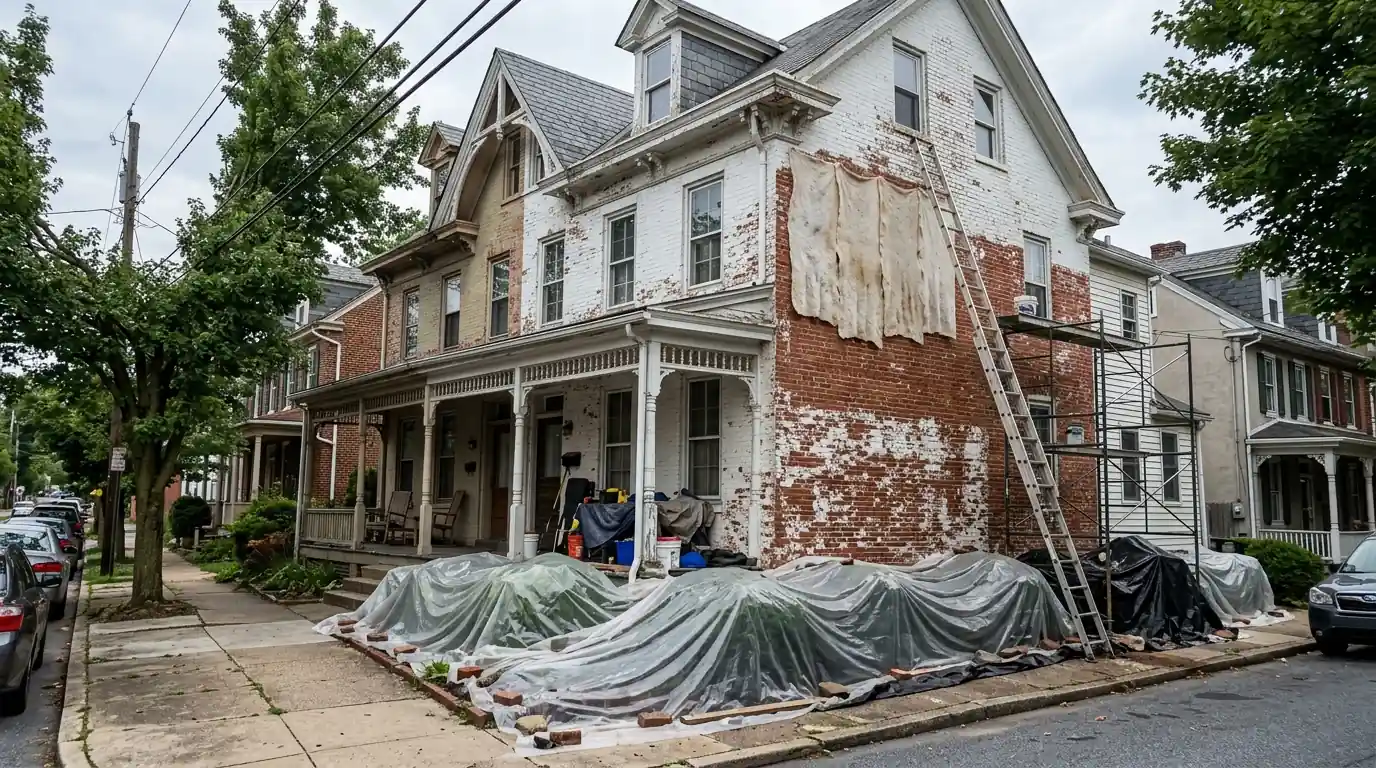
Brick paint removal starts with small test patches to pick a remover. We then apply a stripper or poultice, let it soften the paint for hours, peel it away and rinse at low pressure. Around Exton and Chester County, stripping a painted brick fireplace runs about $685 to $1,435, and a two-story brick house front about $5,280 to $10,370.
Painted brick turns up all over Chester County. Owners painted borough rows in Phoenixville and Downingtown to hide soot or patchy repairs, and plenty of 1960s colonials got a coat of white sometime in the 1990s. Many of those coatings now peel in sheets. If your house sits in a borough historic district, such as West Chester, Phoenixville or Doylestown, check with the borough before you start, since its board that reviews exterior changes may weigh in on masonry work. Our guide to historic borough projects covers the questions to ask.
Most brick here was fired with a hard outer skin that sheds rain. Sandblasting and high-pressure washing grind that skin off, and the soft core underneath soaks up water. After a few freeze-thaw winters, faces start popping off and joints crumble. That damage is permanent. Chemical removal is slower and costs more at the start, but it leaves the wall able to shed water for decades.
Abrasive blasting strips paint by stripping the surface it clings to. On older, softer brick, the fired face goes along with it, and the exposed body behaves like a sponge. Our winters swing above and below freezing again and again, so water trapped in that brick expands, and faces flake off within a few seasons. Washing at very high pressure does similar harm. We don't use either method on brick. The tools are removers, poultice cloth, plastic scrapers, natural-bristle brushes and gentle rinsing.
Masonry strippers come as gels or as pastes covered with a fabric or film. The chemistry softens the paint, while the poultice keeps the remover wet and pulls loosened paint up out of the brick. Dwell time ranges from a few hours to overnight, depending on the product and how many coats there are. Then the cloth comes off with the paint stuck to it, the leftover film is scraped, and the wall is rinsed and neutralized. Thick areas around windows often need a second round.
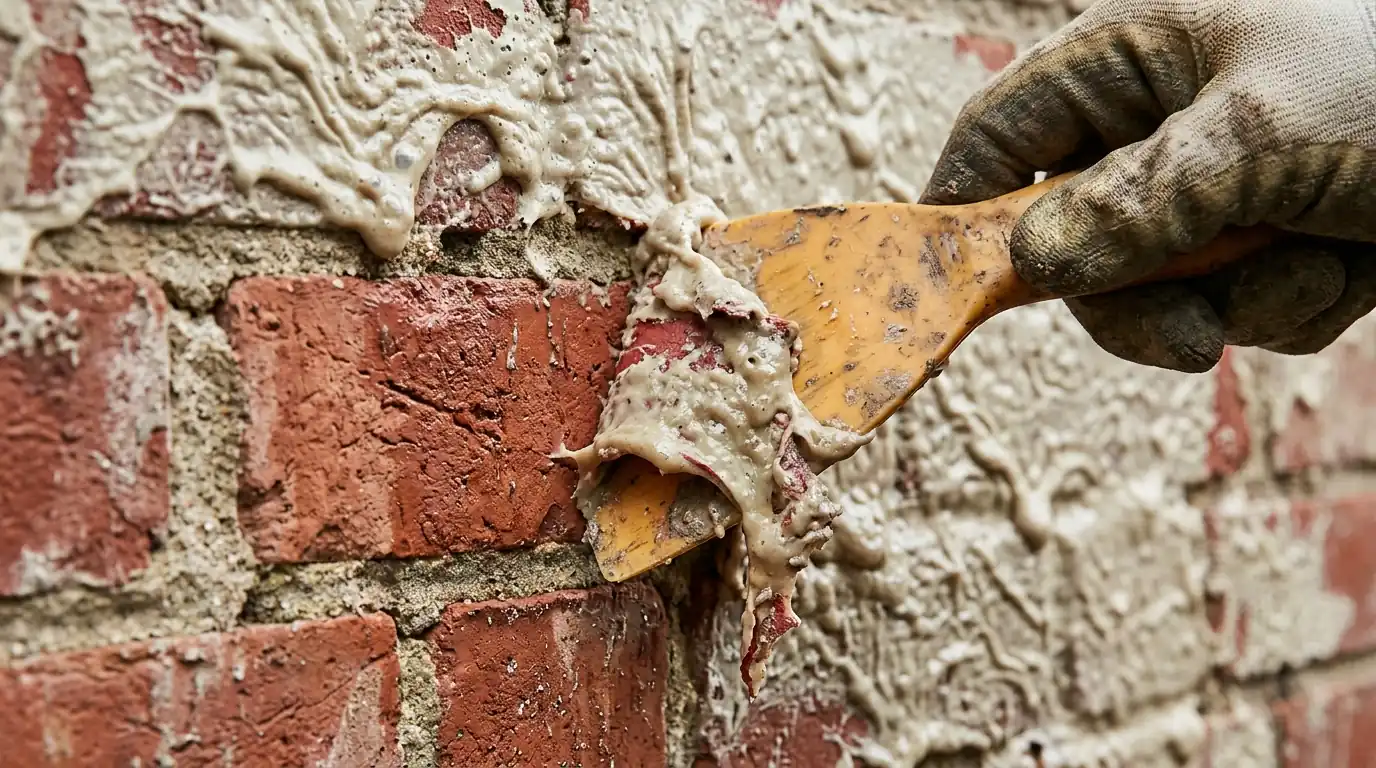
Before we price a whole wall, we strip one or two small spots, usually low and out of sight. Those patches show the number of coats, which remover works, the dwell time needed and the condition of the brick underneath. Sometimes they reveal mismatched replacement brick or heavy patching that someone painted to hide. If that's the case, you may prefer a breathable coating instead, which our brick painting work covers, or a softer limewash finish that lets some brick show.
Paint on brick homes built before 1978 often contains lead, so sludge and rinse water need control. We lay heavy plastic along the foundation, over planting beds and across walks, then catch paint waste as it comes off. Runoff stays out of storm inlets and lawns. Stone sills, slate walks, windows and wood trim are covered too, since some removers can etch or stain them. On borough rows with shared walls, we also plan around the neighbor's steps and doors.
Bare brick showing through flaking paint means the coating has failed. Stripping now is usually easier than after someone adds another coat on top.
Blisters mean water vapor is trapped behind a paint that doesn't breathe. Left alone, that moisture can break down brick faces and the mortar behind it.
Owners restoring a brick house in a West Chester or Phoenixville historic district often want bare masonry back. Ask the borough what it expects first.
Painted chimney breasts and interior brick walls can be stripped too, with plastic containment protecting floors, furniture and the rest of the room.
Spalled or powdery brick hiding behind paint signals trapped moisture. Removing the coating lets the wall dry out before any masonry repair begins.
A painted brick fireplace in a 1970s family room is a manageable stripping project, and a good way to see how your brick responds.
We look at brick condition, mortar and paint layers, test for lead on homes built before 1978, then strip one or two small spots to choose a remover and dwell time.
Windows, doors, stone sills, slate walks and planting beds get covered. Heavy plastic lines the base of the wall so paint waste and rinse water are caught before they spread.
We apply the chosen stripper section by section, often with poultice cloth over it, and leave it for the dwell time the test patches proved works on your brick.
Softened paint peels away with the cloth or comes off with plastic and wood scrapers. Mortar joints get careful work with natural-bristle brushes and small picks.
We rinse at low pressure through a wide fan tip, neutralize if the product calls for it, and repeat on any patches still holding paint.
Paint waste is bagged and handled properly. Then we walk the wall with you and point out any joints or brick faces that may need masonry repair.
Stripping brick is among the most labor-heavy jobs we take on, because each section needs application, dwell time, removal and rinsing, often twice. Prices depend on wall area, the number of coats, trim and lintels, ladder or scaffold access and lead waste handling. These are typical 2026 ranges for Chester County homes, and we refine them after test patches at your house.
| Job | Typical range |
|---|---|
| Test patches, two small areas | $315 to $565 |
| Painted brick fireplace and hearth | $685 to $1,435 |
| Interior brick wall, one room | $1,545 to $3,085 |
| Brick ranch front, one story | $3,240 to $6,615 |
| Two-story brick house front | $5,280 to $10,370 |
| Borough twin, front and side walls | $7,960 to $15,185 |
Planning ranges for 2026, not quotes. The written price comes from a walkthrough. See every service side by side on the painting costs page.
We take on brick paint removal in these towns across Chester, Delaware, Montgomery and Bucks counties. ZIP codes shown for each.
It will look like old brick, which is the point. Expect faint paint ghosts in deep pores and joints, plus old repairs and color shifts the paint was covering. Most owners find that worn character far more appealing than a flat painted wall.
Most masonry strippers need temperatures above roughly 40 to 50 degrees for several days, and rinsing has to wrap up before freezing nights. Around Exton, that usually means mid-April through October. Winter is a good time to strip an indoor fireplace or interior wall instead.
Removers don't hurt sound mortar, but sandy or loose joints may rinse out, especially ones that were already failing behind the paint. We flag weak joints afterward, since repointing with a soft lime-based mortar is often the next step on older brick.
Sometimes that's the better call. If the test patches show patchy replacement brick or lots of old repairs, a breathable masonry coating may look better than bare brick. Our article on why exterior paint peels explains why the coating you choose matters as much as the decision itself.
Plan on one to two weeks of working days, depending on coats and weather. Each section needs dwell time, many need a second pass, and rain stops rinsing. We schedule around the forecast and keep you posted on the next working day.
Often, yes, though stone is less predictable than brick. Fieldstone has deep, irregular pockets that hold paint, so we always run a test area first. Some stone cleans up nicely, while some keeps a light haze of paint that limewash can soften.
Brick around Chester County ranges from soft 19th century brick in the borough rows of West Chester and Phoenixville to the veneer fronts on 1990s...
Green streaks on the north side of a vinyl-sided house, black mildew on a cedar deck, a gray film on fieldstone: Chester County's humid summers grow...
Chester County has an unusual number of old houses: fieldstone farmhouses, bank barns, Federal and Victorian homes along borough streets in West...
If your house was built before 1978, there's a good chance some of its paint contains lead. That covers stone farmhouses, borough twins and many...
Red brick ranches, 1990s colonials with brick fronts and old fieldstone walls across Chester County can all take on a softer, older look without...
Call any time. We will ask a few questions and set up a walkthrough at your home.