Wood Siding Painting
Wood siding covers a lot of houses around Exton, from cedar clapboard on 1980s colonials to old pine siding on farmhouses and the shingled gables of...
We repaint the outside of homes around Exton, from fieldstone farmhouses with wood trim to 1990s colonials wrapped in cedar, stucco and vinyl. Every job starts with finding out why the last coat failed, then matching primer and paint to each surface on the house rather than using one product everywhere.
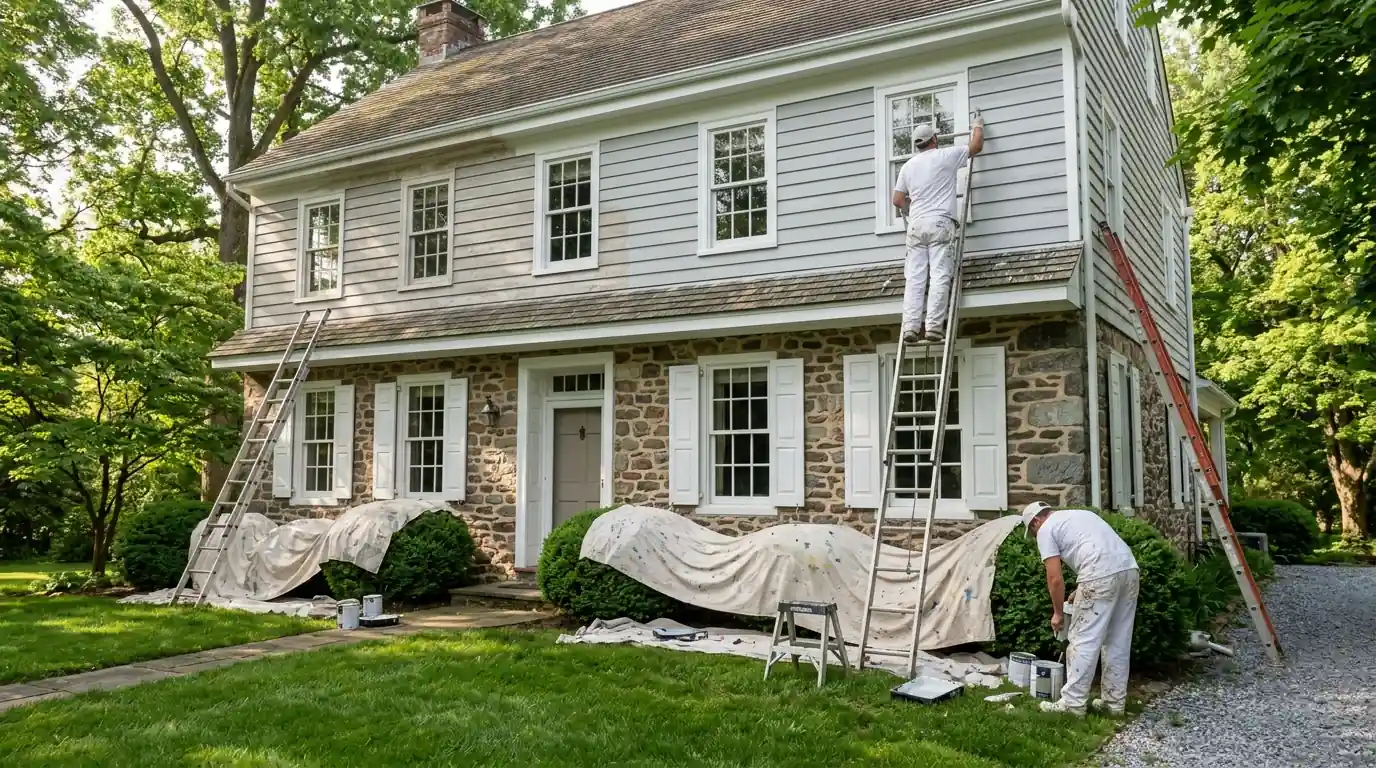
Exterior painting covers washing, scraping, lead-safe prep on older homes, wood and masonry repairs, priming bare spots and two finish coats on siding, trim, doors and shutters. Around Chester County, trim and shutters alone on a colonial run about $2,640 to $5,370. A full two-story colonial usually lands at $8,960 to $17,430, while a stone farmhouse varies widely with prep.
Most exteriors around here mix several materials on one house. A typical Exton colonial from the late 1980s has vinyl or cedar on three sides, a brick or stone veneer front, wood or composite trim, a painted garage door and a front door that takes the afternoon sun. An older farmhouse might have fieldstone walls, a stuccoed addition, wood sashes and a porch with turned posts. Each surface needs its own primer and finish, so we plan the work one material at a time.
Weather sets the season. We paint when air and surface temperatures stay above about 50 degrees through the drying window, which here means late April into October. Humid July afternoons slow curing, and fall dew settles early in low spots near the creeks, so we wrap up each day in time for paint to set. Our article on when to schedule exterior work goes deeper into timing.
Old farmhouses carry many layers of paint on window frames, doors and porch trim, and the bottom coats almost always contain lead. We test, lay sheeting along the foundation, scrape wet and vacuum with HEPA equipment so chips stay out of planting beds and lawns. Fieldstone that has never been painted stays unpainted, and we hand-cut every line where wood trim meets stone.
Newer homes in the large developments around Exton and West Chester rarely have lead, but they bring other problems. Finger-jointed pine trim from the 1990s soaks up water at its joints and rots from the end grain. Builder caulk has usually failed by now, too. We probe trim boards, replace soft sections and apply a flexible sealant only where it belongs before any finish goes on.
Paint that wears thin and chalks is simply age, and a wash plus two coats handles it. Paint that lifts in sheets, blisters or peels down to bare wood usually means water is getting behind it. We trace those failures to overflowing gutters, missing kick-out flashing where roofs meet walls, sprinklers hitting siding or bathroom steam pushing through an outside wall. Fixing the source is cheaper than repainting the same sill every two years. Read why paint peels on homes here for the common causes.
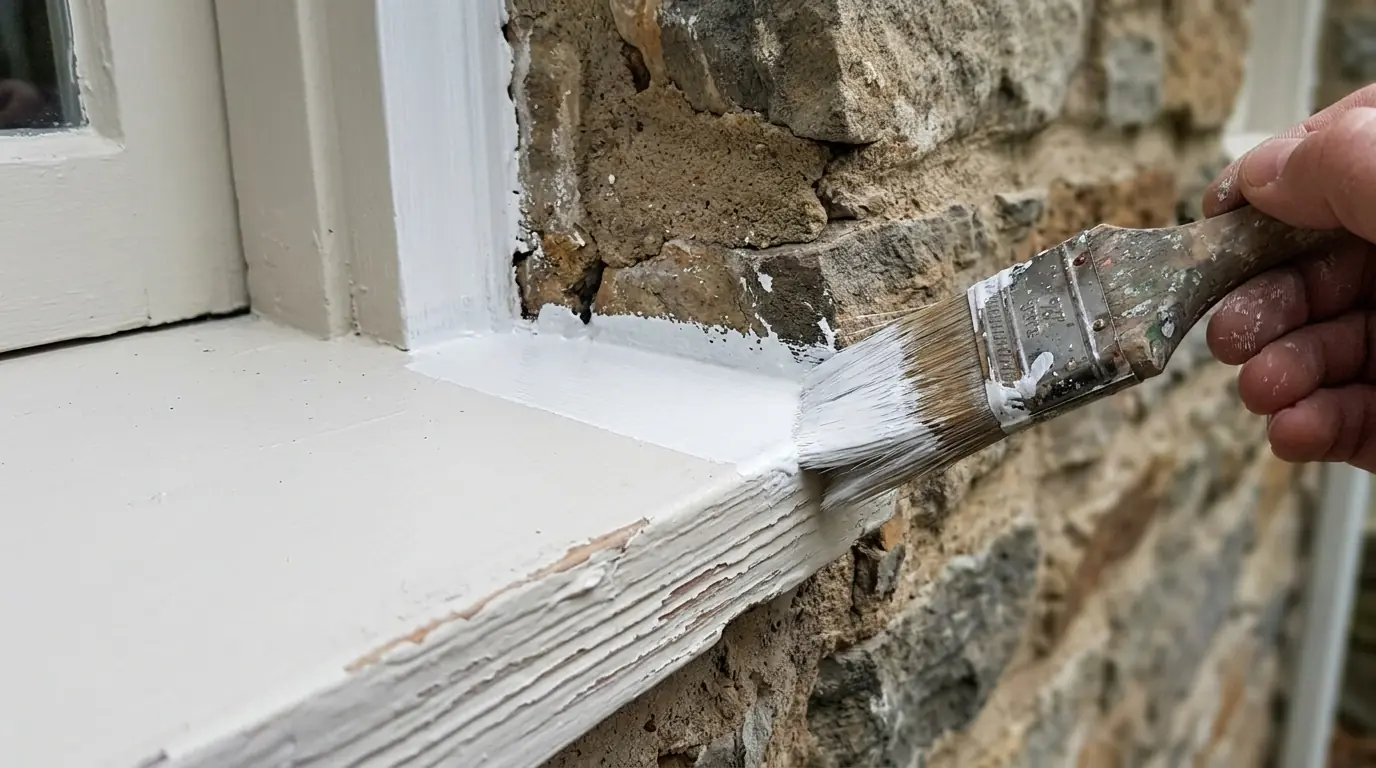
Wood clapboard and trim get a premium acrylic over an oil or bonding primer on bare spots. Stucco gets a breathable masonry coating, but only after a moisture check, because many 1990s and 2000s stucco homes in the area hide wet sheathing behind a sound-looking face. Our stucco painting page explains that check. Vinyl gets a paint made for vinyl in a color no darker than the original, so panels don't warp. Iron railings get a rust-inhibitive primer, and galvanized gutters get a primer made to bond to zinc.
We set ladders and drop cloths early, keep a path open to your front door and cover shrubs, decks and walkways before scraping begins. On a typical two-story colonial, the first two or three days are washing, scraping and repairs, which can look like slow progress from the kitchen window. Priming and finish coats move faster after that. Doors get painted early each day so they can close by evening, and rain days shift us to porch ceilings or other sheltered work.
Big flakes on fascia, sills or siding mean the old coat has lost its grip and rain now gets behind it during every storm.
Rubbing the siding and coming away chalky shows the binder in the paint has worn out, so the surface no longer sheds water the way it should.
A screwdriver sinking into a window sill, corner board or door frame means rot has started, usually where caulk or paint failed first.
Sunny walls lose color and gloss first. When one side looks noticeably duller than the others, the paint film there is getting thin.
Green or black staining on north-facing walls under big trees is growing on the paint and holding moisture against the siding.
Buyers judge a house in seconds from the street. A fresh exterior often does more for first impressions than any interior update you could make.
We look at each elevation, probe trim for rot, test older paint for lead, check stucco for moisture and talk through colors before giving you a price range.
A low-pressure wash with a mild cleaner removes dirt and mildew. Plants, decks, walkways and light fixtures get covered, and the house dries before prep starts.
Loose paint comes off by hand, with lead-safe methods where needed. Rotted wood is cut out and patched or replaced, and failed caulk is removed.
Bare wood, metal and fresh patches get a primer suited to each material, applied the same day so morning dew can't soak into exposed surfaces.
We brush and roll two coats on siding and trim, keeping wet edges on long walls and cutting clean lines at stone, brick and window glass.
We remove masking, rake up chips, rinse walkways and walk the house with you to touch up anything you spot before the ladders come down.
These are typical 2026 ranges for homes around Exton and the rest of Chester County. Your number depends mostly on prep: how much paint has to come off, how much trim is soft, and whether the house needs a lead-safe setup. Height, slope of the lot and the mix of materials matter too. We give a firm figure only after walking the whole house with you.
| Job | Typical range |
|---|---|
| Trim, fascia and shutters on a two-story colonial | $2,640 to $5,370 |
| Full exterior, two-story colonial with mixed siding | $8,960 to $17,430 |
| Stone farmhouse, wood trim, sashes and porch | $6,180 to $14,870 |
| Borough twin half, siding and trim | $5,470 to $9,860 |
| Front door, shutters and garage door refresh | $1,140 to $2,630 |
Planning ranges for 2026, not quotes. The written price comes from a walkthrough. See every service side by side on the painting costs page.
We take on exterior house painting in these towns across Chester, Delaware, Montgomery and Bucks counties. ZIP codes shown for each.
Most two-story colonials take one to two weeks of working days, depending on prep and repairs. Rain and heavy dew push the schedule, and we won't paint a wall that's still wet from a morning shower even if the sky clears by noon. We keep you posted on the plan each day.
No. We need access to an outdoor spigot and to know which doors and windows should stay shut. Many people leave for work and come home to a tidied site. We do ask you to be around for the final walk so we can fix anything you notice together.
Some boroughs around here, including West Chester and Doylestown, have historic districts where a board looks at exterior changes on older buildings. Rules differ from town to town, so check with your borough office before choosing a new front color. Our post on painting in a historic borough explains what to ask.
Yes, with a paint made for vinyl and a color no darker than the original panels unless the product allows it. Darker colors absorb heat and can warp vinyl on sunny walls. We clean thoroughly, prime only where needed and apply two thin coats so the panels look even.
We stop, show you what we found and price the repair before going further. Small soft spots get consolidant and epoxy filler. Longer runs of fascia, sill or corner board get replaced with matching stock that's primed on all sides before it goes up.
Wood siding covers a lot of houses around Exton, from cedar clapboard on 1980s colonials to old pine siding on farmhouses and the shingled gables of...
Stucco around Chester County comes in two kinds: old lime stucco over farmhouse stone and newer stucco on 1990s and 2000s homes. The newer kind can...
Original wood windows in Chester County farmhouses and borough homes can last another century if paint and glazing keep the water out. We scrape,...
Rot on Chester County homes tends to start where water sits: window sills on old farmhouses, porch post bases, the bottoms of door jambs and trim on...
If your house was built before 1978, there's a good chance some of its paint contains lead. That covers stone farmhouses, borough twins and many...
Call any time. We will ask a few questions and set up a walkthrough at your home.