Fence Staining & Painting
Fences around Exton run from short picket runs in front of borough homes to hundreds of feet of split-rail and board fence on larger lots. We clean,...
Many homes built around Exton in the 1990s and 2000s came with big pressure-treated decks off the kitchen, often a full story up with long stairs. We strip and brighten the wood, let it dry, and brush stain into floors, rails and stairs in a product matched to your sun and shade.
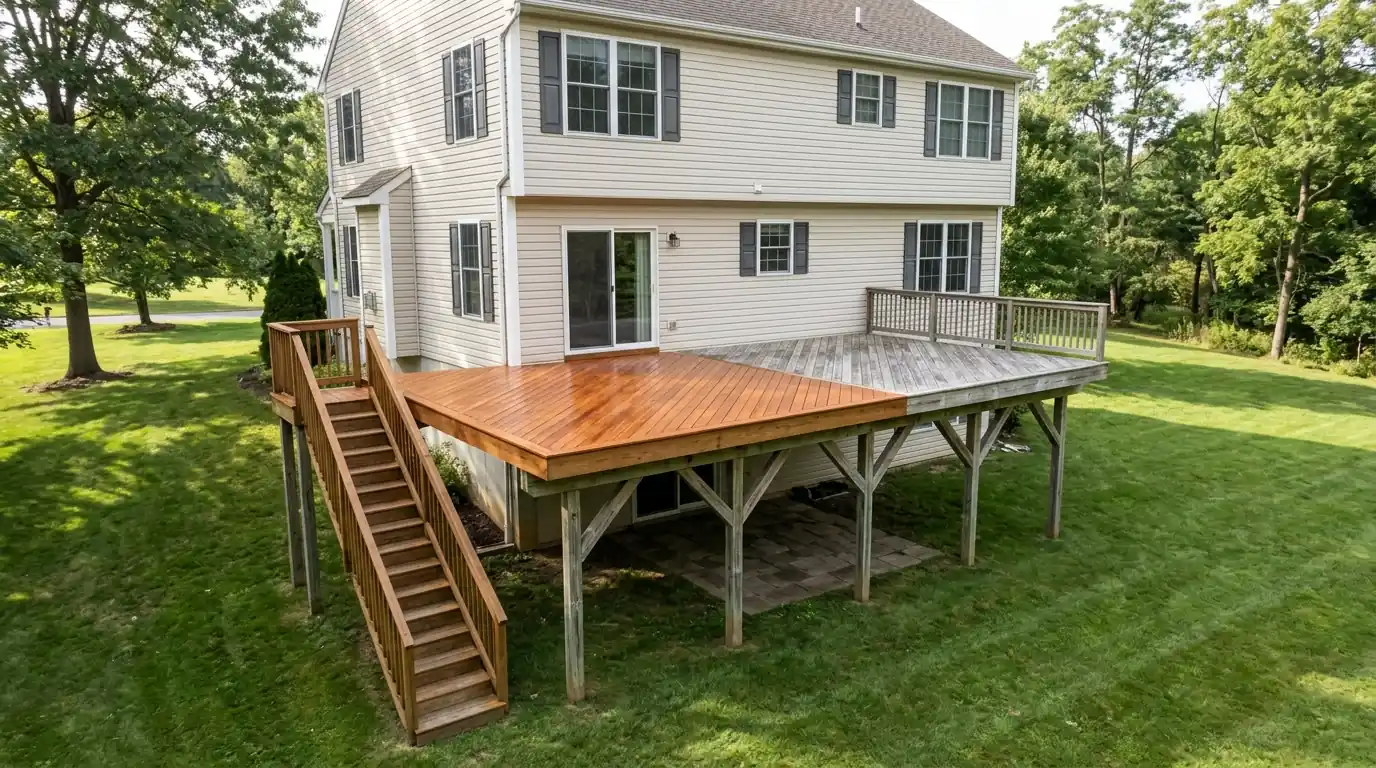
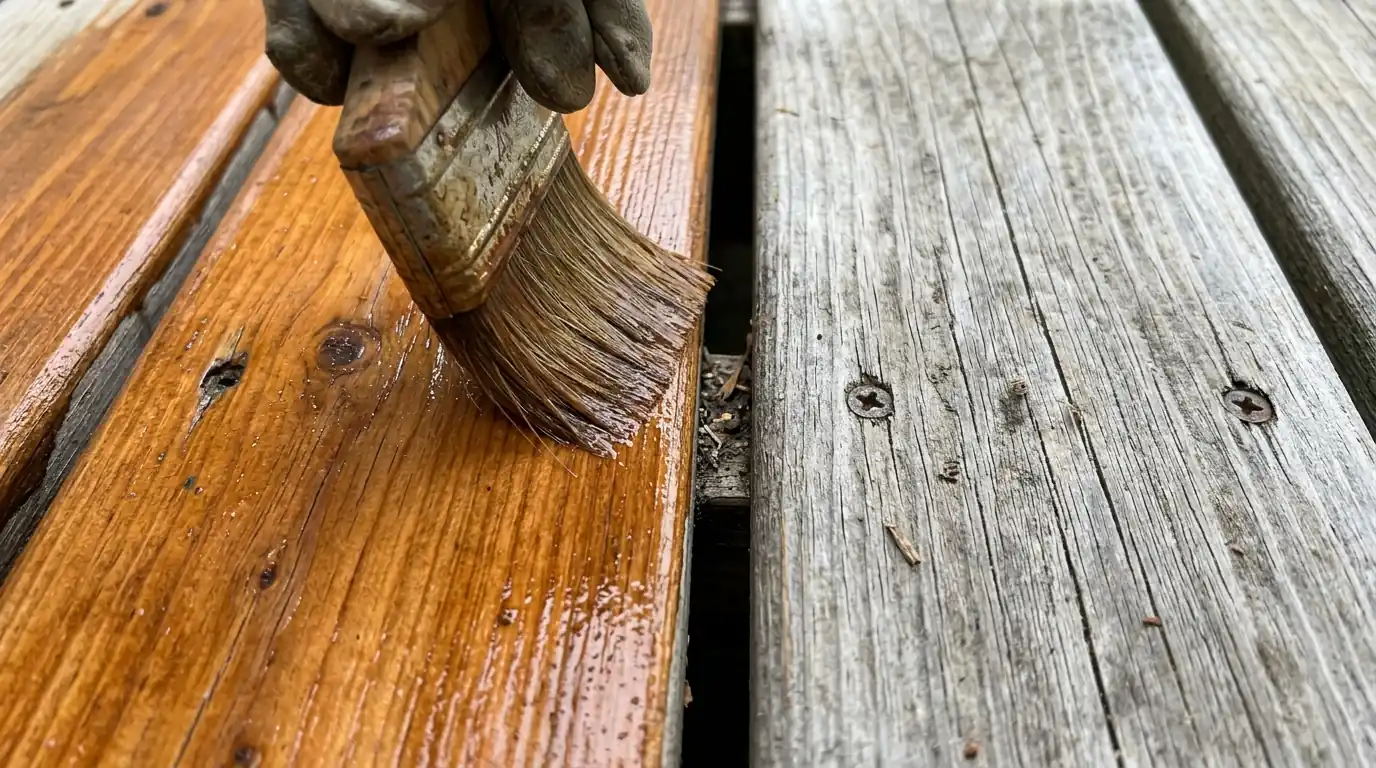
Deck staining covers cleaning or stripping the old finish, brightening the wood, sanding raised grain, letting boards dry, then brushing and back-brushing stain into floor boards, rails, balusters and stairs. Around Exton and Chester County, a 16 by 20 foot pressure-treated deck with rails typically runs $1,185 to $2,265, and second-story decks with long stairs cost more.
A rear deck in a Chester County development usually gets a mix of exposures. The floor bakes in afternoon sun, the far corner sits under a maple or oak and grows mildew, and the stairs collect leaves and snow. A single finish wears differently across all of it. We read the deck section by section and adjust the prep to match, instead of treating it as one flat surface.
The decks we see most often were built twenty to thirty years ago and have been through several rounds of stain, sometimes of different kinds. A solid stain over a semi-transparent, or a water-based coat over oil, can peel in patches that look worse than bare wood. Getting back to a consistent surface is most of the work, and it's what makes the next coat last.
Semi-transparent stain soaks in, shows the grain, and fades rather than peeling, which makes it the safer choice for floor boards and stair treads that take foot traffic. Solid stain hides patched or mismatched boards and blocks more UV, but it acts like a thin film and can flake underfoot. We often use solid on rails, balusters and fascia and semi-transparent on the floor. It looks intentional and keeps future recoats simple.
Pressure-treated pine is soft, and too much pressure from a washer raises fibers that look fuzzy for years. We let a deck stripper do the heavy lifting, then rinse with a wide fan tip at moderate pressure. An oxalic brightener neutralizes the stripper and brings back a fresh tan color. After that, we wait until a moisture meter shows around 15 percent, which usually takes two dry days in a humid Chester County summer.
Walkout decks on 1990s colonials often stand eight to twelve feet off the ground, with long posts, beams and a stair run down to the yard. Those support members dry slowly and stay shaded, so we coat posts, beams and stair stringers rather than just the visible surfaces. Ladders and planks let us reach the outside rim joist. Soft wood at the post bases or along the ledger gets flagged for repair of rotted framing before any stain goes on.
Splash a cup of water on the floor. If it soaks in and darkens the wood within a minute rather than beading, the protection is gone.
UV breaks down the top layer of wood into gray fibers that hold dirt and mildew and take stain unevenly until they're stripped away.
Peeling film where feet land means a solid stain has failed. It has to be stripped before any new stain will hold.
Mildew and algae under trees or close to the house make boards slick and keep them damp, shortening the life of any finish applied over them.
Cracks along the grain and splinters on the handrail show dried-out wood. Sanding and fresh stain slow the splitting and make rails safe to grab.
Some boards dark, some faded and some bare means mixed products are failing at different rates. A full strip resets the whole deck.
We check boards, rails, stairs, posts and the ledger for rot or loose fasteners, identify the existing stain, and take moisture readings in both sun and shade.
Plants are wetted and covered, siding and stone below the deck are shielded with plastic, and nearby windows and doors are taped off.
Stripper loosens old coatings, a fan-tip rinse at moderate pressure clears them away, and an oxalic brightener evens the color and neutralizes the wood.
Raised grain and rail tops are sanded, popped nails or screws are reset, and we wait for the boards to dry to a safe moisture level.
We stain rails and balusters first, then the floor two or three boards at a time, back-brushing so stain soaks in and wiping off any excess.
The deck stays off-limits for a day or two, then you get the product name and color so future maintenance coats match exactly.
Deck staining prices move with square footage, the number of balusters, stair runs, height off the ground and how much old coating has to come off. A ground-level deck with faded semi-transparent stain is the quickest kind. A second-story deck with peeling solid stain takes the longest. Expect 2026 prices around Exton and Chester County to fall roughly in these ranges.
| Job | Typical range |
|---|---|
| 12 by 14 foot ground-level deck | $745 to $1,385 |
| 16 by 20 foot deck with rails | $1,185 to $2,265 |
| Second-story deck with long stair run | $2,140 to $3,935 |
| Multi-level deck with built-in benches | $2,865 to $4,970 |
| Stripping failed solid stain, added | $445 to $1,065 |
Planning ranges for 2026, not quotes. The written price comes from a walkthrough. See every service side by side on the painting costs page.
We take on deck staining in these towns across Chester, Delaware, Montgomery and Bucks counties. ZIP codes shown for each.
Floors in full sun usually need a maintenance coat every two to three years with a semi-transparent stain. Rails, balusters and shaded sections often last a year or two longer. Solid stain can go longer on vertical parts but wears sooner on treads. A yearly spring cleaning helps every coat go further.
Yes, usually within two or three days of cleaning, as long as the weather stays dry and the moisture meter agrees. In humid stretches or after rain, the wait gets longer. Staining damp wood traps moisture and causes peeling, so we'd rather lose a day than rush it.
Composite and PVC boards aren't meant to be stained, so we leave them unstained. We can clean them to remove mildew and pollen buildup, and we often stain or paint the wood framing, fascia, posts and rails that surround a composite floor.
Usually yes. Fresh treated lumber is wet from the treatment process. We check by sprinkling water on it, and if it beads, the boards aren't ready. Many new decks need a few months of weathering, and some carry a shiny mill glaze that has to be cleaned or lightly sanded before stain will soak in.
Yes, and it's common on larger lots where the deck and fence face the same sun. We set up once, use the same product line, and keep the colors matched. Our page on fence staining explains how we handle board, picket and split-rail fences.
Fences around Exton run from short picket runs in front of borough homes to hundreds of feet of split-rail and board fence on larger lots. We clean,...
Green streaks on the north side of a vinyl-sided house, black mildew on a cedar deck, a gray film on fieldstone: Chester County's humid summers grow...
Rot on Chester County homes tends to start where water sits: window sills on old farmhouses, porch post bases, the bottoms of door jambs and trim on...
Wraparound farmhouse porches, borough front porches and the concrete stoops of 1950s colonials all wear out underfoot first. We sand or grind back to...
Townhome communities and condo buildings around Exton, Malvern, King of Prussia and Lansdale repaint on a cycle, usually trim, doors and shutters on...
Call any time. We will ask a few questions and set up a walkthrough at your home.