Barn & Outbuilding Painting
Bank barns, carriage houses, wood sheds and detached garages are part of what makes Chester County properties look the way they do. We scrape them...
Harleysville still has working farmland around it, along with stone farmhouses, barns and the newer subdivisions that went up between the fields. We paint all of it, from bank barns and fieldstone homes to the drywall interiors of recent colonials, and every job starts with a walk around the property.
Around Harleysville we paint barns and outbuildings, farmhouse exteriors and interiors, and newer subdivision homes. Old farmhouses need lead-safe prep, plaster repair and careful work around stone. Barns need wood repair and a coating made for rough-sawn boards. Newer homes mostly need interior color and trim. We price everything in person after seeing the buildings.
Harleysville sits in Lower Salford Township in the Indian Valley, and its older housing reflects generations of farming. Stone and frame farmhouses from the 1800s, often with later additions, stand next to bank barns, corn cribs and sheds. Along Route 113 and the older village streets, you'll find early 20th century frame homes with porches. Since the 1980s, subdivisions of colonials, ranches and carriage homes have filled former fields. For paint, older buildings bring thick lead-bearing layers, horsehair plaster, uneven stone walls and rough-sawn siding that drinks coating. Newer homes bring drywall, vinyl siding and long runs of painted trim. Exposed sites with little shelter from wind also wear exterior paint faster on the weather side.
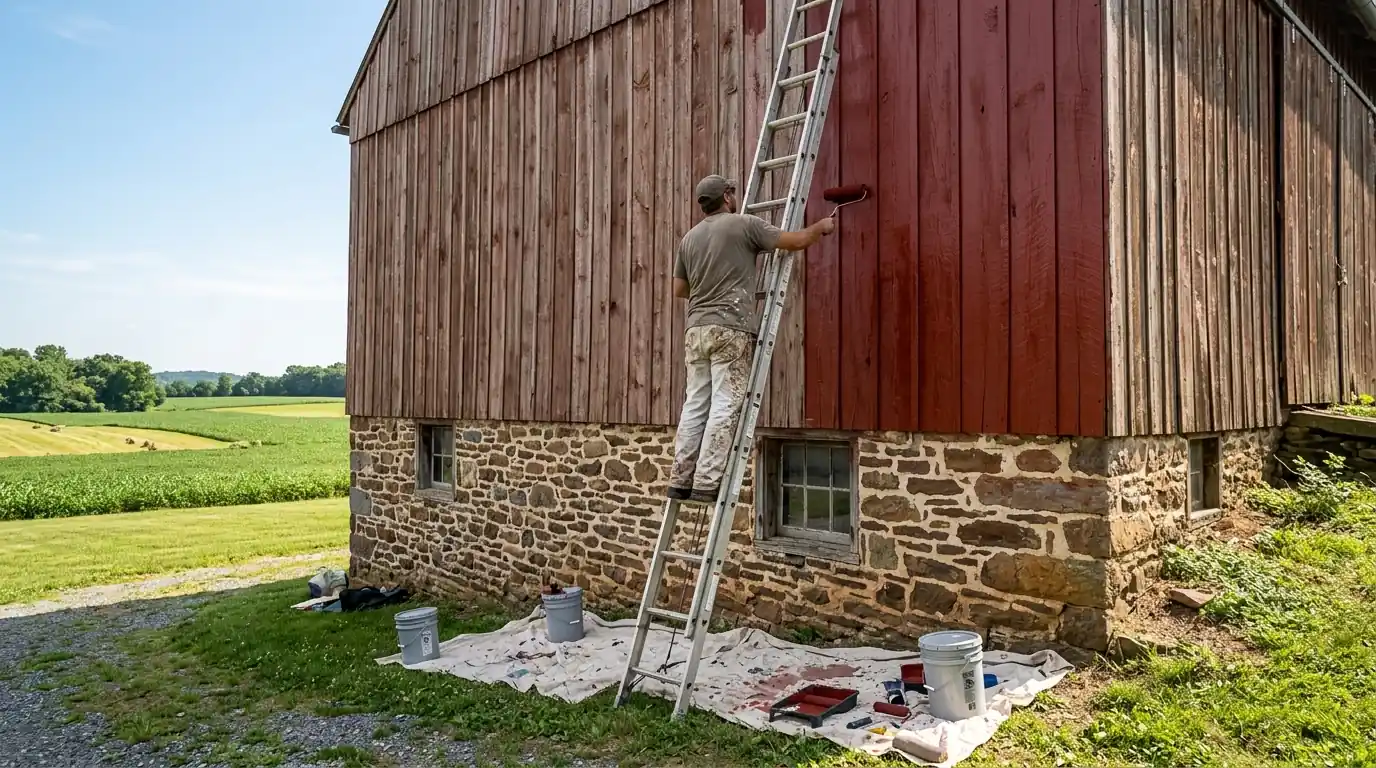
Barn siding takes sun, wind and rain with almost no overhang, so paint fails faster there than on the house. We start by replacing split or rotted boards, refastening loose ones and scraping loose paint by hand or with careful power washing. Rough-sawn wood needs a primer that soaks deep into the grain and a finish thick enough to fill the texture. Red, white and dark gray remain the usual choices here. Our barn and shed painting covers sheds, corn cribs and garages too.
Thick stone walls, deep window wells and plaster laid directly on stone make these interiors handsome but tricky. Plaster on exterior walls can carry moisture, so we look for damp spots before painting and use a breathable finish where it's needed. Horsehair plaster ceilings with loose sections get plaster washers or patching before color. Woodwork usually holds lead paint in lower layers, so we contain the room and clean with HEPA vacuums. See our farmhouse plaster guide for more.
Subdivision homes built on former farmland often face open fields, so wind-driven rain and full sun hit one side hard. That side's trim fades and its caulk cracks first. We walk all four elevations, recaulk gaps at window and door trim, and use a high-quality acrylic that handles UV well. Inside, these homes usually need a first full repaint and new enamel on trim. A typical exterior trim and door package runs about $1,870 to $3,460.
Bank barns, carriage houses, wood sheds and detached garages are part of what makes Chester County properties look the way they do. We scrape them...
We repaint the outside of homes around Exton, from fieldstone farmhouses with wood trim to 1990s colonials wrapped in cedar, stucco and vinyl. Every...
Stone farmhouses outside Exton and Victorian twins in West Chester and Phoenixville still have their original plaster, often horsehair plaster on...
If your house was built before 1978, there's a good chance some of its paint contains lead. That covers stone farmhouses, borough twins and many...
We repaint the inside of homes around Exton room by room, fixing nail pops, cracked plaster and scuffed builder paint before any color goes on. You...
Rot on Chester County homes tends to start where water sits: window sills on old farmhouses, porch post bases, the bottoms of door jambs and trim on...
Our painters work across the surrounding towns as well. Harleysville sits in Montgomery County, which we cover across the towns listed there.
Traditional barn red is the most common choice here, followed by white and darker grays. Lighter colors show dirt and mildew sooner, while red hides wear well. We bring samples to the walkthrough and paint a test patch on a board so you can see it against the fields.
Yes. We paint the wood trim, sash, doors and porches on stone farmhouses and the interiors inside them. We generally recommend leaving natural fieldstone unpainted, because coatings can trap moisture in the wall. If the stone was painted long ago, we'll talk through the options.
Barns need dry wood and several days without rain, so late spring through early fall is the window. Calling in winter gives time to inspect the siding and plan board repairs. Larger barns may take one to two weeks depending on height and condition.
Call our line, answered 24/7, and we will set up a walkthrough at your home.