Lead-Safe Painting
If your house was built before 1978, there's a good chance some of its paint contains lead. That covers stone farmhouses, borough twins and many...
Cast iron radiators still heat many old farmhouses and borough homes in West Chester, Phoenixville and Downingtown. Over decades they collect rust, flaking paint and bronze coatings that have turned dull. We clean them down, prime with a primer made for bare metal and finish with a heat-rated enamel, leaving valves and vents working.
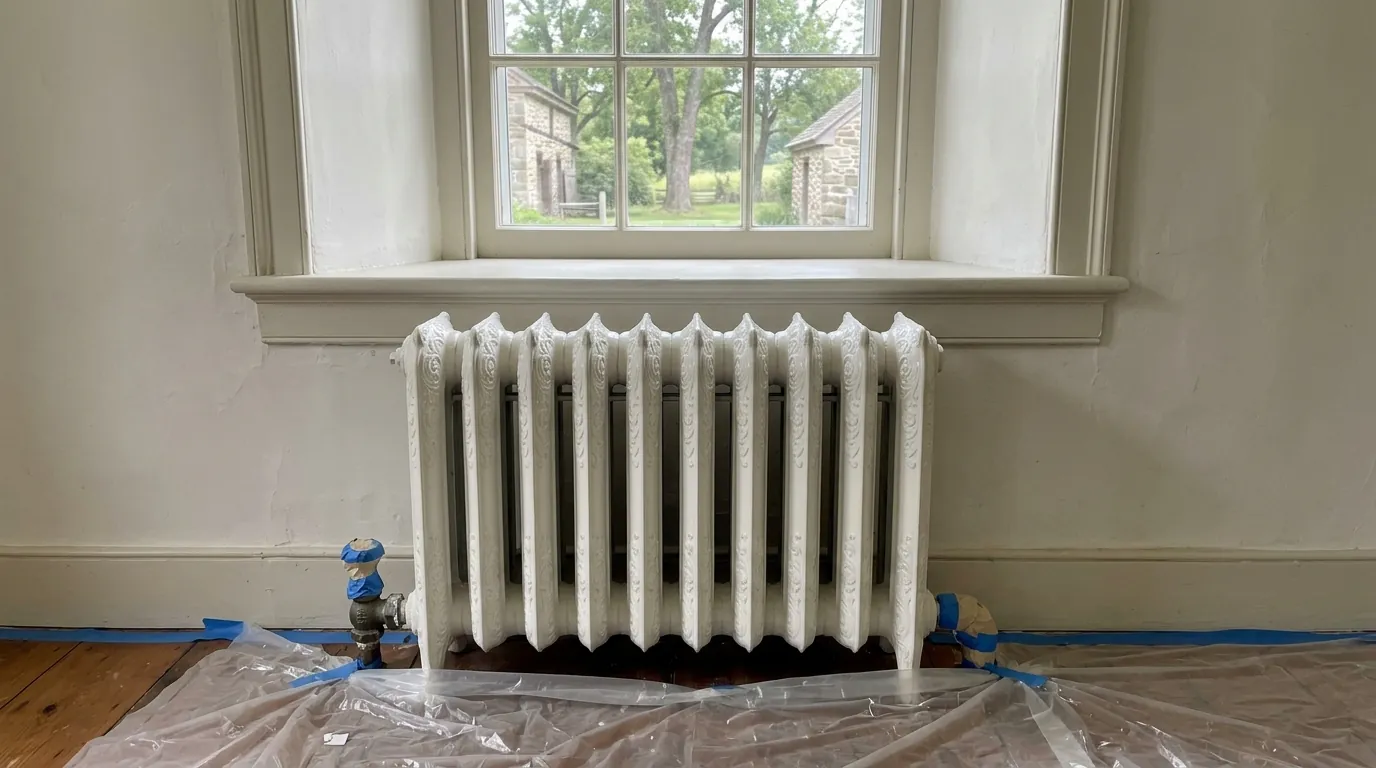
Radiator painting means cleaning out dust, removing rust and loose paint, lead-safe prep on old coats, priming bare iron with a direct-to-metal or alkyd primer and applying two thin coats of heat-resistant enamel. Around Exton and Chester County, a single standing radiator usually costs $235 to $485 painted in place. A whole house of eight to ten radiators runs about $1,840 to $3,960.
Steam and hot water radiators were standard in homes built before the 1950s, and plenty of them still run in Chester County farmhouses and the brick twins of the older boroughs. The iron lasts almost forever, but the paint doesn't. Heat cycles every winter make old coats brittle, and condensation or a leaky valve starts rust at the base. Many were also painted with metallic bronze or aluminum paint, which looks tired and can slightly cut the heat they give off.
We paint radiators in place most of the time, because disconnecting cast iron units is plumbing work and they can weigh several hundred pounds. Painting in place takes patience with long brushes, painting mitts and small rollers to reach between the columns. The result should look close to a factory finish, with every valve, vent and union left clean and able to turn.
Radiators in homes built before 1978 almost always carry lead paint somewhere in their layers, and years of heat make that paint break down into dust and flakes. We test before scraping and treat positive results with lead-safe methods: plastic sheeting around the unit, wet scraping, hand sanding instead of power tools in tight spots and HEPA vacuums. Our lead-safe painting page covers the full setup. If the layers are too thick to clean up well in place, we'll talk through the options at the walkthrough.
Rust usually starts at the bottom where the radiator meets the floor, around leaky valves and on units under windows where condensation drips down. We wire-brush and sand rusted areas to sound metal and wipe them with a solvent so primer can grip clean iron. Bare spots get a direct-to-metal primer or an alkyd metal primer. Both bond firmly to iron and stop new rust from creeping out under the finish coat.
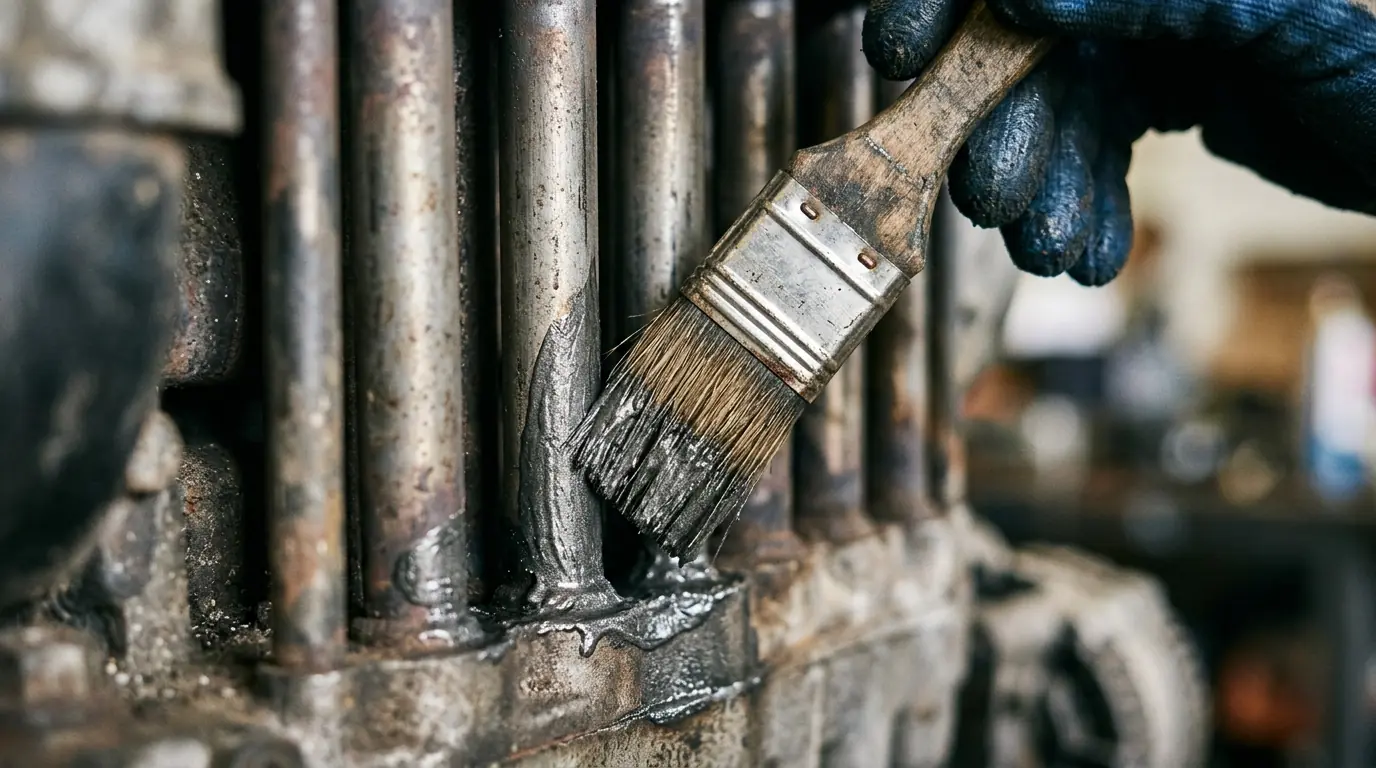
The one rule we never break on radiators is simple: paint never goes on the moving parts. Steam air vents, hot water bleed valves, supply valve stems and the unions where pipes connect all get masked or wrapped before priming starts. A painted-shut air vent stops a steam radiator from heating, and a painted bleed screw becomes a headache on the first cold night. Before we pack up, we check that each one still turns freely.
Most people paint radiators the same color as the wall or trim so they fade into the room. Others pick a contrasting deep green or charcoal to show off ornate column castings. A satin or semi-gloss heat-rated enamel cleans easily and handles the daily temperature swings. We avoid metallic paints unless you want that period look on purpose. When the walls are getting repainted too, we paint what we can reach behind the radiator first, and full room painting fits naturally into the same visit.
Orange rust where the radiator meets the floor, or around a dripping valve, spreads under the old paint and stains floors if it's left alone.
Chips around the radiator after the heat comes on mean old paint has gone brittle, and in older homes those chips may contain lead.
Metallic radiator paint from decades ago turns dull and patchy and can slightly reduce heat output compared with a regular enamel color.
A yellowed or chipped radiator stands out badly once the walls and trim around it are clean and newly painted.
Air vents or bleed valves caked with old paint may not work properly. Cleaning and repainting is a good time to get them working again.
We look at each radiator, check valves and vents, test old paint for lead and plan the job for a stretch when the system can stay off or cool.
Floors, nearby walls and baseboards get plastic and tape. Valves, vents and pipe unions are wrapped so no primer or paint can reach them.
We vacuum dust from inside the sections and wash the radiator with a degreaser, since years of dust and grime will stop paint from bonding.
Loose paint and rust are scraped and wire-brushed by hand, with lead-safe methods where needed. Edges get sanded so the finish doesn't show ridges.
Bare spots get a direct-to-metal or alkyd metal primer, worked into every crevice with small brushes and painting mitts.
Thin coats cure harder and don't run between the columns. We let the finish cure before you turn the heat back up and confirm every vent turns.
Radiator painting is priced per unit, but size and style matter a lot. A plain wall-hung radiator goes quickly, while a tall ornate column radiator with heavy rust and lead paint can take several hours of prep alone. These 2026 ranges reflect older homes around Exton, West Chester and the other Chester County boroughs. We confirm pricing after seeing each unit.
| Job | Typical range |
|---|---|
| Standard column radiator, painted in place | $235 to $485 |
| Tall or ornate radiator with heavy rust | $415 to $790 |
| Whole house, eight to ten radiators | $1,840 to $3,960 |
| Lead-safe setup, per room | $145 to $315 |
| Wall behind the radiator, add-on | $115 to $265 |
Planning ranges for 2026, not quotes. The written price comes from a walkthrough. See every service side by side on the painting costs page.
We take on radiator painting in these towns across Chester, Delaware, Montgomery and Bucks counties. ZIP codes shown for each.
Yes, but the radiator has to be cool while we work and stay off until the enamel cures. That's easy in spring, summer and early fall. In winter we plan around mild spells and paint a few rooms at a time so the house stays comfortable.
We use heat-rated enamels made for radiators, applied over a direct-to-metal or alkyd primer where iron is bare. Standard wall paint softens, yellows and peels on a surface that heats up every day. Metallic paints are available but can slightly lower heat output, so we usually steer people toward a regular enamel color.
Usually not. Disconnecting a cast iron radiator is plumbing work, and the units are very heavy, so we paint in place. If a radiator is already disconnected for floor refinishing or plumbing changes, we can paint it while it's off the wall and easier to reach.
No. A dripping valve or vent needs repair by whoever services your heating system, and paint won't stop it. We'll point out leaks at the walkthrough so they can be fixed first, because water from a bad valve will lift fresh paint and start rust again.
Blasting strips a radiator to bare iron and gives the cleanest result, but it means disconnecting and hauling the unit away. For most homes, careful in-place prep and a good metal primer give a durable finish with far less cost and disruption.
If your house was built before 1978, there's a good chance some of its paint contains lead. That covers stone farmhouses, borough twins and many...
We repaint the inside of homes around Exton room by room, fixing nail pops, cracked plaster and scuffed builder paint before any color goes on. You...
Chester County has an unusual number of old houses: fieldstone farmhouses, bank barns, Federal and Victorian homes along borough streets in West...
We repaint baseboards, door and window casings, crown molding and wainscoting in homes around Exton. Every joint is caulked, every nail hole filled...
Stone farmhouses outside Exton and Victorian twins in West Chester and Phoenixville still have their original plaster, often horsehair plaster on...
Call any time. We will ask a few questions and set up a walkthrough at your home.