Storefront Painting
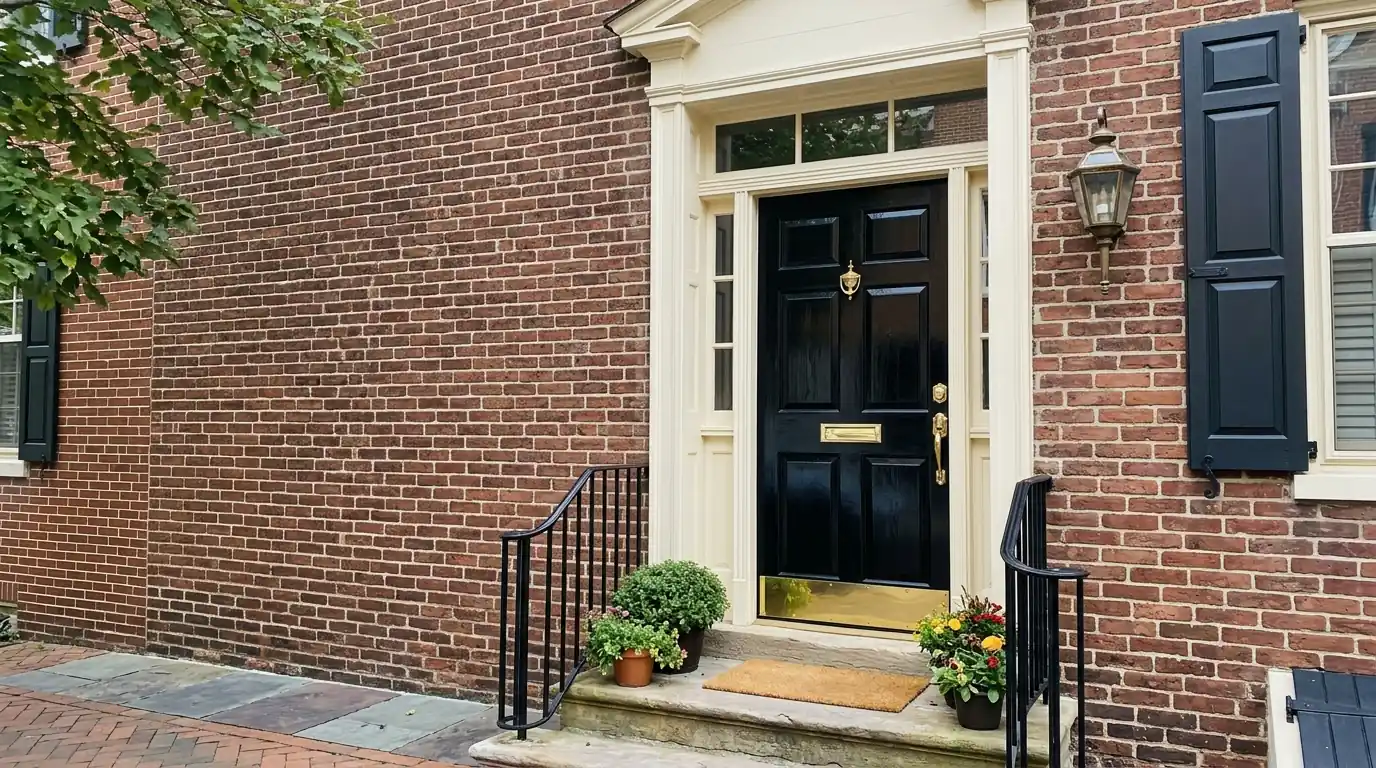
A shop front gets judged in the two seconds it takes someone to walk past. We repaint storefronts on borough main streets in West Chester,...
Few businesses around Exton can shut down for a week while the walls get painted. We schedule commercial work in evening, overnight and weekend phases, so offices, medical suites, restaurants and shops in Chester and Montgomery County open on time each morning with the space clean and usable.
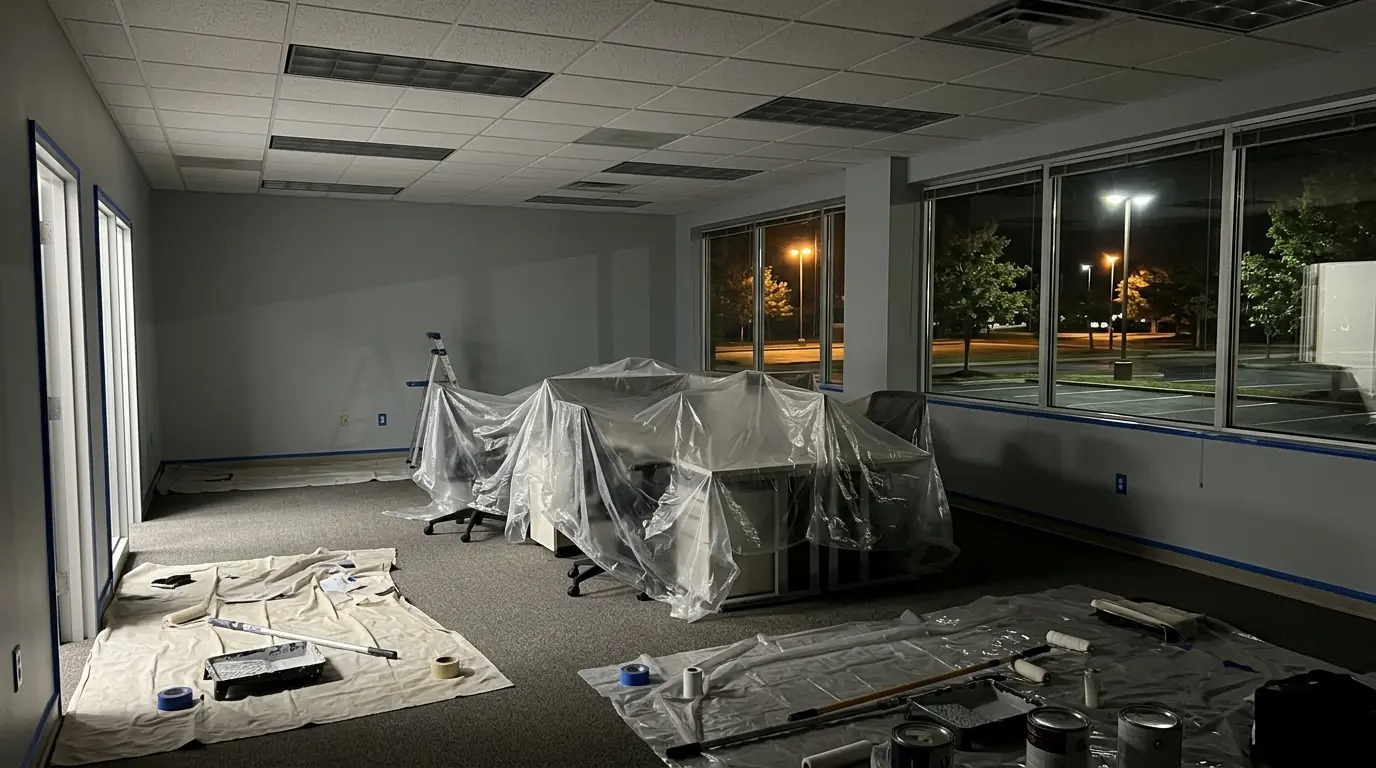
Commercial painting here means offices, clinics, restaurants, studios and retail suites repainted in zones after hours with low-odor coatings. Each shift ends with furniture reset and floors swept. Around Exton and Chester County in 2026, a small office suite typically runs $2,740 to $5,960, and a medical suite with three to five rooms usually lands between $2,215 and $4,870, depending on the job.
Most of our commercial work sits in the office parks along Route 202 and the Route 30 bypass, around Exton, Malvern and King of Prussia. These buildings are full of tenant suites with drywall partitions, dropped ceilings, steel door frames and carpet tiles. The paint itself is nothing exotic. The real challenge is access, because property managers set the hours, the loading dock rules and the elevator schedule. We plan the job around those rules before we put a number on it.
Smaller commercial spaces follow a different rhythm. A dentist in Downingtown needs operatories back for the morning patient list. A cafe in West Chester can give us the hours between close and the early bake. A yoga studio in Phoenixville may only lose Sunday evening. We split each space into zones, paint one zone per shift, and tell you exactly which rooms are off limits and for how long. If the facade needs work too, painting the storefront can run during the same week.
We start after the last person leaves, usually around 6 p.m., and finish well before staff badge in. Desks get pushed to the middle of each room and wrapped in plastic. Monitors and phones are bagged rather than unplugged, unless your IT person says otherwise. In a typical 3,800 square foot suite with reception, six private offices and a conference room, reception goes first so clients see a finished front. Private offices follow in pairs, then the conference room, then corridors and door frames on a Friday so they cure over the weekend.
Commercial walls take more punishment than any family room. Rolling chairs gouge corridor corners, carts clip door frames, and cleaning staff wipe restroom walls every night. We usually spec a scrubbable eggshell acrylic for walls, a waterborne alkyd or urethane-modified enamel for doors and frames, and a mildew-resistant coating in restrooms and break rooms. Zero-VOC lines let a medical or dental office reopen the next morning without a paint smell. Where the back of the building has bare concrete, an epoxy coating on the slab can go down during the same closure.
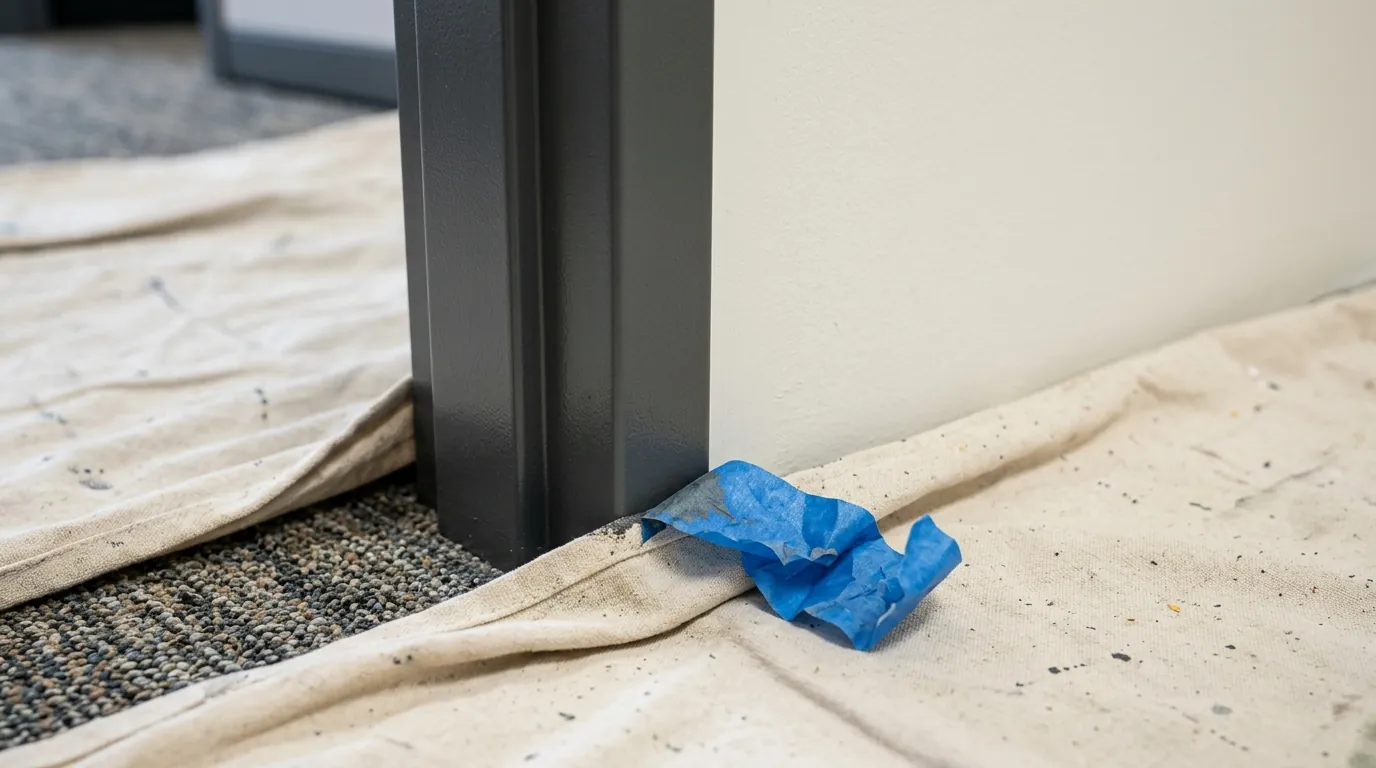
When a tenant leaves a suite in a King of Prussia or Malvern office building, the landlord usually wants it repainted before showings. Those jobs move quickly because the space is empty. We patch anchor holes from old shelving, cut in around new partition walls, and repaint in the building's standard colors so the suite matches the corridor outside. Managers get a short note after each visit with photos of finished rooms. In occupied buildings, we agree with the manager on which floors and stairwells can close, and for how many hours.
Black chair marks, chipped door frames and worn paint at hand height in hallways make a well-run office look tired to every visitor who walks in.
A new lease, a name change or updated brand colors is a natural moment to repaint, before furniture and artwork go back on the walls.
Water marks from an old roof leak or HVAC condensation spread across drywall ceilings. We seal the stain with a shellac or oil primer before the finish coat.
Peeling paint around sinks, mildew spots near vents and stained walls by coffee stations are signs the coating there needs a tougher, washable replacement.
Restaurants and clinics with chipped or porous walls in kitchens, restrooms or exam rooms do well to repaint with washable coatings before an inspector notices.
We visit while you're open to see traffic patterns, surfaces and ceiling heights, and to ask the property manager about access, loading docks and quiet hours.
Your estimate lists each zone and the night or weekend we'll paint it, so you can warn staff and customers ahead of time and plan around closed rooms.
Workstations, kitchen gear and retail displays are moved or wrapped. Carpet tiles and finished floors get drop cloths and low-tack tape that peels off cleanly.
Each shift we fill holes, sand patches, spot prime stains and apply two finish coats inside that zone only, leaving the rest of the space untouched.
Before we leave, furniture goes back, protection comes up, floors are swept, and anything still curing gets a small sign so nobody leans on it.
After the last zone, we walk the space with you or your manager, mark touch-ups with blue tape, and finish them on one short final shift.
Commercial pricing depends on square footage, the surface mix and the hours we can work. Night and weekend shifts cost more than daytime labor, and every phase adds setup and teardown time. Washable or specialty coatings for clinics and kitchens also cost more than standard wall paint. These 2026 ranges reflect occupied spaces around Exton and Chester County, and they're firmed up after we walk the property with you.
| Job | Typical range |
|---|---|
| Small office suite, walls and doors | $2,740 to $5,960 |
| Medical or dental suite, three to five rooms | $2,215 to $4,870 |
| Restaurant dining room, overnight shifts | $3,165 to $7,240 |
| Vacant tenant suite, about 2,500 sq ft | $3,380 to $6,415 |
| Office corridor and stairwell, per floor | $1,385 to $2,960 |
Planning ranges for 2026, not quotes. The written price comes from a walkthrough. See every service side by side on the painting costs page.
We take on commercial painting in these towns across Chester, Delaware, Montgomery and Bucks counties. ZIP codes shown for each.
Usually, yes. We close one zone at a time after hours and leave the rest of the office in use. When a room has to be painted during the day, zero-VOC paint and taped walkways make it workable, but evening shifts are almost always easier for your staff and for our painters.
We pick zero-VOC wall paint and waterborne enamels, run fans toward open windows or the building exhaust, and paint treatment rooms early in the shift so they air out for hours before patients arrive. Most clinics reopen the next morning without anyone mentioning an odor.
Yes. A lot of our commercial work around Malvern, Exton and King of Prussia is arranged by property managers handling vacant suites, corridors and stairwells. We follow the building's rules on dock times, elevator use and noise, and send a short update with photos after each visit.
Paint stores can match most brand colors from a code or a physical sample. We brush a test patch on the actual wall first, because office LED fixtures and north-facing windows can make the same formula look cooler than it does on a printed brand guide.
We paint offices, clinics and small retail spaces in Exton, West Chester, Downingtown, Malvern, Phoenixville and Coatesville, plus King of Prussia, Norristown, Lansdale and Pottstown in Montgomery County and Doylestown in Bucks County. Keeping to those towns means the painters who walk your space are the ones who paint it.
A shop front gets judged in the two seconds it takes someone to walk past. We repaint storefronts on borough main streets in West Chester,...
Most epoxy jobs we do around Exton are two-car garages on homes built during the 1990s and 2000s, with slabs that have spent twenty winters soaking...
Townhome communities and condo buildings around Exton, Malvern, King of Prussia and Lansdale repaint on a cycle, usually trim, doors and shutters on...
Homes built around Exton and West Chester from the 1970s through the 2000s are almost all drywall, and they share the same problems: nail pops,...
A brown ring on the ceiling usually shows up after a roof leak, an ice dam, an overflowing tub upstairs or a dripping air handler in the attic....
Call any time. We will ask a few questions and set up a walkthrough at your home.