Window & Sash Painting
Original wood windows in Chester County farmhouses and borough homes can last another century if paint and glazing keep the water out. We scrape,...
If your house was built before 1978, there's a good chance some of its paint contains lead. That covers stone farmhouses, borough twins and many colonials and split-levels from the 1950s to the 1970s around Chester County. We use lead-safe work practices so painting doesn't leave dust behind for your family to breathe.
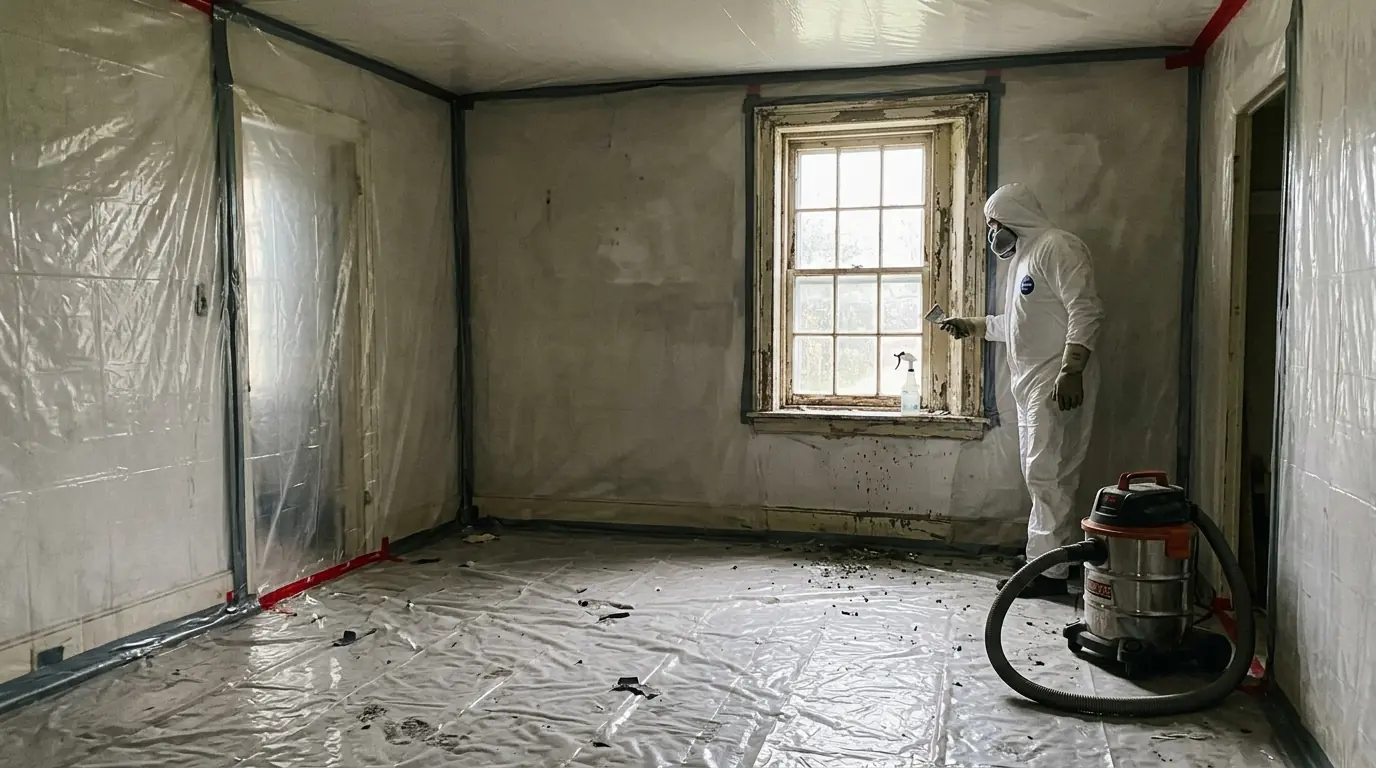
Lead-safe painting is regular painting done with controls that keep lead dust from spreading. We seal off the work area, mist before scraping, avoid dry sanding and open flames, collect debris daily, and finish with HEPA vacuuming and wet wiping. Around Exton, lead-safe prep adds roughly $285 to $615 to one interior room and $835 to $2,045 to a house exterior.
Lead paint isn't usually a danger while it sits intact under newer coats. The risk comes when it's disturbed: scraped, sanded, cut or worn down at friction points like windows and doors. That makes painting one of the moments it matters most. Small children and pregnant women are the most vulnerable, and fine dust can settle into carpet and floor cracks where it lingers. Our post on lead paint in older homes covers where it tends to hide.
The federal rules for renovation and painting in pre-1978 homes are built around a handful of practices, and we follow them on every older house. They include containment, wet methods, careful cleanup and a final check that surfaces are clean. None of it is exotic. It's slower and more careful than ordinary painting, and that extra time shows up in the price.
Before scraping starts, furniture leaves the room or gets wrapped in plastic. We tape heavy plastic over the floor, extending past the work area, and seal doorways, vents and built-ins. Signs at the entry keep family members and pets out until cleanup is done. In older farmhouses, where rooms connect through wide openings, we often build a plastic wall with a zipper door so the rest of the house stays in use.
Dry sanding and power planing throw lead into the air as fine dust, and very hot heat guns or open flames can create lead fumes. We avoid all of them. Instead, we mist surfaces with water before scraping, so chips fall heavy and damp instead of drifting. Where sanding is needed, we use wet sanding sponges or sanders connected to HEPA vacuums. On old horsehair plaster, the same careful approach protects both the walls and the people living there.
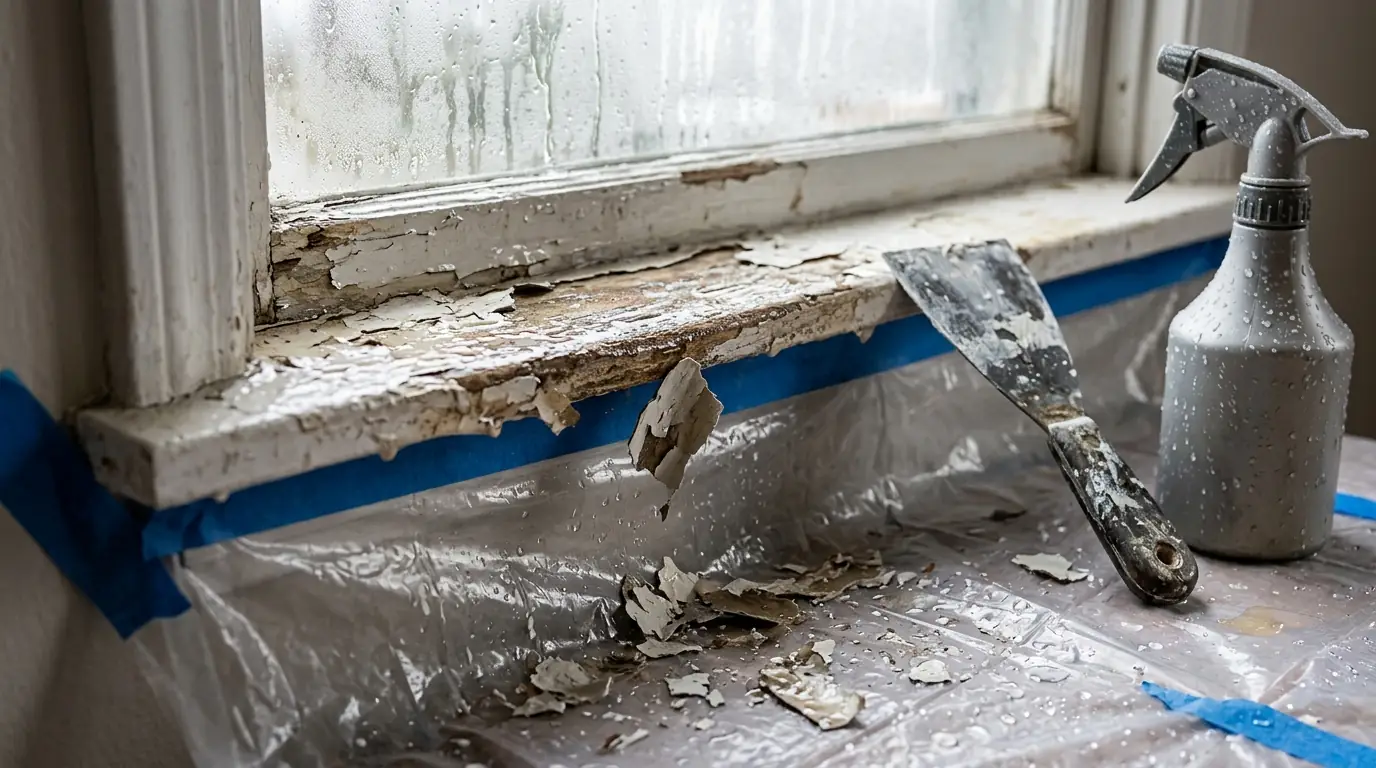
Cleanup happens daily, not just at the end. Chips and plastic are misted, folded inward and bagged. Then every surface gets HEPA vacuumed and wiped with damp cloths, changing water and cloths often. When the job wraps up, we wipe windowsills and floors with cleaning verification cloths and compare them to a reference card. If a wipe doesn't pass, we clean that area again and recheck it before anyone moves back into the room.
Outside, we spread heavy plastic on the ground several feet out from the wall, beyond the work area, and weight it down. Windows and doors near the scraping stay closed. We don't scrape on windy days, when chips can blow toward a neighbor's yard or into garden beds. On borough twins with a shared wall, we stay on your side and keep debris off the adjoining property. Everything is collected at the end of each working day, never left overnight.
Any home built before 1978 may have lead paint somewhere. The older the house, the more likely it is, especially on trim, windows and porches.
Old sashes rub against their jambs every time they open, grinding paint into dust. Sills and troughs often hold the highest lead levels in a house.
Weathered porch rails, columns and floors on older homes are common lead locations. Chips in the yard near a play area deserve quick attention.
Young children put hands and toys in their mouths. If you're painting an older home with little ones around, lead-safe methods matter most.
Refinishing original doors, trim or stair parts in an older house means disturbing old layers. That's exactly when containment and wet methods are needed.
Flaking paint on farmhouse plaster may hide early lead layers underneath. Scraping it without controls spreads dust across the whole room.
We ask when your house was built and test suspect surfaces with lead test kits. For a full picture, we suggest a lead inspection by a qualified inspector before work begins.
Floors, vents and doorways are sealed with plastic, furniture is moved or wrapped, and warning signs go up so nobody wanders into the work area.
Surfaces are misted before scraping. Sanding is done wet or with HEPA-connected tools. We never dry sand, power plane or use open flames on old paint.
Debris is misted, folded into the plastic and bagged at the end of each day. Tools and shoes are cleaned before anyone leaves the contained area.
Once prep is done, we prime and paint as usual. Fresh paint over stable old layers seals them in, which is part of keeping an older house lead-safe.
We HEPA vacuum, wet wipe every surface, then check windowsills and floors with cleaning verification cloths. The plastic comes down only after the room passes.
Lead-safe work adds time and materials to a paint job: plastic, tape, HEPA vacuums, wet cleaning supplies and an extra hour or more of cleanup each day. The added cost depends on how many surfaces are disturbed and how much containment the space needs. These are typical 2026 add-on ranges for homes around Exton and Chester County, on top of the painting itself.
| Job | Typical range |
|---|---|
| Containment and cleanup, one interior room | $285 to $615 |
| Window sill and jamb prep, per window | $125 to $245 |
| Stair hall with rails and balusters | $515 to $1,085 |
| House exterior, ground containment | $835 to $2,045 |
| Porch ceiling and columns, wet scraping | $575 to $1,335 |
Planning ranges for 2026, not quotes. The written price comes from a walkthrough. See every service side by side on the painting costs page.
We take on lead-safe painting in these towns across Chester, Delaware, Montgomery and Bucks counties. ZIP codes shown for each.
Usually not for a single room. The contained area stays off-limits until it passes the final check, but the rest of the house remains usable. For larger projects, or if you have an infant or are pregnant, staying elsewhere during heavy prep is worth considering.
It helps. A test kit on a few surfaces can tell us a lot, and a full inspection gives the clearest picture. If your house predates 1978 and nothing has been tested, we treat the disturbed surfaces as if they contain lead.
Often, yes, as long as the old paint is stable. Sealing intact layers under fresh paint is common practice. The problem is friction and impact surfaces, like window sashes and door edges, where paint keeps wearing down and needs more careful treatment.
Windows combine lead paint with constant friction. Every time a sash slides, it grinds a little paint into dust, which collects in the trough and on the sill. That's why window prep often costs more per square foot than walls.
Everything is misted, folded inward and sealed in heavy bags. For most homeowner projects, that waste can go out with regular trash once sealed, though we follow any local rules that apply. Nothing is left loose in your yard or garage.
It does. The 1978 cutoff includes plenty of homes built in the 1950s, 1960s and early 1970s around Exton and Malvern. Lead levels in later paint were often lower, but trim, doors and windows can still test positive, so we don't assume otherwise.
Original wood windows in Chester County farmhouses and borough homes can last another century if paint and glazing keep the water out. We scrape,...
Chester County has an unusual number of old houses: fieldstone farmhouses, bank barns, Federal and Victorian homes along borough streets in West...
We repaint the inside of homes around Exton room by room, fixing nail pops, cracked plaster and scuffed builder paint before any color goes on. You...
Stone farmhouses outside Exton and Victorian twins in West Chester and Phoenixville still have their original plaster, often horsehair plaster on...
Every empty day between tenants costs a landlord rent. We repaint vacant units fast, usually in one to three days, for landlords with student rentals...
Call any time. We will ask a few questions and set up a walkthrough at your home.