Deck Staining
Many homes built around Exton in the 1990s and 2000s came with big pressure-treated decks off the kitchen, often a full story up with long stairs. We...
Fences around Exton run from short picket runs in front of borough homes to hundreds of feet of split-rail and board fence on larger lots. We clean, repair and stain or paint each type the way it needs, and we finish both faces when the layout allows.
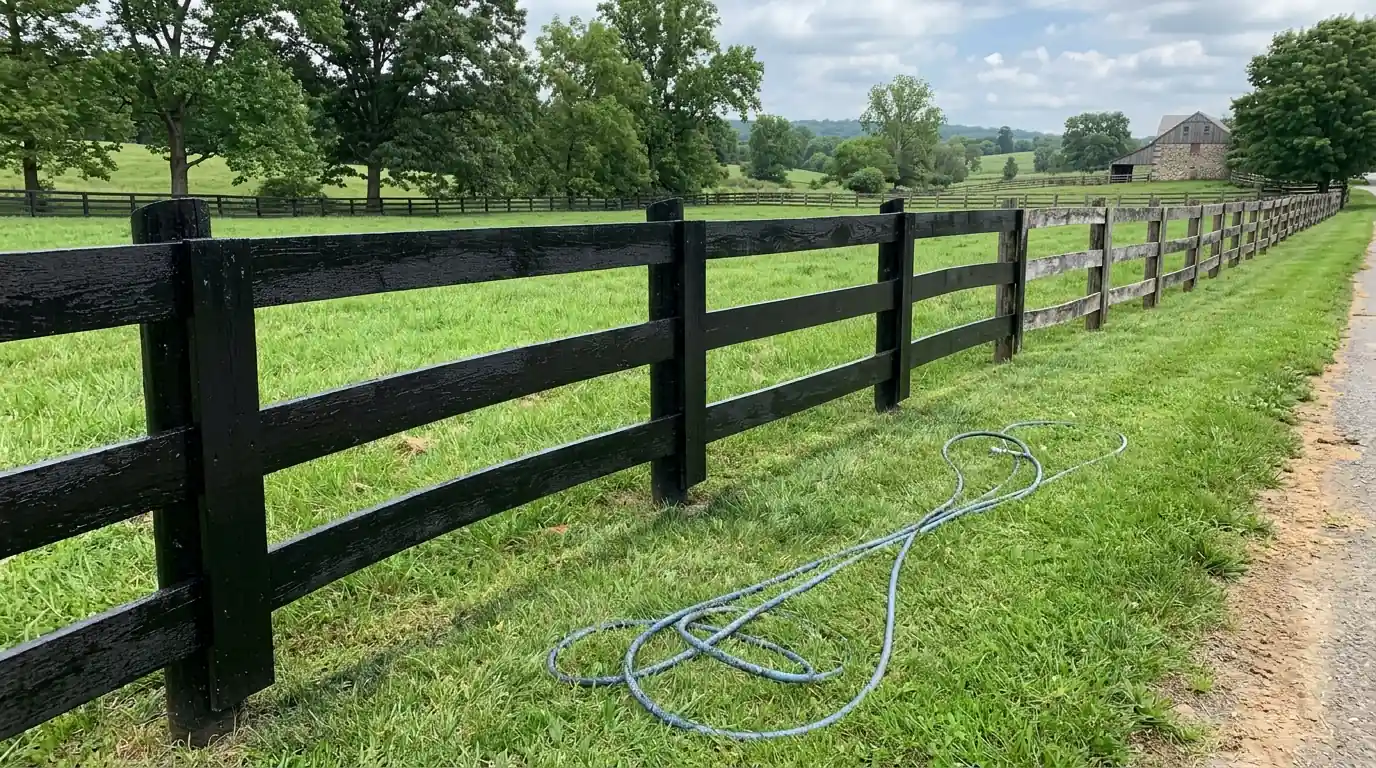
We wash off mildew and gray fibers, tighten loose boards and pickets, let the wood dry, then spray and back-brush stain or brush and roll paint. Around Exton and Chester County, staining one side of 150 feet of six-foot privacy fence typically runs $1,745 to $3,285, and split-rail fence costs about $4 to $9 per linear foot.
Chester County still has plenty of open land, and the fences show it. Split-rail fences mark yards and pastures, three- and four-board fences line horse properties, and the 1990s and 2000s developments have long runs of cedar or pressure-treated privacy fence between lots. In the boroughs you'll find painted picket fences along front walks. Each style weathers differently, and the right finish depends on how the fence is built and what it's there to do.
Most fence failures start at the bottom. Grass, mulch and sprinklers keep the lower boards wet, and mildew climbs from there. Post tops and the tops of pickets catch rain and split. We focus our prep on those spots first, then pick a stain or paint that suits the wood, the sun exposure and how much upkeep you want down the road.
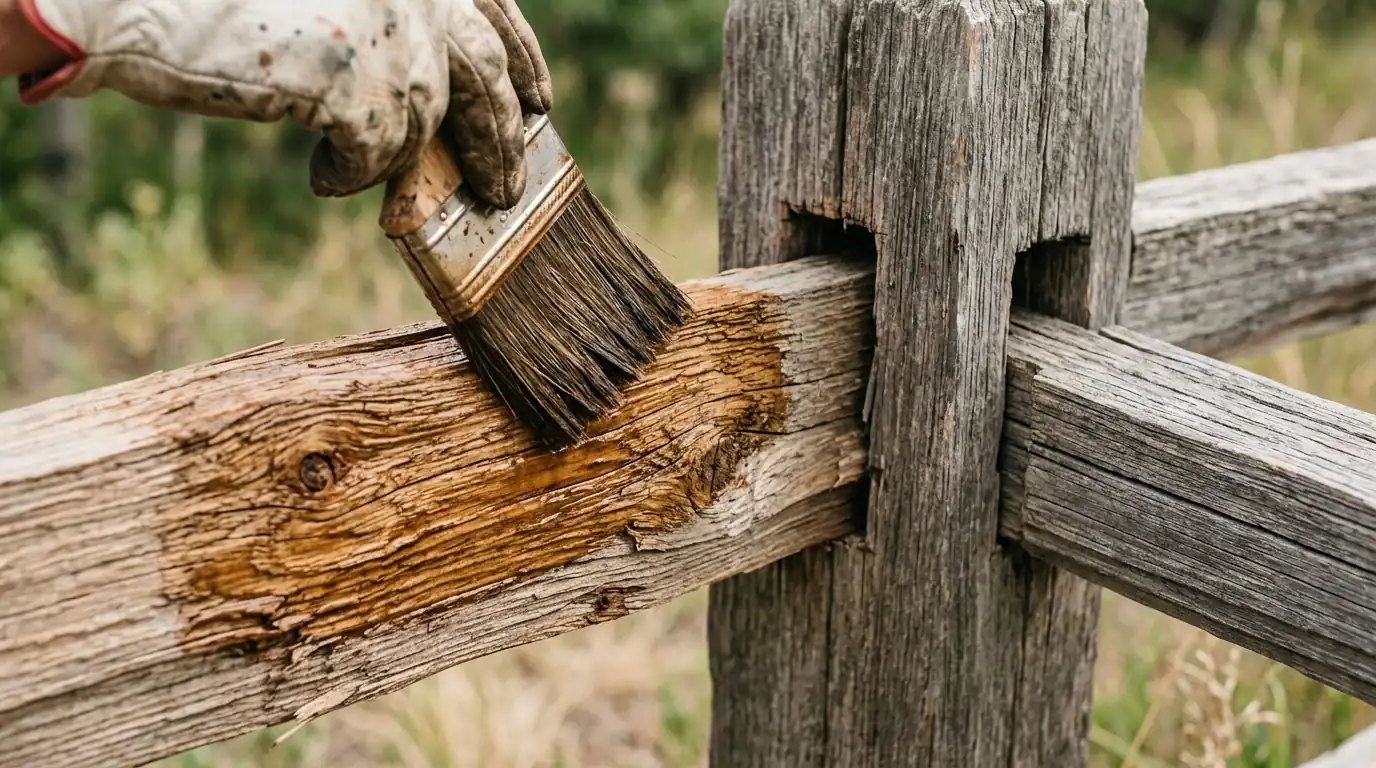
Split-rail fences are usually cedar or locust and can be left to weather, but an oil-based semi-transparent stain slows splitting and keeps the rails from going black with mildew. Board fences on horse properties are a different job. Many owners keep them black or white, and those get a fence paint or solid stain sprayed on and brushed into rough-sawn faces. Long runs mean we plan the work in sections along the line, finishing each stretch before moving on.
On cedar and pressure-treated privacy fences in newer developments, stain almost always ages better than paint. A semi-transparent product shows the grain and fades evenly, while a solid stain evens out mismatched replacement boards. Front picket fences in Doylestown, West Chester or Lansdale are another story. They look right painted, usually white or the house trim color, with an oil primer under an exterior acrylic so the pointed tops don't peel first.
Lot-line fences in developments raise this question on almost every job. Coating only your face leaves the other side bare, and moisture getting in from there shortens your finish too. If your neighbor agrees, we do both faces in one visit and you sort out the cost between you. If not, we finish your side, seal the post caps and the tops of the boards, and keep stain off their lawn and siding.
Spraying is the practical way to cover a few hundred feet of fence, but on open lots the wind picks up quickly. We check the forecast and wind before setting up, shield the far side with plastic, cover cars, AC units and plantings, and back-brush each section so stain works into the wood instead of sitting on top. When gusts pick up, we switch to brushes and rollers and accept a slower day.
Mildew climbing up from the grass line keeps the lower boards damp and will soften the wood if it's left alone for a few more seasons.
Split-rail and board fences turn silver and develop cracks along the grain once sun and rain have worn through any old stain.
Paint failing at the points and on post caps lets rain into end grain. It needs scraping and priming before the wood starts to rot.
Once fresh pressure-treated or cedar boards have dried out for a few months, a first coat of stain protects them while they're still in good shape.
Bright new boards beside weathered ones stand out from across the yard. A solid or semi-solid stain brings them back together.
A clean, evenly stained fence makes the backyard look cared for in listing photos, and it's a quick project compared with repainting the house.
We measure the full run, note the fence style and wood type, check posts and rails for rot or movement, and talk through which faces will be coated.
Loose pickets and boards are refastened, popped nails reset, and broken pieces flagged. Soft posts get noted, since stain won't save a post rotting at ground level.
A mildew cleaner and a low-pressure rinse remove growth and gray fibers. The wood then dries for a day or two until it's ready to absorb stain.
Plastic and shields go up along the neighbor's side, over plants, cars and air conditioners, and on siding or stone that sits close to the fence.
Stain is sprayed and immediately back-brushed into the wood. Picket fences get primer and paint by brush and roller, with tops and edges coated carefully.
We walk the fence with you, touch up any misses, pick up all plastic and tape, and leave the leftover stain labeled for later touch-ups.
Fence prices depend on length, height, style and whether one face or both get coated. A 150-foot privacy fence in a development is a different job from a picket fence along a front walk or several hundred feet of board fence around a paddock. These are typical 2026 ranges around Exton and Chester County, firmed up after we walk the line.
| Job | Typical range |
|---|---|
| 150 ft privacy fence, 6 ft, one side | $1,745 to $3,285 |
| Same fence, both sides | $2,965 to $5,410 |
| Front picket fence, 40 to 60 ft, painted | $715 to $1,365 |
| Split-rail fence, per linear foot | $4 to $9 |
| Three- or four-board fence, painted, per foot | $7 to $14 |
| Mildew wash and brightening only | $285 to $635 |
Planning ranges for 2026, not quotes. The written price comes from a walkthrough. See every service side by side on the painting costs page.
We take on fence staining & painting in these towns across Chester, Delaware, Montgomery and Bucks counties. ZIP codes shown for each.
We can paint chain-link with a direct-to-metal coating, often black or dark green so it fades into the yard. Vinyl fences usually only need cleaning, and painting them is rarely a good idea because coatings struggle to hold on flexible plastic. We'll tell you honestly if a cleaning alone gives you a better result.
It doesn't have to be. Cedar and locust rails last a long time unfinished and weather to silver. Stain helps if you want to slow cracking, keep mildew down or bring back a warmer wood tone. A semi-transparent oil stain is the usual choice, since it soaks in and won't peel off rough rail surfaces.
We take latches and handles off where it's practical, or mask them carefully where it isn't. Hinges usually stay in place and get masked. Gates are coated on both faces and all edges, since they swing and show every side. If a gate sags or drags, we'll point it out before we start.
Yes. Using the same product line and color on both is the simplest way to get a match. If the fence is a different wood, such as cedar beside a pine deck, the same stain can read a shade different, so we test a board first. Many people schedule deck staining alongside the fence.
Late spring through early fall works well, as long as there are a couple of dry days after washing and no rain for a day after staining. Hot afternoons can dry stain too fast on the sunny face, so we often follow the shade around the yard. Damp fall mornings can push our start time later.
Many homes built around Exton in the 1990s and 2000s came with big pressure-treated decks off the kitchen, often a full story up with long stairs. We...
Green streaks on the north side of a vinyl-sided house, black mildew on a cedar deck, a gray film on fieldstone: Chester County's humid summers grow...
Bank barns, carriage houses, wood sheds and detached garages are part of what makes Chester County properties look the way they do. We scrape them...
We repaint the outside of homes around Exton, from fieldstone farmhouses with wood trim to 1990s colonials wrapped in cedar, stucco and vinyl. Every...
Iron railings on borough stoops, Victorian porches and 1960s ranch entries all fail the same way: rust starts at a chip, creeps under the paint and...
Call any time. We will ask a few questions and set up a walkthrough at your home.