Historic Home Painting
Chester County has an unusual number of old houses: fieldstone farmhouses, bank barns, Federal and Victorian homes along borough streets in West...
Original wood windows in Chester County farmhouses and borough homes can last another century if paint and glazing keep the water out. We scrape, repair and reglaze sashes, protect the sills that take the weather, and paint so every window still opens when we leave.
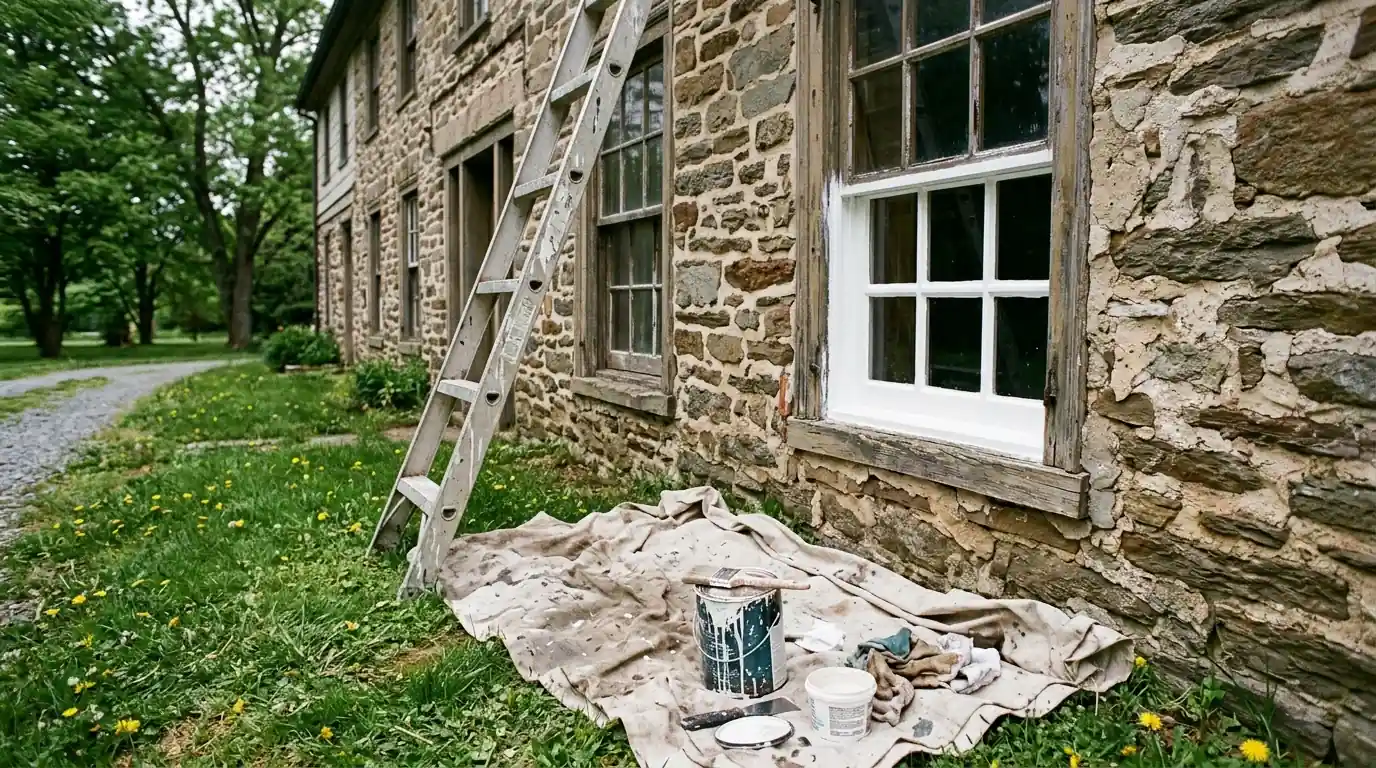
Window painting covers scraping sashes, frames and sills, replacing failed glazing putty, filling soft wood with epoxy, priming bare spots and brushing two finish coats lapped slightly onto the glass. Around Exton and Chester County, a standard double-hung wood window typically costs $285 to $615 for the exterior, with divided-light farmhouse sashes and high gable windows running higher.
Stone farmhouses around Chester County often still have six-over-six or nine-over-six wood sashes, sometimes with wavy old glass, and the Victorian twins and brick rows in West Chester and Phoenixville carry tall two-over-two windows. Many of these sashes have outlived several rounds of replacement windows elsewhere on the block. What wears them down is water: through cracked putty, open joints at the sill, and paint that's been peeling for a few winters too many.
Because these homes are almost always older than 1978, we assume lead in the window paint until a test says otherwise. Windows are the worst spot for it, since opening and closing grinds paint into dust on the stool and sill. That changes how we scrape, what we collect and how we clean up, and lead-safe work practices are built into every price we give for older windows.
Glazing putty is the bead that seals each pane into the sash. Once it cracks and drops out, rain sits in the rabbet and rots the muntins and bottom rail from the inside. We dig out loose putty, prime the bare wood so fresh compound doesn't dry out too fast, and set new glazing points where the old ones rusted away. Most traditional putties need several days to skin before paint, so we sequence windows in batches and keep work moving while each group cures.
Many older farmhouses and homes from the 1950s to 1980s have aluminum triple-track storms over the wood sashes. Storms protect the sash, but they also trap moisture when the weep holes at the bottom get clogged or painted shut. We take storm panels out where possible, paint the wood sash and frame behind them, clear the weeps, and caulk the storm frame only along the top and sides so water can still drain out below.
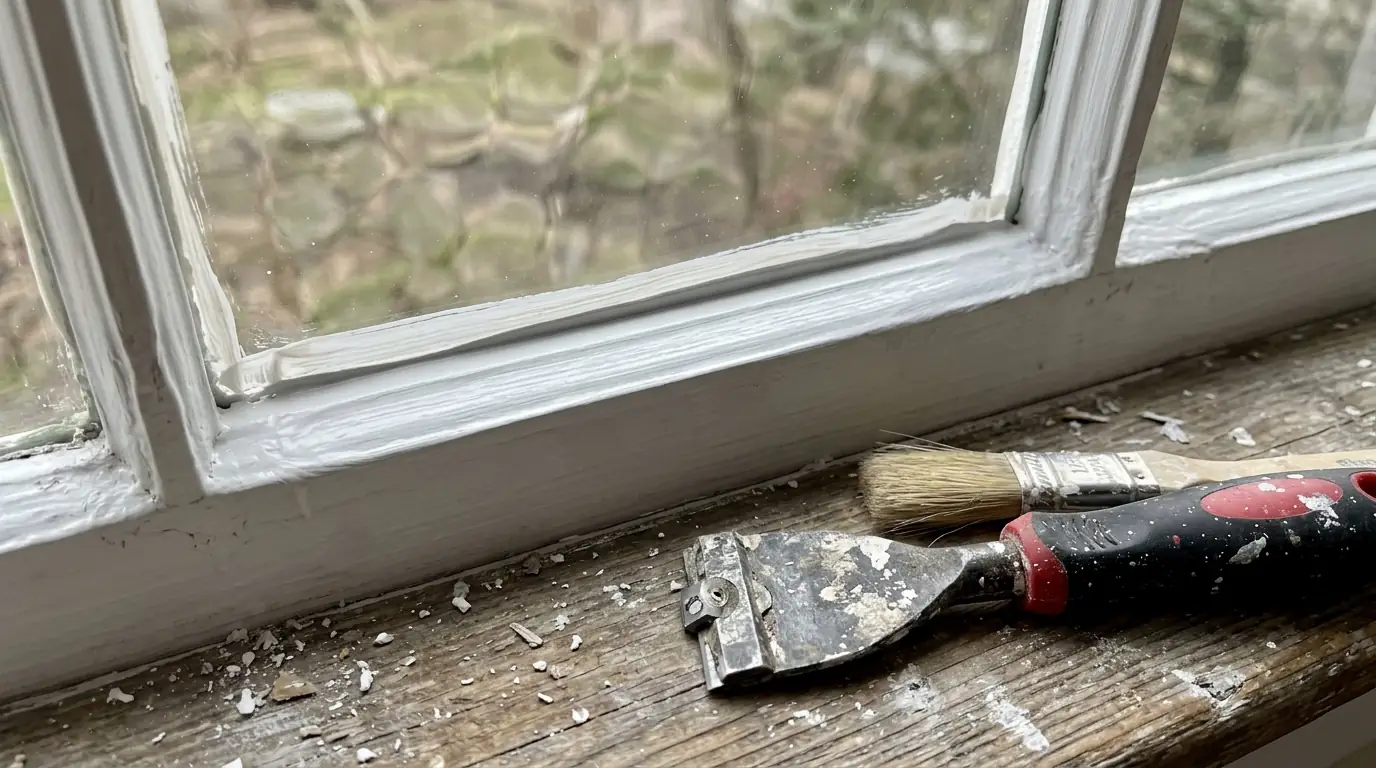
A sash painted closed in the afternoon can be glued shut by morning. We move each upper and lower sash during the day while the paint sets, keep coating off the parting beads and channels, and wax the friction points once everything dries. Windows sealed shut by past painters can usually be freed with a sash saw and patient prying from both sides. Sash cords and pulleys stay unpainted so the counterweights keep doing their job.
On a stone house, the wood frame sits deep in a thick wall, and the sill catches every drip off the window. We probe sills with an awl, dig out punky wood and rebuild it with two-part epoxy, then shape it so water runs off instead of pooling. Where the frame meets stone, stucco or brick, cracked caulk is cut out and replaced. Sills get a harder enamel than the sash, because they take far more abuse.
Gaps along the panes where glazing has fallen out let rain run behind the glass, and the wood starts rotting quickly from inside the sash.
Bare, weathered wood across the top of a sill means paint has been gone for a while. Catching it now avoids an epoxy rebuild later.
Sashes painted shut, or swollen tight in humid summers, need careful freeing, light planing and repainting so they open and close smoothly again.
Flakes or dust on the interior sill of an older home can contain lead. It's worth testing and handling with lead-safe cleanup.
Loose glass and shrunken sashes let in winter air. Fresh glazing and paint tighten things up and quiet the window on windy nights.
Storms that won't slide and water sitting in the track usually mean blocked weep holes and wet wood hiding behind the panels.
We look at every window, note rot, glazing condition and how each sash operates, and test paint for lead on pre-1978 homes before any scraping begins.
Plastic goes down below each window outside and on the floor inside where needed. Surfaces are misted before scraping, and debris is collected daily rather than left to blow around.
Loose paint comes off with carbide scrapers and wet sanding. We avoid open flame and high-heat guns on lead paint, and we feather edges so the new finish lies flat.
Rotted sill and rail sections get two-part epoxy, missing putty is replaced, and glazing points are reset. Each batch of windows cures before we prime it.
Bare wood gets an oil-based or bonding primer, joints are caulked, and two finish coats go on by brush, lapped about a sixteenth of an inch onto the glass.
Sashes are moved and tested, glass is scraped clean of stray paint, storms go back with weeps clear, and inside sills are wiped down.
Window prices depend on the number of panes, how much putty has failed, the condition of the sills and how high each window sits. A two-over-two sash with tight glazing goes fast, while a nine-over-nine farmhouse sash with loose putty can take most of a day. These are typical 2026 ranges for Chester County homes, confirmed after a walkthrough.
| Job | Typical range |
|---|---|
| Double-hung wood window, exterior | $285 to $615 |
| Divided-light farmhouse sash, reglazed | $465 to $940 |
| Gable or third-story window, tall ladder or lift | $385 to $795 |
| Sill epoxy rebuild, per sill | $165 to $415 |
| Remove, clean and reset a storm window | $65 to $135 |
Planning ranges for 2026, not quotes. The written price comes from a walkthrough. See every service side by side on the painting costs page.
We take on window & sash painting in these towns across Chester, Delaware, Montgomery and Bucks counties. ZIP codes shown for each.
If the frames are solid and rot is limited to sills or bottom rails, repairing and painting usually costs less and keeps the original glass and proportions. Old-growth wood in a farmhouse sash is often tougher than anything in a new unit. Replacement makes more sense when most sashes are decayed through. We'll show you which windows are worth keeping during the walkthrough.
Lapping paint about a sixteenth of an inch onto the glass seals the joint between the putty and the pane. Without that small overlap, rain finds the edge of the glazing, works behind it, and starts the rot cycle again. It's a traditional detail, and a clean, straight line on the glass is a sign the window was painted correctly.
It depends on the borough. Places like West Chester and Doylestown have historic districts where some exterior changes go before an architectural board, and the rules can differ for repair, color and replacement. Check with your borough office before work starts. Our post on painting in a historic borough covers the questions worth asking.
Vinyl frames can take paint with a bonding primer and a vinyl-safe acrylic, though dark colors risk distortion in summer sun and painted vinyl needs care at the sash tracks. Many window makers advise against painting their frames, so check your paperwork first. Often the better move is painting the wood trim and casings around them.
Most windows stay closed and secure overnight. We work a few at a time, so a room may have a storm panel out for a day or two while putty cures. In cold or rainy stretches we save window work for drier weeks, and anything unfinished is closed and protected before we leave for the day.
Chester County has an unusual number of old houses: fieldstone farmhouses, bank barns, Federal and Victorian homes along borough streets in West...
If your house was built before 1978, there's a good chance some of its paint contains lead. That covers stone farmhouses, borough twins and many...
Rot on Chester County homes tends to start where water sits: window sills on old farmhouses, porch post bases, the bottoms of door jambs and trim on...
We repaint the outside of homes around Exton, from fieldstone farmhouses with wood trim to 1990s colonials wrapped in cedar, stucco and vinyl. Every...
We repaint baseboards, door and window casings, crown molding and wainscoting in homes around Exton. Every joint is caulked, every nail hole filled...
Call any time. We will ask a few questions and set up a walkthrough at your home.