Ceiling Painting
We repaint ceilings in homes around Exton, from eight-foot bedroom ceilings in split-levels to vaulted family rooms and two-story foyers. Stains are...
A brown ring on the ceiling usually shows up after a roof leak, an ice dam, an overflowing tub upstairs or a dripping air handler in the attic. Painting over it rarely works. We confirm the leak is fixed and the ceiling is dry, repair the damage, block the stain and repaint.
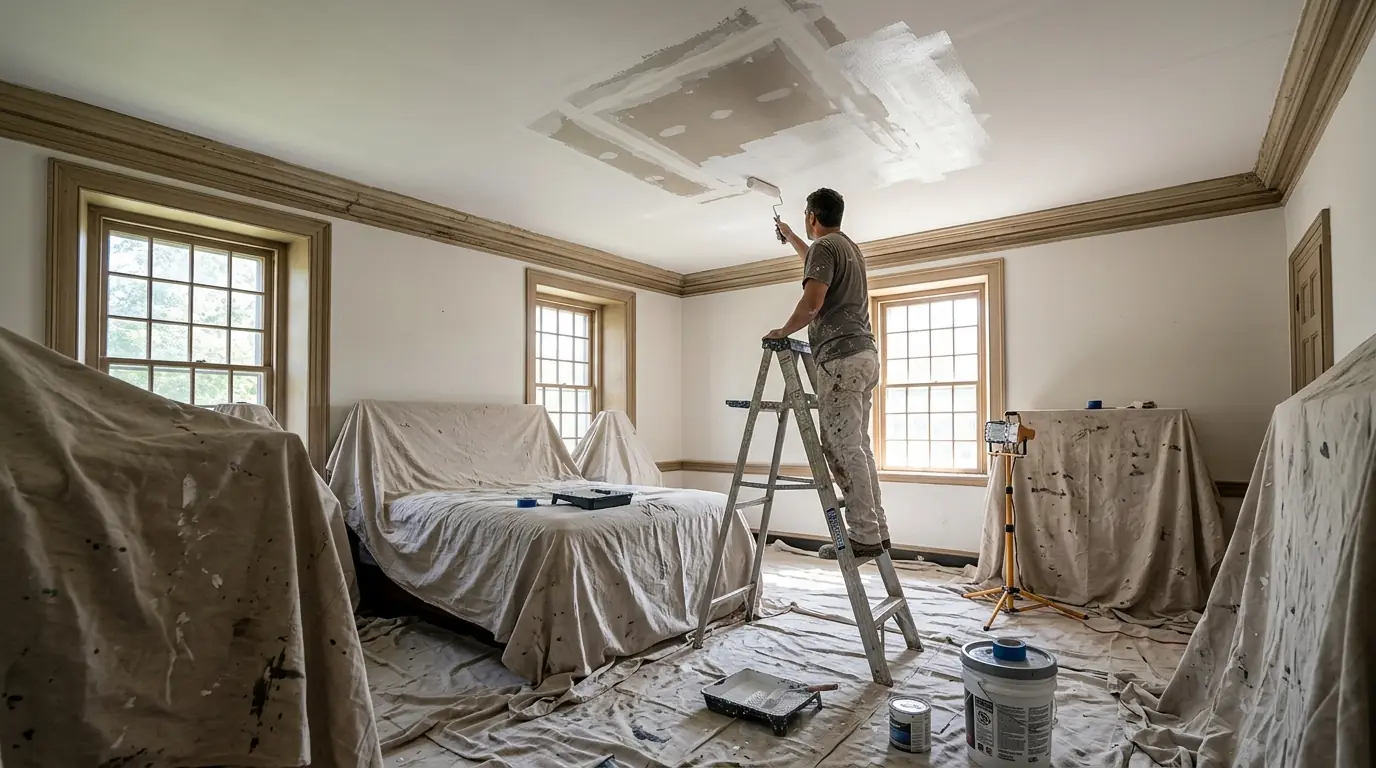
Water-stained ceiling repair means confirming the leak is fixed, checking the ceiling with a moisture meter, cutting out any sagging drywall or plaster, sealing the stain with an oil-based or shellac primer and repainting the entire ceiling so it matches. Around Exton and Chester County, a single stain on a flat ceiling usually runs $265 to $545.
Water stains come from minerals and tannins that travel with the leak and settle in the drywall paper or plaster as it dries. Regular latex paint can't hold them back. Within days, the brown ring bleeds right through a fresh coat. That's why a stain-blocking primer matters, and why the ceiling has to be completely dry before any of it starts.
In homes around Exton, the causes follow the seasons. Ice dams after heavy snow push water under shingles at the eaves. Summer humidity makes air conditioning condensate lines in attics clog and overflow, which is common in 1990s and 2000s homes with attic air handlers. Bathroom leaks from a tub, toilet or shower pan show up on the ceiling below at any time of year.
We won't paint a stain until the source has been repaired, because a new stain will simply appear on top of the old one. Ask whoever fixed it what they found, and if the leak came from a tub or shower, run it for a while and watch the ceiling below. For roof leaks, wait for a good rain after the repair. When we arrive, we check the area with a moisture meter, comparing it with a dry section of the same ceiling.
A stain on a flat, firm ceiling usually just needs priming and paint. Sagging, soft or crumbling material is different. Drywall that has bowed between joists, paper that has bubbled or seams that have opened need to be cut out and replaced with new board, taped and finished. In older farmhouses with horsehair plaster, water can loosen the plaster's grip on the lath, so we press-test the area and reattach or patch it. Our plaster repair work covers that side in more depth.
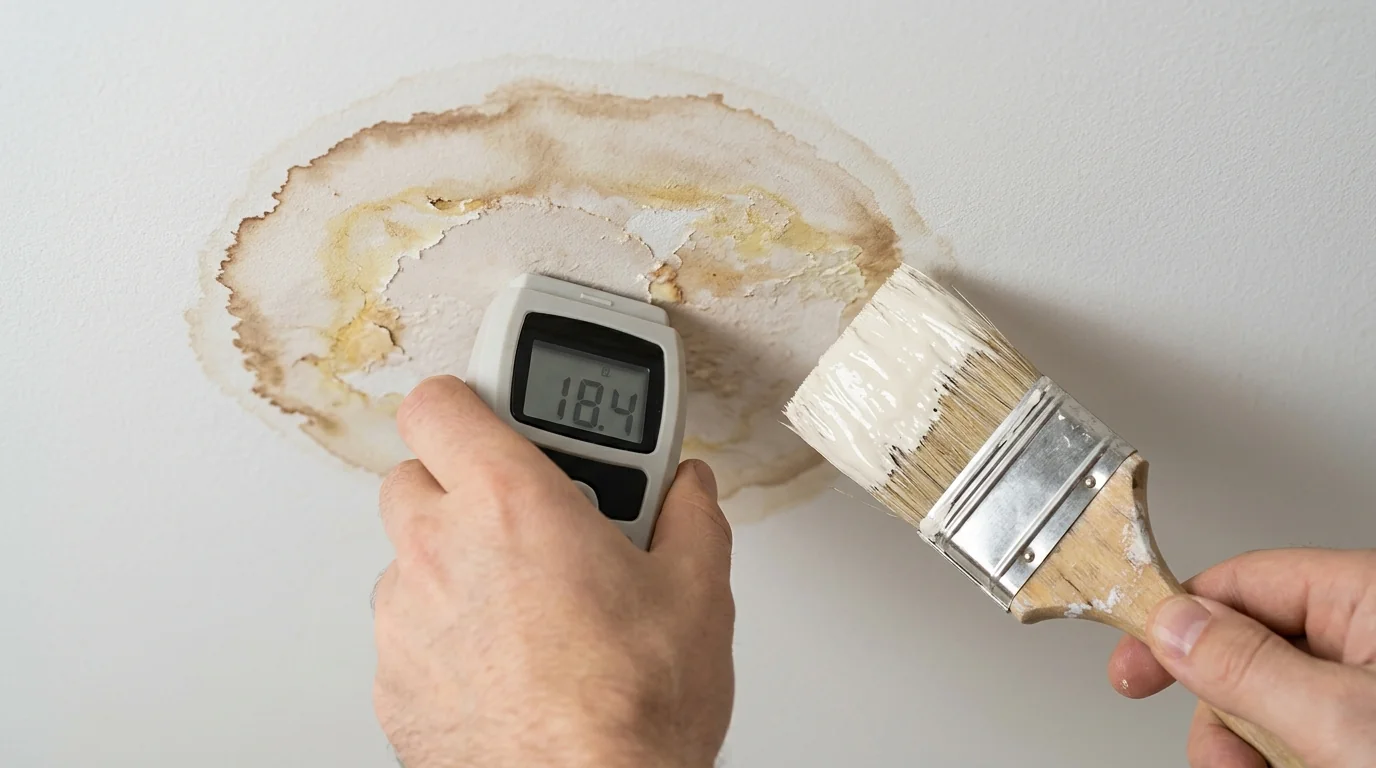
Water-based primers can reactivate the stain and let it migrate into the topcoat. Oil-based and shellac-based stain blockers seal it in instead. We spot-prime the stain first, often with a second coat on dark rings, then prime any patched areas. Shellac dries quickly and blocks heavy staining well, though it needs good ventilation while it cures. Oil primer suits larger areas. Either way, the stain is locked in before the finish paint goes on.
Touching up just the stained spot almost never matches. Ceiling paint ages and yellows slightly, and a fresh patch shows as a brighter square, especially with light raking across it from a window. We repaint the entire ceiling plane, corner to corner, in flat ceiling paint, so the repaired area blends in. If the ceiling has a texture, we match it on the patched section first. Our ceiling painting page explains how we handle tall or vaulted ceilings.
A tan or brown ring, often with a darker edge, is the classic sign of a past leak. It needs a stain blocker, not ordinary paint.
Stains under a tub, toilet or shower usually point to a leaking seal, drain or grout line. Fix the source before the ceiling is repaired.
Stains along the eaves after snow often come from ice dams pushing water under shingles. They tend to appear on top-floor ceilings near outside walls.
A stain under an attic air conditioning unit in summer often means a clogged condensate line or an overflowing drain pan above it.
A section that sags, bulges or feels soft has absorbed water and lost strength. Keep people out from under it and call soon.
If a stain came back after someone painted over it, the wrong primer was used. The fix is a proper oil or shellac stain blocker.
We ask what caused the leak and how it was fixed. If the source is still active, we hold off on the ceiling until it's fully resolved.
We test the stained area with a moisture meter and compare it with a dry part of the same ceiling. Wet material gets more drying time before work.
Sagging drywall is cut back to the nearest joists and replaced. Loose plaster is reattached or patched. Rusted screws and wet insulation are dealt with first.
New board is taped, coated and sanded smooth. If the ceiling has texture, we match it on the patched area so the repair blends in.
We spot-prime the stain and patches with an oil-based or shellac stain blocker, adding a second coat over dark rings so nothing bleeds through.
The entire ceiling plane gets fresh flat paint, wall to wall, so there's no bright patch. We protect floors and furniture and clean up before leaving.
Ceiling stain repair is priced by how much damage there is and how big the ceiling is. A dry stain on a firm ceiling is mostly primer and paint, while a sagging section adds drywall or plaster work and drying time. Tall foyers and vaulted ceilings need more setup. These are typical 2026 ranges for homes around Exton and Chester County.
| Job | Typical range |
|---|---|
| Single stain, flat ceiling, prime and repaint | $265 to $545 |
| Stain under a bathroom, small patch and repaint | $435 to $865 |
| Sagging drywall section, replaced and painted | $615 to $1,235 |
| Horsehair plaster repair and full ceiling repaint | $745 to $1,565 |
| Two-story foyer or vaulted ceiling | $835 to $1,715 |
Planning ranges for 2026, not quotes. The written price comes from a walkthrough. See every service side by side on the painting costs page.
We take on water-stained ceiling repair in these towns across Chester, Delaware, Montgomery and Bucks counties. ZIP codes shown for each.
You can try, but the stain usually bleeds back through within days. Water stains carry minerals and tannins that dissolve into latex paint. A coat of oil-based or shellac stain blocker seals them in first, so the finish coat stays clean.
It depends on how much water came through. A small, quick leak may dry in a few days with good airflow. Larger soaks can take a week or more. We check with a moisture meter instead of guessing, and wait until the wet area matches a dry part of the ceiling.
Not always, but a ceiling that stayed wet for a long time can grow mold on the back of the drywall or in the insulation above. If we see fuzzy growth, smell mustiness or find wet insulation, we'll point it out before any painting goes ahead.
Ceiling paint dulls and yellows slowly, so a fresh patch looks brighter than the rest, especially in daylight from a window. Painting from wall to wall makes the repair invisible. It's usually only a little more work than a careful touch-up.
Usually ice dams. Snow melts on the warm part of the roof, refreezes at the cold eaves, and the trapped water backs up under the shingles. The stain often shows along an outside wall on the top floor. Better attic insulation and ventilation help prevent repeats.
Usually not. Condensate leaks tend to be slow and clean, leaving a stain more than structural damage. Once the drain line or pan is cleared and the ceiling dries, most of these ceilings need only a stain blocker and fresh paint. Soft or sagging areas get replaced.
We repaint ceilings in homes around Exton, from eight-foot bedroom ceilings in split-levels to vaulted family rooms and two-story foyers. Stains are...
Homes built around Exton and West Chester from the 1970s through the 2000s are almost all drywall, and they share the same problems: nail pops,...
Stone farmhouses outside Exton and Victorian twins in West Chester and Phoenixville still have their original plaster, often horsehair plaster on...
Sprayed acoustic ceilings were standard in many split-levels, ranches and colonials built around Exton and Downingtown through the 1980s. We test the...
We repaint the inside of homes around Exton room by room, fixing nail pops, cracked plaster and scuffed builder paint before any color goes on. You...
Call any time. We will ask a few questions and set up a walkthrough at your home.