Lead-Safe Painting
If your house was built before 1978, there's a good chance some of its paint contains lead. That covers stone farmhouses, borough twins and many...
Stone farmhouses outside Exton and Victorian twins in West Chester and Phoenixville still have their original plaster, often horsehair plaster on wood lath. We stabilize loose sections, fill cracks the way plaster needs, and prime with the right sealer so your finish coat lies flat instead of showing every repair.
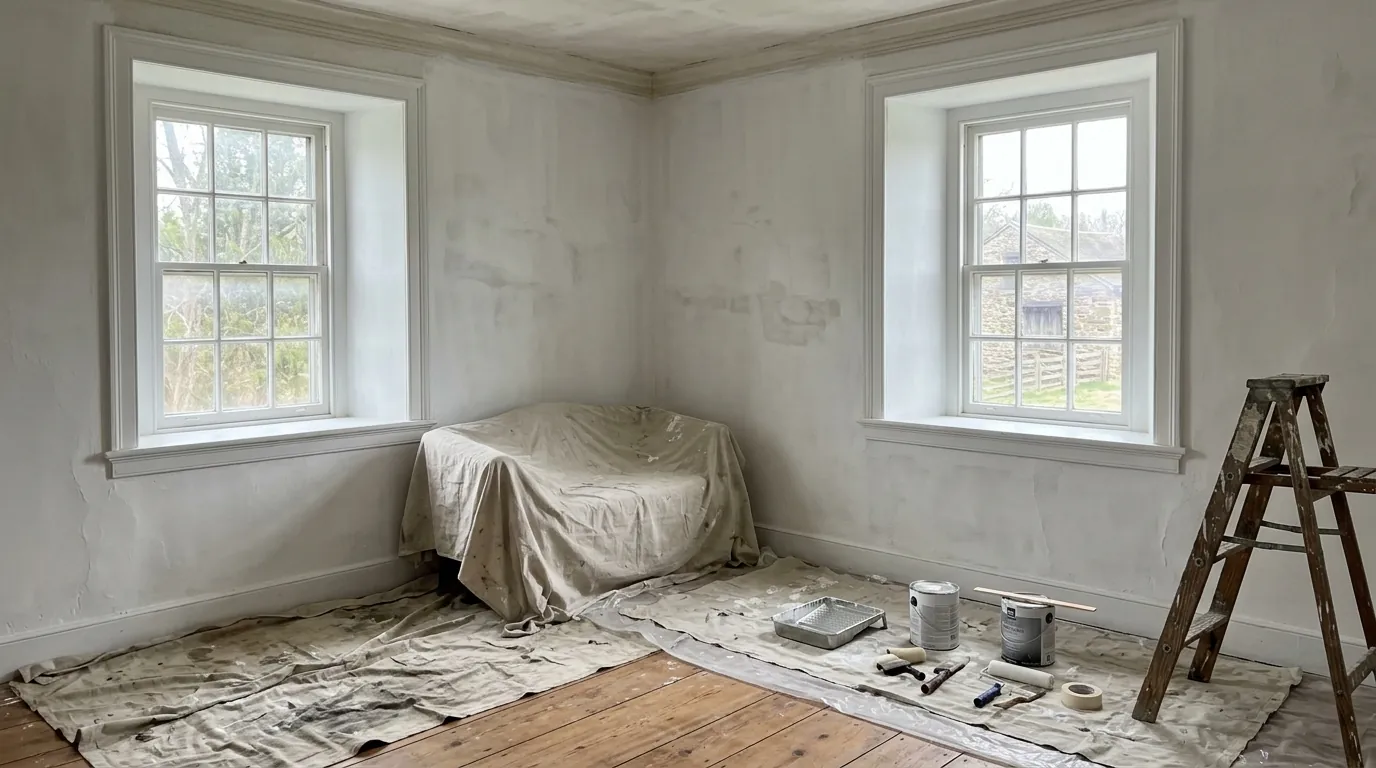
Plaster repair means reattaching loose plaster to the lath with plaster washers or adhesive, cutting out failed patches, filling with setting-type compound, skim coating rough areas, and priming before two finish coats. Around Exton and Chester County, repairing and painting a room of cracked plaster typically costs $585 to $1,265, more for sagging ceilings or heavy damage.
Many Chester County homes built before the 1940s were plastered by hand, usually in three coats over wood lath, with horse or cattle hair mixed into the base coat for strength. You'll find it in old stone farmhouses around Exton and Malvern, along Downingtown's borough streets, and in the brick rows of Phoenixville and Pottstown. Well-kept plaster is dense, quiet and solid, and it's worth saving rather than tearing out.
Trouble starts when the keys, the bits of plaster that squeezed between the lath strips, snap off. Then sections sag away from the wall, cracks open over doorways, and ceilings develop soft spots you can feel when you press. Humid summers and dry heated winters move the house every year. Painting over that without fixing it buys a season, maybe two, before the cracks reappear through the new color.
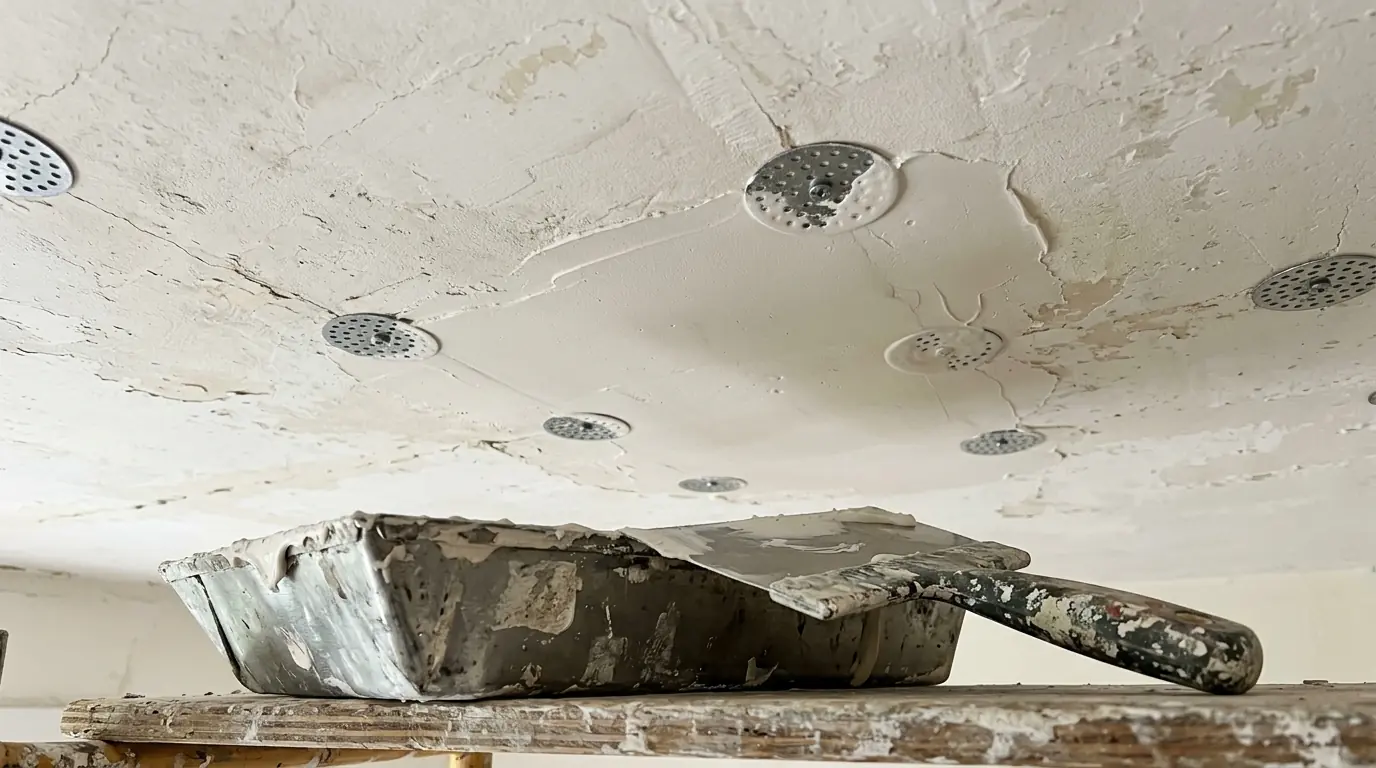
Usually it can. If the plaster is still mostly attached and the lath behind it is sound, we reattach loose areas with plaster washers, small perforated discs screwed through the plaster into the lath, or with an adhesive injected behind it. That pulls the surface back tight without the dust and cost of gutting the room. Replacement makes sense only where plaster has already fallen, the lath is broken, or water has turned it soft and crumbly.
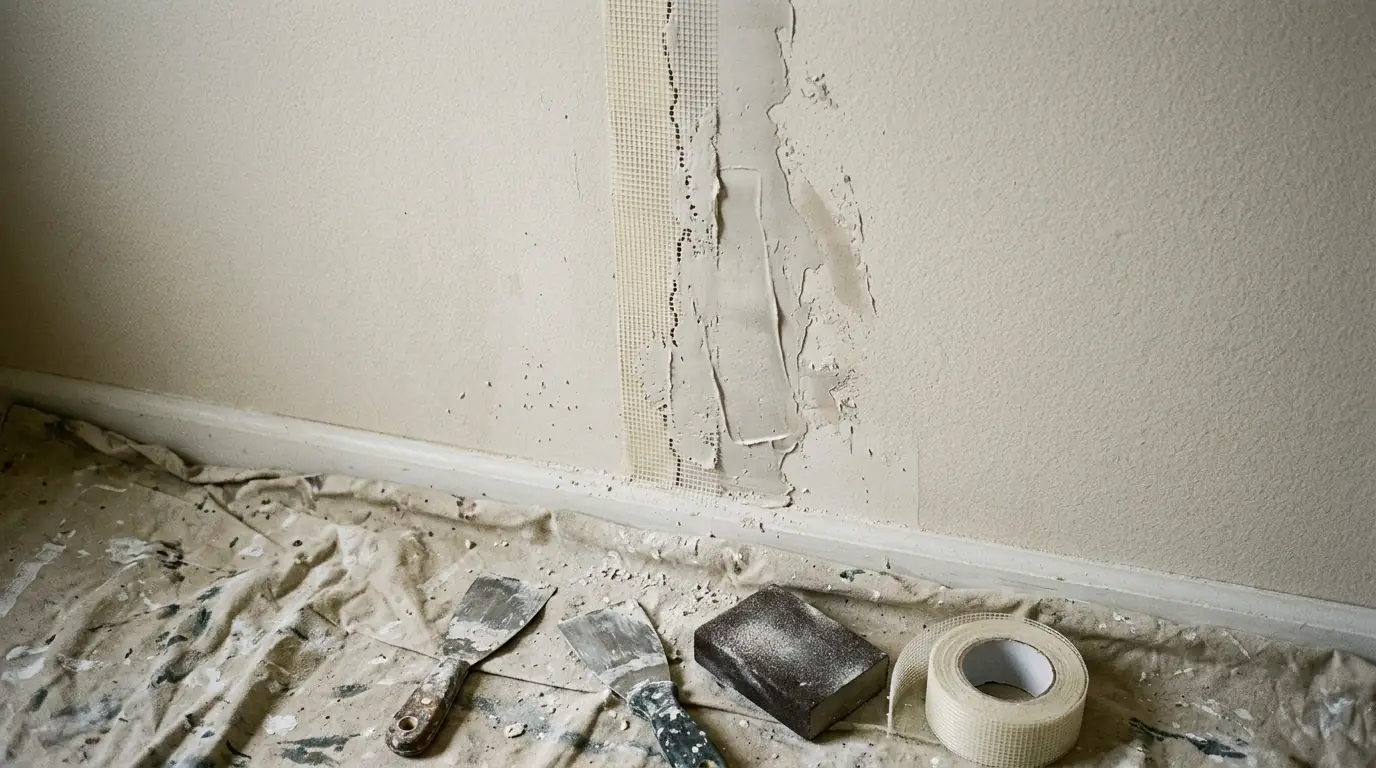
Lightweight spackle and premixed joint compound shrink, stay soft, and don't bond well to old lime plaster. On cracks and holes we use a setting-type compound that hardens chemically, and for deeper losses we build up with a base coat plaster. Cracks get opened slightly and taped with fiberglass mesh so they don't simply reopen. Where the old surface is a patchwork of earlier repairs, a thin skim coat across the whole wall evens it out before primer.
Plaster walls almost always mean a house built well before 1978, so the paint layers on them may contain lead. We test first, and if lead is present we follow lead-safe work practices: plastic containment, misting instead of dry sanding, HEPA vacuums and careful cleanup. The details are on our lead-safe painting page. It adds some time to the job, but it keeps dust out of the rest of the house, which matters a great deal with children at home.
Fresh patches absorb paint differently from the old surface around them, which leaves dull spots called flashing. A sealing primer over the whole wall evens that out, and walls with old water stains or oil-based layers get a stain-blocking primer instead. For the finish, a matte or eggshell acrylic hides the gentle waves that hand-troweled plaster naturally has. A higher sheen shows every ripple, so we steer most farmhouse rooms toward flatter finishes, as our farmhouse plaster guide explains.
A crack that returns after every patch, especially above doors and windows, usually means the plaster has lost its grip on the lath and needs reattaching first.
Press gently on a wall or ceiling. If it flexes, sounds hollow, or bulges outward, the keys have broken and the section is pulling away from the lath.
Ceilings fail first because gravity works against them. Long cracks with a slight sag in an old farmhouse bedroom should be stabilized before a section comes down.
Plaster near past roof or plumbing leaks can turn chalky and soft. Once the leak is fixed, that area gets cut out and rebuilt rather than painted over.
Old calcimine or distemper coatings hidden under modern paint cause peeling in sheets. They have to be washed off or sealed before new paint will hold.
Decades of quick fixes leave walls uneven under side light. A skim coat over the whole surface gives you one consistent face to paint.
During the walkthrough we press, tap and light each wall and ceiling to find loose areas, check for past leaks, and decide which rooms need lead testing before prep begins.
Floors, furniture and doorways get covered and sealed with plastic. Where testing finds lead, we set up containment and switch to wet methods and HEPA vacuums for all prep.
Sagging sections are drawn back to the lath with plaster washers or adhesive injected behind the surface. The washers stay in place and get buried under the patch.
Cracks are opened, taped with mesh and filled with setting compound. Holes are built up in layers, then everything is feathered wide so the repair blends into the original wall.
A sealing primer goes over the entire wall, not just the patches, so the finish coat absorbs evenly. Stained areas get a stain-blocking primer before that.
Two coats of interior acrylic go on in the sheen you chose. We check every wall with a work light held at a low angle and touch up anything that catches it.
Plaster work is priced by how much of the surface is loose, how many cracks there are, and whether lead-safe practices are needed. A bedroom with a few hairline cracks is a short job, while a farmhouse parlor with a sagging ceiling and a dozen old patches can take several days. These are typical 2026 ranges around Exton and Chester County, set in person after we inspect the walls.
| Job | Typical range |
|---|---|
| Hairline crack repair and repaint, one room | $585 to $1,265 |
| Ceiling reattachment with washers, one room | $465 to $985 |
| Skim coat and paint, one wall | $385 to $745 |
| Rebuild a hole or water-damaged section | $235 to $615 |
| Lead-safe setup, added per room | $185 to $415 |
Planning ranges for 2026, not quotes. The written price comes from a walkthrough. See every service side by side on the painting costs page.
We take on plaster repair & painting in these towns across Chester, Delaware, Montgomery and Bucks counties. ZIP codes shown for each.
Hairline cracks from seasonal movement can reappear in a very old house, especially near doors and windows. Reattaching loose sections and taping cracks with mesh before filling makes that far less likely than a surface patch. At the walkthrough we point out which areas tend to move the most.
Rarely. Tearing out plaster creates heavy, dusty debris, may disturb lead paint, and costs more than repair in most rooms. Plaster also deadens sound and stands up to knocks better than half-inch drywall. Replacement makes sense where plaster has fallen or the lath behind it has failed.
They're thin perforated metal discs, about an inch across, screwed through the plaster into the wood lath to pull a loose area tight. After they're installed, we cover them with compound and feather the edges. Once primed and painted, they don't show.
Yes, once the source is fixed and the plaster is dry and solid. Brown water rings bleed through latex paint, so they get a stain-blocking primer before the finish coats. If the stain is overhead, our water-stained ceiling work covers the extra steps.
We do, in West Chester, Phoenixville, Downingtown and Doylestown among other covered towns. Interior plaster work doesn't usually involve the borough, but original cornices, ceiling medallions and curved walls deserve careful hand work. We repair rather than remove original details wherever the plaster allows.
If your house was built before 1978, there's a good chance some of its paint contains lead. That covers stone farmhouses, borough twins and many...
Chester County has an unusual number of old houses: fieldstone farmhouses, bank barns, Federal and Victorian homes along borough streets in West...
We repaint the inside of homes around Exton room by room, fixing nail pops, cracked plaster and scuffed builder paint before any color goes on. You...
A brown ring on the ceiling usually shows up after a roof leak, an ice dam, an overflowing tub upstairs or a dripping air handler in the attic....
We repaint ceilings in homes around Exton, from eight-foot bedroom ceilings in split-levels to vaulted family rooms and two-story foyers. Stains are...
Call any time. We will ask a few questions and set up a walkthrough at your home.