Commercial Painting
Few businesses around Exton can shut down for a week while the walls get painted. We schedule commercial work in evening, overnight and weekend...
A shop front gets judged in the two seconds it takes someone to walk past. We repaint storefronts on borough main streets in West Chester, Phoenixville and Doylestown, plus shopping centers around Exton, working early mornings and Sundays so your door stays open and your sidewalk stays clear.
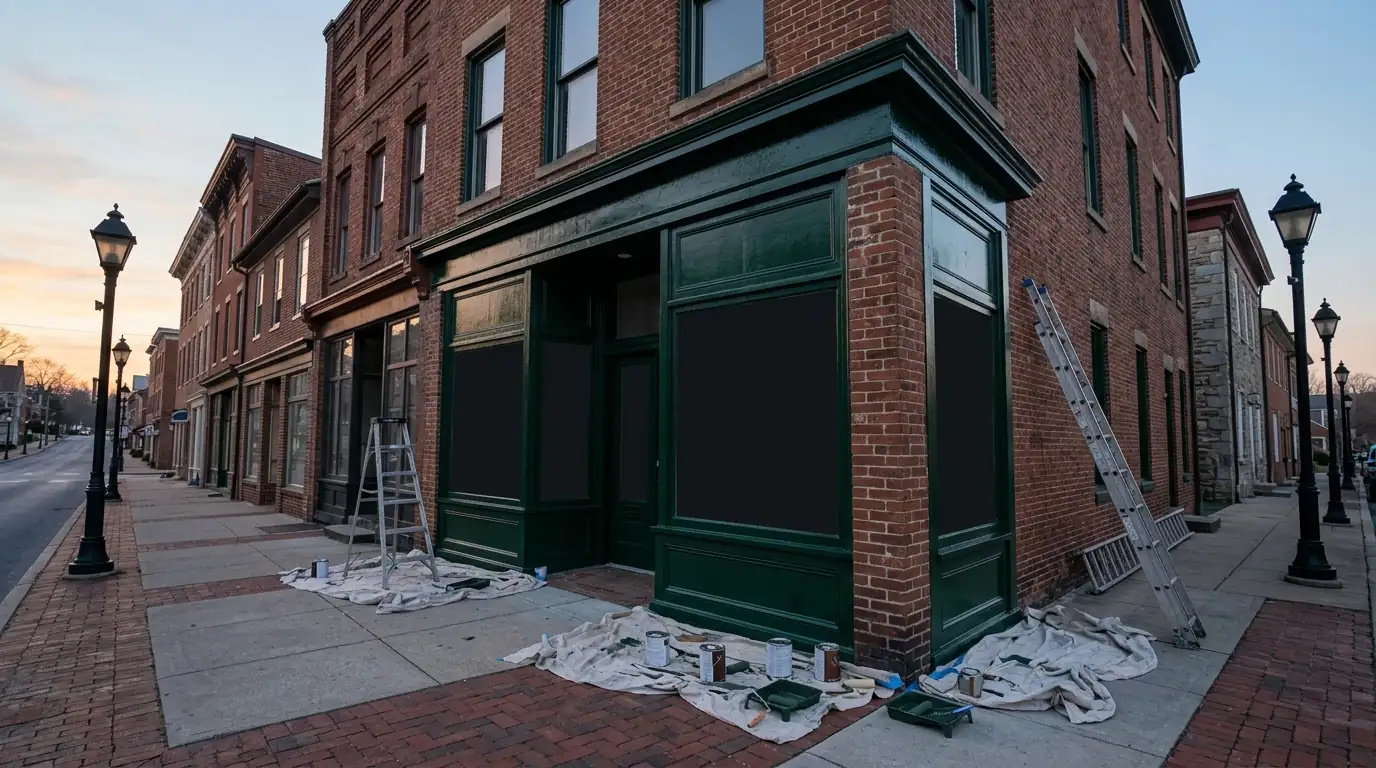
Storefront painting covers wood bulkheads, door and window frames, pilasters, cornices, sign boards and metal trim on a retail or restaurant facade. Most single-bay fronts take one to three early-morning visits. Around Exton and Chester County in 2026, a single-bay borough storefront typically costs $1,465 to $3,280, and a two-bay front with pilasters usually runs $2,635 to $4,940, depending on the job.
Main street storefronts in our area tend to be older than they look. Many shop fronts on Gay Street in West Chester, Bridge Street in Phoenixville and Main Street in Doylestown sit in 19th century brick buildings, with wood bulkheads, paneled doors and cornices layered under decades of paint. Under a fresh-looking coat we often find soft wood at the sill, failing glazing, and old oil paint that's shedding the newer latex on top. Those layers need sorting out before any color goes on.
Strip centers along Route 100 and the Route 30 bypass are simpler: aluminum frames, stucco or EIFS fascia, and steel doors at the back. The work there is mostly cleaning, a bonding primer on the metal, and enamel that resists fading in afternoon sun. In both settings we plan around your hours, keep the sidewalk passable, and never block your entrance while you're trading. Bigger interior jobs behind the glass fall under commercial painting and can be scheduled for the same week.
Most storefronts carry a sign board, gold-leaf or vinyl lettering on the glass, and sometimes a fabric awning. We don't paint lettering, but we work tight around it. Window graphics get masked with low-tack film, and sign boards are cut in by hand with a sash brush rather than taped, since tape can lift old paint. If you're replacing a sign, ask the sign maker to hang it after our last coat so the bolt holes land in finished, sealed wood.
Parts of West Chester, Phoenixville and Doylestown sit inside historic districts, where exterior changes on commercial buildings may go through a design review before work starts. The rules differ from one borough to the next, and a repaint in the existing color is often handled differently from a color change. We tell every shop owner the same thing: call the borough office first and ask what applies to your address. Your lease may also set approved colors, so check that with the landlord too.
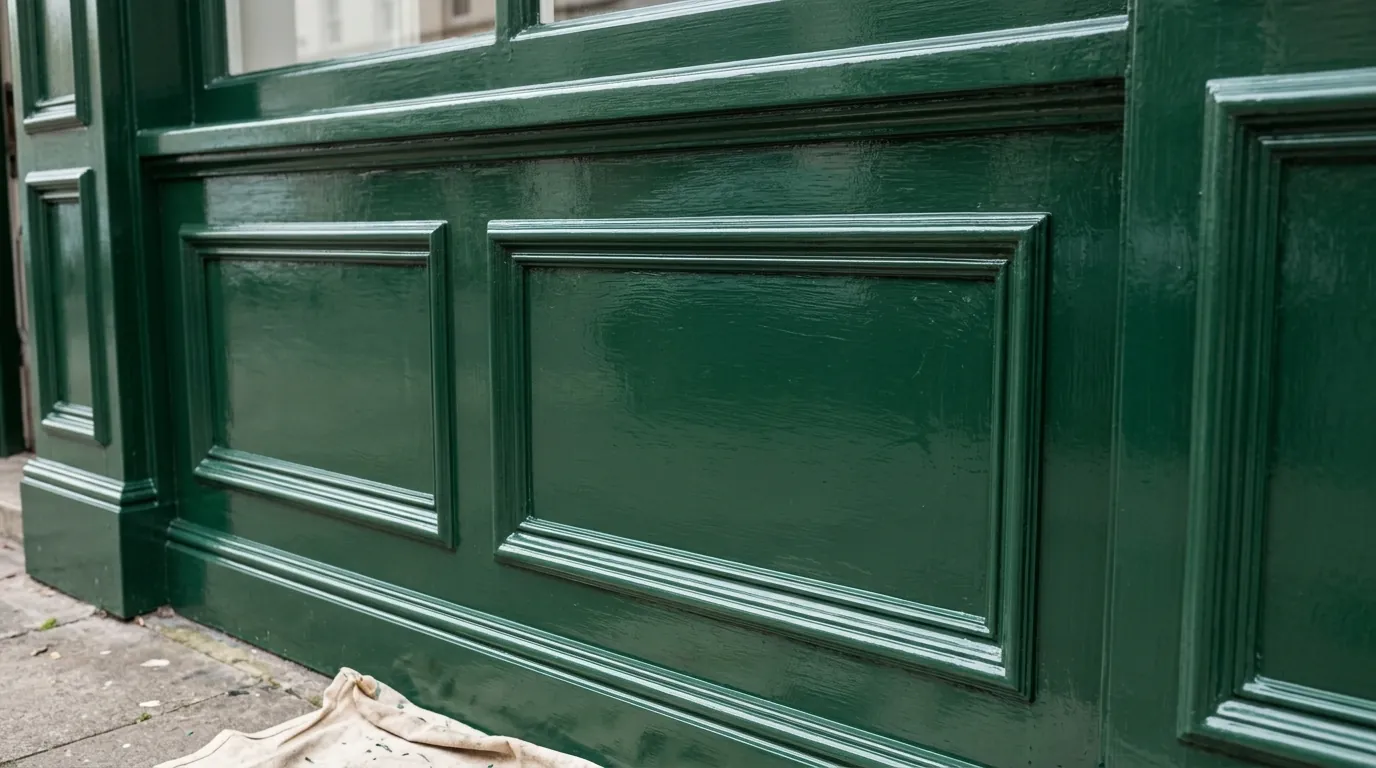
A single borough storefront might combine painted brick piers, a wood bulkhead, a cast iron column, an aluminum transom frame and a steel security door. Each needs different prep. Brick gets washed and checked for loose mortar. Wood gets scraped, sanded and spot primed, cast iron gets wire-brushed and coated with a rust-inhibiting primer, and aluminum needs a scuff and a bonding primer. Skipping any one of those steps is why some storefronts peel within a single freeze-thaw winter.
Most of our storefront visits start around 6 a.m. and wrap up before a coffee shop's first customers arrive or a boutique opens its door. On a two-bay front we might prep on day one, prime on day two and finish on days three and four, leaving the door usable every day with a wet-paint sign beside it. Sundays suit shops that close or open late. Summer evenings work too, as long as the paint gets a few hours of warm air before the dew settles.
Paint lifting off the low wood panels under display windows lets water into the wood, and passersby notice it right at the doorstep.
A red or navy door that's turned chalky, pink or pale after a few summers of afternoon sun makes the whole shop look closed.
Orange streaks running down from cast iron columns, railings or steel doors mean the coating has failed and corrosion is spreading under the paint.
A new tenant in an old storefront usually wants the facade in its brand colors before the grand opening and before the new sign goes up.
If a screwdriver sinks into a sill or the bottom of a door frame, rot has started, and it should be repaired before any new paint goes over it.
We visit during business hours, test old paint adhesion with tape, probe sills for rot, and note which surfaces are wood, masonry, iron or aluminum.
We pick early mornings, Sundays or summer evenings that fit your business, and we tell you which days the door will have wet paint on it.
Window graphics get masked, signs get covered, and the sidewalk gets drop cloths and cones so customers can walk past and in without stepping on anything.
We wash, scrape, sand and spot prime wood, wire-brush and prime iron, scuff and prime aluminum, and replace failed caulk.
Finish coats go on by brush and small roller, with lines cut freehand along glass and sign boards so nothing lifts when tape comes up.
Every visit ends with the sidewalk swept, drop cloths lifted and the entrance clear, so the first customer of the day never walks through a work zone.
Storefront prices turn on the number of bays, how much wood needs repair, and how many materials the facade mixes. Early-morning and Sunday visits add a little labor time, and second-story cornices often need a lift or tall ladders with sidewalk protection. These 2026 ranges are typical for borough main streets and strip centers around Exton and Chester County, and they're firmed up after we see the facade.
| Job | Typical range |
|---|---|
| Single-bay storefront, frames, door and bulkhead | $1,465 to $3,280 |
| Two-bay storefront with pilasters | $2,635 to $4,940 |
| Two-story corner facade with cornice | $4,370 to $8,815 |
| Strip center unit, aluminum frame and rear steel door | $945 to $2,180 |
| Cast iron column or gate, rust treatment and enamel, each | $285 to $640 |
Planning ranges for 2026, not quotes. The written price comes from a walkthrough. See every service side by side on the painting costs page.
We take on storefront painting in these towns across Chester, Delaware, Montgomery and Bucks counties. ZIP codes shown for each.
No. We paint around signs and glass lettering, masking and cutting in carefully, but sign work belongs to a sign maker. If you're getting a new sign, plan for it to be hung after our final coat so the mounting holes go through finished, sealed wood.
Yes. We schedule early mornings or Sundays, keep the door usable with a wet-paint sign beside it, and leave the sidewalk clear every day. Most single-bay fronts are done in two or three short visits that end before you'd normally open.
Deep reds, bright blues and many yellows fade fastest in strong afternoon sun. Darker greens, charcoals, deep browns and black usually hold color longer. On a south- or west-facing facade we steer owners toward premium exterior enamels with stronger pigments, and we expect any bright accent to need a refresh sooner.
Call the borough office before choosing a new color and ask what applies to your building. Some changes may go through design review, while a repaint in the existing color may be handled more simply. We'll work from whatever the borough tells you and won't start until you're cleared.
Yes. We clean or spot-seal the tags first so they don't bleed through, then repaint the full wall section rather than a patch, which tends to show. On walls that get tagged often, we can add a clear anti-graffiti coating that lets future tags wash off.
Few businesses around Exton can shut down for a week while the walls get painted. We schedule commercial work in evening, overnight and weekend...
Rot on Chester County homes tends to start where water sits: window sills on old farmhouses, porch post bases, the bottoms of door jambs and trim on...
Chester County has an unusual number of old houses: fieldstone farmhouses, bank barns, Federal and Victorian homes along borough streets in West...
Iron railings on borough stoops, Victorian porches and 1960s ranch entries all fail the same way: rust starts at a chip, creeps under the paint and...
Brick around Chester County ranges from soft 19th century brick in the borough rows of West Chester and Phoenixville to the veneer fronts on 1990s...
Call any time. We will ask a few questions and set up a walkthrough at your home.