Brick Paint Removal
A lot of brick around Chester County went under paint decades ago, from borough twins in West Chester to 1960s ranch homes outside Exton. Getting it...
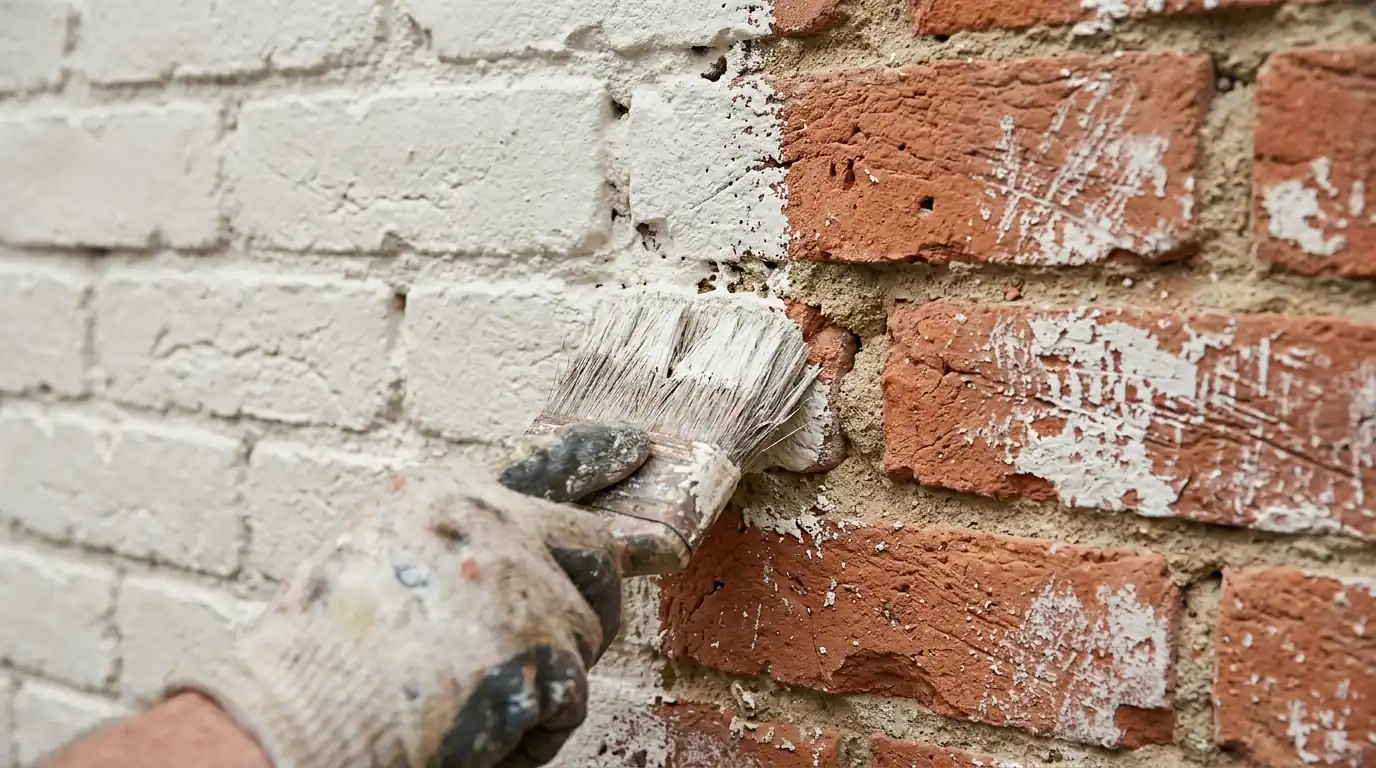
Brick around Chester County ranges from soft 19th century brick in the borough rows of West Chester and Phoenixville to the veneer fronts on 1990s colonials. We repaint already-painted brick and paint sound brick when it makes sense, always with coatings that let the wall dry and after fixing the mortar first.
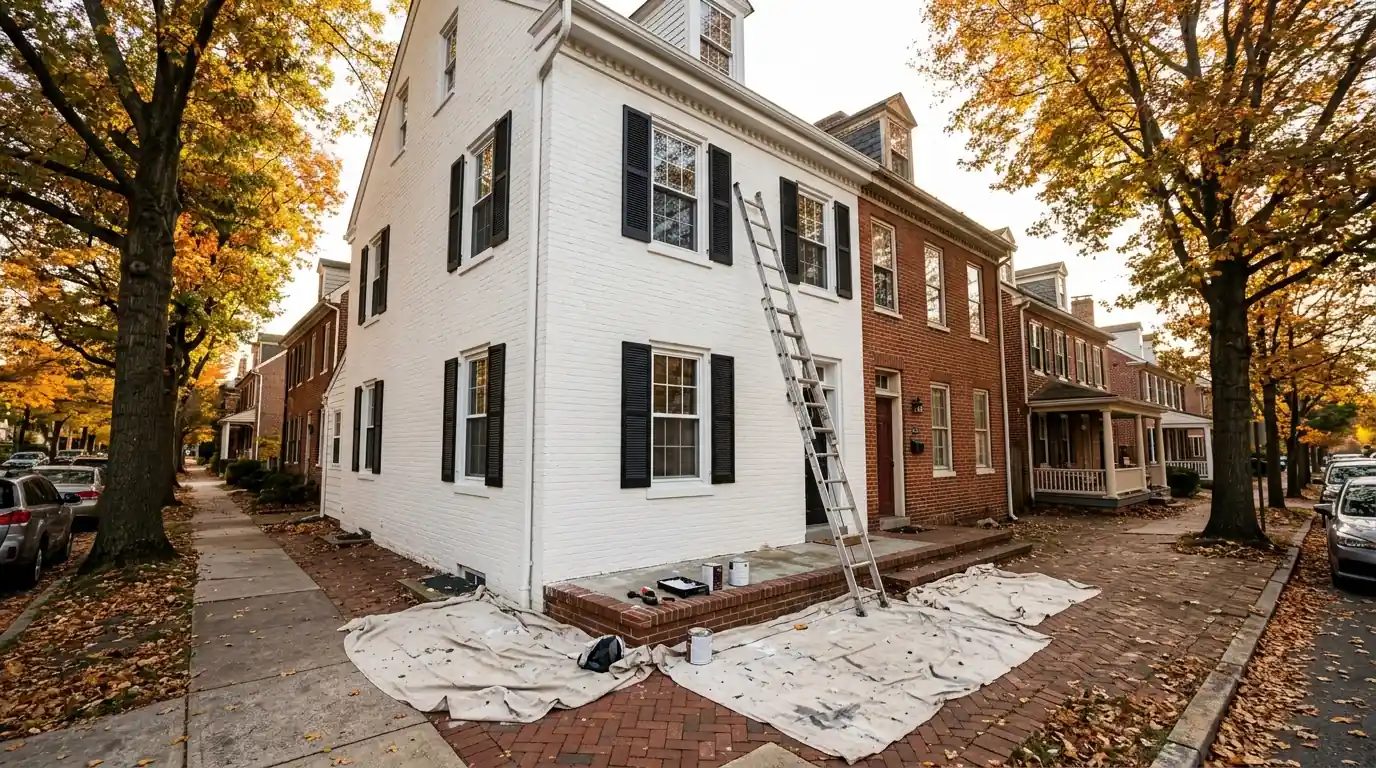
Brick painting means a gentle wash, scraping loose paint, repointing open joints, then a breathable masonry primer and two finish coats, or a mineral silicate paint. Around Exton and Chester County, repainting a borough twin's brick front usually runs $2,840 to $5,470. Painting the brick veneer front of a suburban colonial for the first time runs about $2,360 to $4,980.
The oldest brick here was fired softer and laid in lime mortar, so it soaks up rain and gives it back slowly. Many of those walls in Phoenixville, Pottstown and Coatesville were painted generations ago and now carry layers of latex over oil. Once brick has been painted, it needs to stay painted or be stripped. This page covers both repainting those walls and painting newer brick for the first time.
Newer brick is a different case. The brick fronts on split-levels from the 1960s and colonials from the 1990s were fired harder and laid in cement mortar, often with an air gap behind the veneer. Painting them is common when owners want to update an orange or pinkish brick. It works well with the right coating, but it's a long-term commitment, so we talk it through before anyone opens a can.
Water reaches old brick from rain, from the ground and from inside the house. A heavy elastomeric film seals the face, so that moisture stays trapped just behind the paint. When it freezes on a January night, thin shells of brick pop off along with the coating. You see it first near the sidewalk, under window sills and beside downspouts. We use masonry acrylics with high vapor permeability or potassium silicate paints that bond into the brick itself. Both wear by slowly chalking instead of peeling, which keeps the next repaint simple.
Open joints let water straight into the wall, and no coating can fix that. On older borough brick we rake out crumbling mortar by hand and repoint with a lime-rich mix that's softer than the brick. Hard cement patches from past repairs force movement into the brick faces and crack them, so we replace the worst of those. Newer veneer gets a mortar matched to its original joints. Fresh mortar cures for several days before any primer touches it.
Many colonials around Exton, Malvern and Downingtown have brick on the front only, with siding on the other three sides. Painting that brick in a soft white, warm gray or deep charcoal can tie the front to the siding and trim. We wash the brick, let it dry fully, prime with a masonry primer that stays vapor-open and finish with a breathable masonry paint. If you want the brick texture to show through, a limewash finish is a softer option.
Color looks different on rough brick than on a small paint chip. We brush large samples onto a section near the front door so you can see each one in morning and late-day light before deciding. Very dark colors absorb heat on south-facing walls and may chalk sooner, which is worth weighing if you're drawn to a near-black front.
West Chester, Phoenixville and Doylestown each have historic areas where exterior changes on older buildings may need approval before work starts. Painting brick that has never been painted is the kind of change that tends to draw attention, while repainting already-painted brick in a similar color usually draws less. Rules vary, so check with your borough before deciding. Our post on working in a historic borough lists questions worth asking.
Paint flaking within a few feet of the ground usually means moisture wicking up from the soil is pushing through a coating that can't breathe.
Thin chips of brick coming away with the paint are spalling, a freeze-thaw failure that worsens every winter until the moisture problem is solved.
Efflorescence is mineral salt carried out by water. It pushes paint off from behind and tells us the water source has to be fixed first.
If a key scrapes mortar out of the joints easily, water is entering the wall there, and new paint around those joints will fail quickly.
Dated brick color on an otherwise updated colonial is one of the most common reasons people call us about painting brick for the first time.
We check gutters, downspouts, grading, sills and mortar, and note where water enters the wall. Those problems get fixed or flagged before we discuss coatings.
A masonry cleaner and gentle rinse remove dirt, mildew and chalk. High pressure would drive water deep into soft brick and erode old lime joints.
Failing paint comes off by scraper and wire brush, with lead-safe sheeting and HEPA vacuums on older homes so chips stay out of beds and lawns.
Open joints get matched mortar, and spalled brick faces get a breathable patch. Repairs cure for several days before any coating touches them.
Bare brick and repaired areas get a vapor-open masonry primer or silicate base so the finish bonds evenly across old paint and new work.
We roll and back-brush each coat into the mortar joints and rough brick faces so there are no pinholes left for rain to find.
Brick prices follow prep more than square footage. A sound painted wall with tight joints is a light job. A borough front with years of peeling, spalled faces and sandy mortar can double the labor before the finish coats go on. These 2026 ranges reflect homes around Exton and across Chester County, and we confirm them once we've seen your wall in person.
| Job | Typical range |
|---|---|
| Borough twin brick front, repaint | $2,840 to $5,470 |
| Brick veneer front of a colonial, first paint | $2,360 to $4,980 |
| Brick ranch or split-level, full exterior | $5,890 to $10,740 |
| Repointing before paint, per wall section | $685 to $1,940 |
| Brick chimney exterior, prep and two coats | $745 to $1,630 |
Planning ranges for 2026, not quotes. The written price comes from a walkthrough. See every service side by side on the painting costs page.
We take on brick painting in these towns across Chester, Delaware, Montgomery and Bucks counties. ZIP codes shown for each.
On newer veneer in good shape, painting is a reasonable way to change the look, as long as you accept repainting about every ten years. On soft 19th century brick that's sound, we usually advise leaving it bare or choosing a mineral paint or limewash that stays vapor-open.
Silicate paint soaks in and bonds chemically with the brick, staying very vapor-open and wearing slowly, but it needs bare or mineral surfaces. Masonry acrylic leaves a thin breathable film and can go over sound older latex. What's already on your wall usually decides which one we use.
With working gutters and sound mortar, a breathable coating on brick usually holds eight to twelve years here. Fronts facing south or catching runoff from a bad downspout wear sooner. Sheltered rear walls often go longer between coats.
Yes, though stripping costs more and sometimes reveals damaged or mismatched brick underneath. It suits walls that were in good shape when they were painted. Our page on removing paint from brick explains the process, and we'll price both options at the walkthrough.
Rarely on older solid brick walls. Elastomeric products are thick and stretchy, which helps on cracked stucco over block, but they block too much vapor for soft brick. On borough rows that often leads to blistering and spalling within a few winters.
A lot of brick around Chester County went under paint decades ago, from borough twins in West Chester to 1960s ranch homes outside Exton. Getting it...
Red brick ranches, 1990s colonials with brick fronts and old fieldstone walls across Chester County can all take on a softer, older look without...
Brick chimneys, fieldstone foundations and older masonry walls around Exton take a beating from wind-driven rain and freeze-thaw winters. We fix the...
We repaint the outside of homes around Exton, from fieldstone farmhouses with wood trim to 1990s colonials wrapped in cedar, stucco and vinyl. Every...
Chester County has an unusual number of old houses: fieldstone farmhouses, bank barns, Federal and Victorian homes along borough streets in West...
Call any time. We will ask a few questions and set up a walkthrough at your home.