Exterior House Painting
We repaint the outside of homes around Exton, from fieldstone farmhouses with wood trim to 1990s colonials wrapped in cedar, stucco and vinyl. Every...
Green streaks on the north side of a vinyl-sided house, black mildew on a cedar deck, a gray film on fieldstone: Chester County's humid summers grow all of it. We clean each surface with the pressure and cleaner it can handle, from a gentle soft wash on stucco to a surface cleaner on concrete.
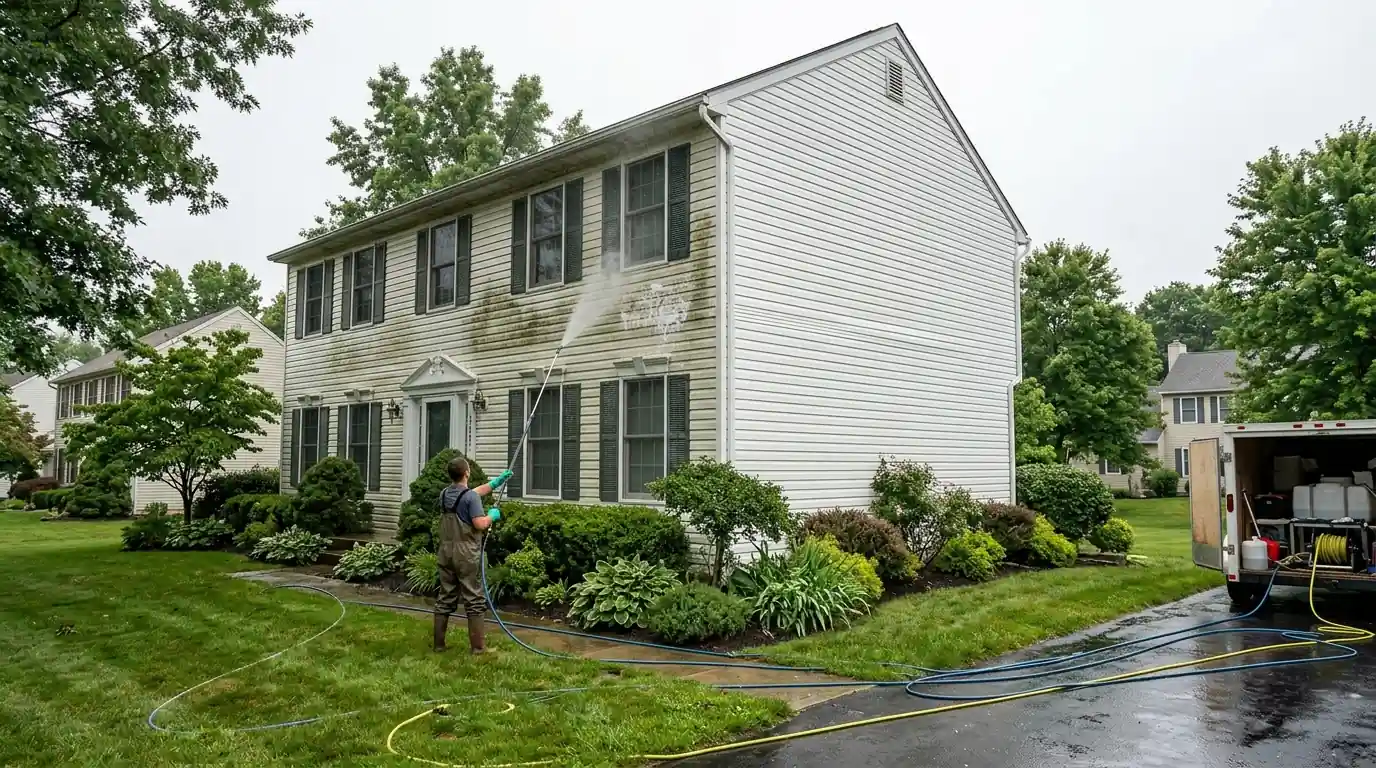
Power washing means pre-treating mildew and dirt with a cleaner, then rinsing each surface at a pressure matched to it. Siding and stucco get a soft wash, wood and brick get low pressure, and only concrete sees high pressure. Around Exton, washing a typical two-story colonial runs about $415 to $865, and a townhome about $245 to $485.
Most houses we wash around Exton, Downingtown and Malvern fall into a few groups. There are vinyl-sided colonials and townhomes from the 1990s and 2000s, cedar-sided homes tucked under shade trees, older stone and stucco houses, and plenty of brick fronts with siding wrapped around the sides. Each one needs a different approach. A single high-pressure pass that works on a concrete patio can tear vinyl, gouge cedar and force water into stucco.
We wash in two situations. Sometimes the wash is the whole job, a spring cleanup before the house goes on the market or after a pollen-heavy May. More often it's the first day of an exterior paint project, because paint can't stick to chalk, mildew or pollen. In both cases the goal is the same: a clean surface, and no water pushed into places where it can sit.
We think about pressure, nozzle angle and distance together, not just raw machine power. Vinyl and aluminum siding get a soft wash, which means cleaner applied at low pressure and rinsed off gently. Cedar and painted wood trim get low pressure with a wide fan tip held well back. Brick and fieldstone get the same gentle handling, because their mortar joints can wash out. Concrete walks and driveways are the only surfaces where we turn the pressure up and use a spinning surface cleaner.
Stucco homes from the 1990s and 2000s are a known problem in our region, because water can get behind the stucco and rot the sheathing without showing on the surface. Spraying water at a wall like that, especially near windows and roof edges, can make hidden damage worse. So before we wash or paint stucco, we check for signs of trapped moisture and use only a soft wash, aimed downward, with no water driven into cracks or window joints. Our post on painting stucco homes explains why that first check matters.
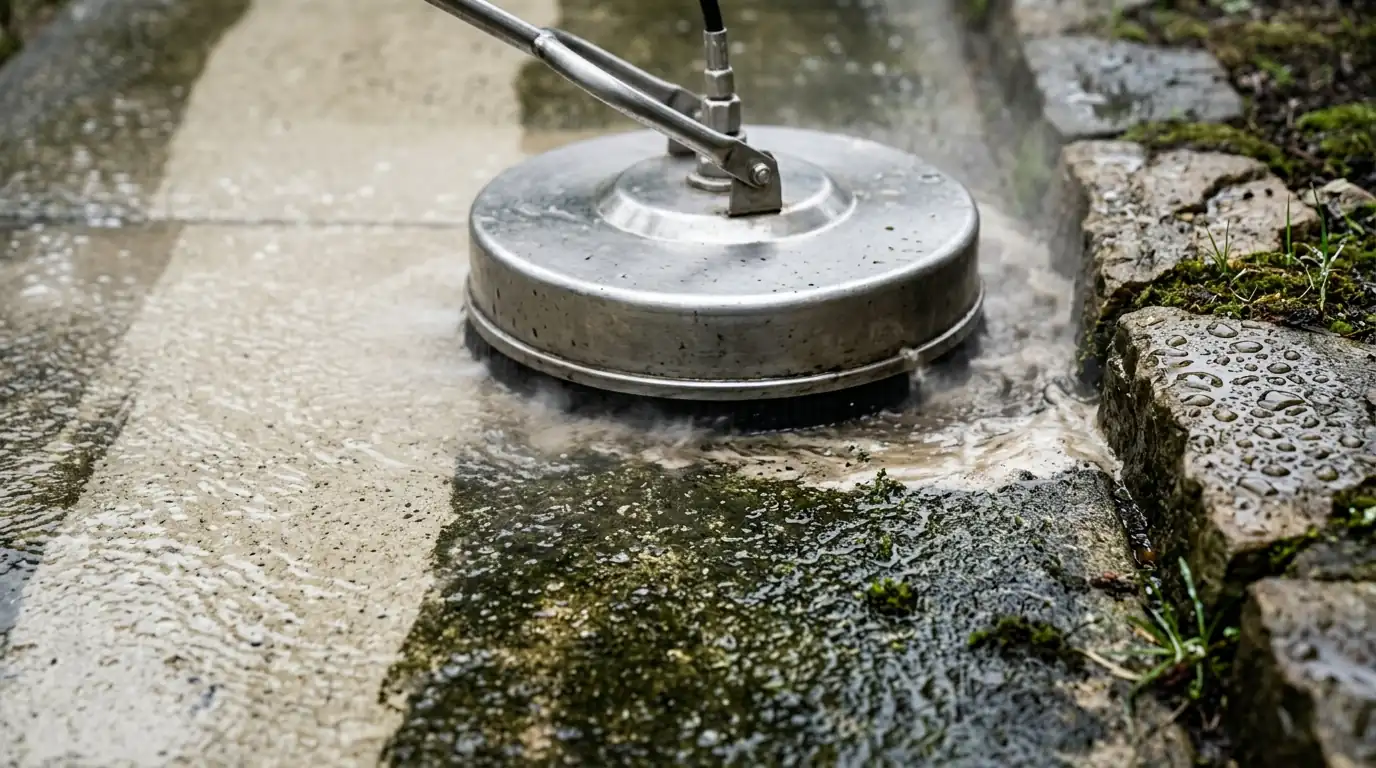
Water alone moves mildew around without killing it, so the green film comes back within a season. We pre-treat with a cleaner that kills mildew and algae, let it dwell a few minutes, then rinse. On north-facing walls under big shade trees, which stay damp through our humid summers, that pre-treatment makes the difference between a clean wall for a year and a clean wall for a month. Before spraying, we wet down shrubs and beds and rinse them again afterward.
Wood and masonry hold water longer than most people expect. After washing a cedar-sided or brick home, we usually wait at least a day or two of dry weather before priming, and longer after a cool, damp spell. Vinyl dries faster. We check questionable spots with a moisture meter rather than guessing. If the wash is part of an exterior repaint, we build that drying time into the schedule from the start, so nobody is tempted to rush the primer.
Algae and mildew on north-facing siding grow quickly in Chester County's humid summers. A soft wash with a mildew cleaner clears it without harming the vinyl.
If old paint leaves white powder on your fingers, it's chalking. That film needs to come off, or new paint won't hold for long.
Dark stripes below gutters and roof edges come from runoff and mildew. They wash off, and they also tell you where water is spilling over.
A deck that has turned gray needs cleaning and a brightener before stain. Washing at the right pressure is the first step toward a finish that soaks in.
A clean exterior photographs better and makes the house look cared for. A wash is often the quickest pre-listing improvement you can make outside.
Every exterior paint job we do starts with washing. Paint applied over dirt, chalk or mildew is the most common reason a new finish fails early.
We note siding types, loose trim, failing caulk, open window gaps and any stucco needing a moisture check before water touches it. Outlets, fixtures and vents get noted too.
Shrubs and beds are wet down first. Exterior outlets, light fixtures, dryer vents and open-looking window joints get covered so water can't reach wiring or wall cavities.
We apply a cleaner at low pressure, working from the bottom up so it doesn't streak, and let it dwell long enough to kill mildew and loosen grime.
Each surface gets rinsed at the pressure it can take, top to bottom, with the nozzle aimed downward so water doesn't drive up under siding laps.
Concrete walks, driveways and patios go last with a surface cleaner, which keeps the spray contained and avoids the striping a handheld wand leaves behind.
We rinse beds a second time, look over the house in daylight, and note any spots where paint, caulk or wood needs attention before painting.
Washing prices depend on the size and height of the house, how many surface types it has, how heavy the mildew is and how much needs protecting around it. Steep lots, three-story backs and decks above walkout basements take longer. These are typical 2026 ranges around Exton and Chester County. When the wash is part of a paint job, it's simply built into that estimate.
| Job | Typical range |
|---|---|
| Townhome or end unit, front and rear | $245 to $485 |
| Two-story colonial, vinyl or aluminum | $415 to $865 |
| Large 2000s home with walkout basement | $635 to $1,145 |
| Stone or stucco house, soft wash only | $545 to $1,085 |
| Deck, cleaned and brightened | $215 to $445 |
| Driveway and walks, surface cleaner | $235 to $515 |
Planning ranges for 2026, not quotes. The written price comes from a walkthrough. See every service side by side on the painting costs page.
We take on power washing in these towns across Chester, Delaware, Montgomery and Bucks counties. ZIP codes shown for each.
It will knock off some loose paint, but it isn't a substitute for scraping. Blasting paint off with high pressure damages wood and drives water into it. We wash to clean, then hand-scrape and sand loose paint during prep, once the surface has dried.
Yes. High pressure can crack older vinyl, and spraying upward pushes water behind the laps and into the wall. We soft wash vinyl with the nozzle aimed down, which cleans it well without lifting panels or forcing water where it can sit.
It can be, with care. On 1990s and 2000s stucco, we look for signs of trapped moisture first, then soft wash only and keep water away from cracks and window edges. If a wall looks suspect, we'll tell you before any washing starts.
Most homes look good with a wash every two to three years. Shady lots and north walls may need it yearly. Washing on a regular schedule also stretches the life of your paint, because mildew left in place slowly breaks down the finish.
Usually, yes. We hook our hose up to an outdoor spigot, and the water used for a typical house is modest. If your spigots are shut off for the winter or the flow is weak, we'll talk through options during the walkthrough.
We wet plantings before we start, rinse them again when we finish, and use cleaners diluted for exterior use. Delicate plants right against the wall can be covered loosely. Most yards look exactly the same the next day.
We repaint the outside of homes around Exton, from fieldstone farmhouses with wood trim to 1990s colonials wrapped in cedar, stucco and vinyl. Every...
Many homes built around Exton in the 1990s and 2000s came with big pressure-treated decks off the kitchen, often a full story up with long stairs. We...
Stucco around Chester County comes in two kinds: old lime stucco over farmhouse stone and newer stucco on 1990s and 2000s homes. The newer kind can...
Plenty of split-levels and colonials around Exton still wear the aluminum siding put up in the 1960s and 1970s, and many 1980s homes switched to...
A lot of brick around Chester County went under paint decades ago, from borough twins in West Chester to 1960s ranch homes outside Exton. Getting it...
Call any time. We will ask a few questions and set up a walkthrough at your home.