Ceiling Painting
We repaint ceilings in homes around Exton, from eight-foot bedroom ceilings in split-levels to vaulted family rooms and two-story foyers. Stains are...
Sprayed acoustic ceilings were standard in many split-levels, ranches and colonials built around Exton and Downingtown through the 1980s. We test the texture, scrape it off with the room fully protected, skim the drywall smooth and paint, so the ceiling looks as clean as a newer home's.
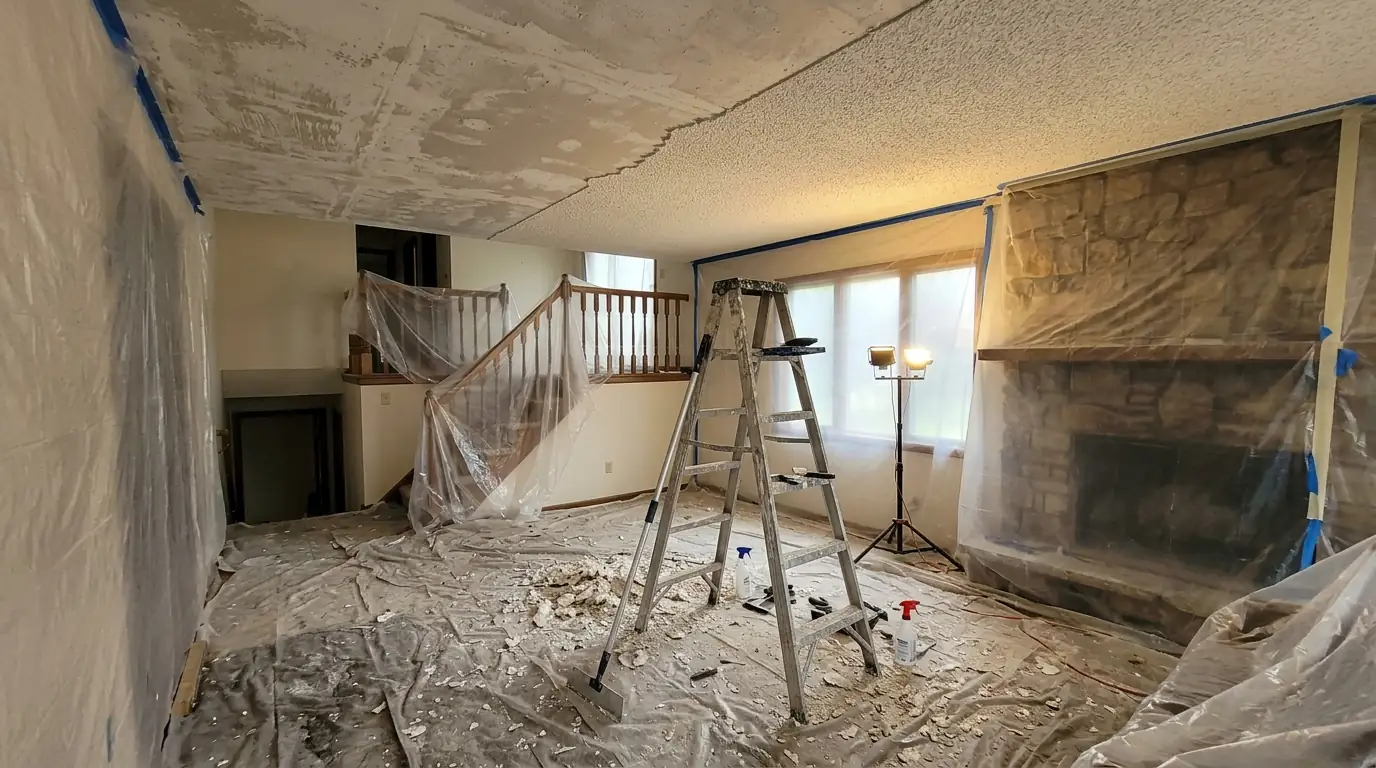
Popcorn ceiling removal starts with a lab test for asbestos on older ceilings, then sealing the room in plastic, misting the texture, scraping it off, repairing and skim coating the drywall, priming and painting. Around Exton and Chester County, a typical 12 by 14 foot bedroom ceiling costs $785 to $1,535, more for painted texture or tall ceilings.
Builders sprayed acoustic texture on ceilings because it was fast, hid uneven drywall joints and softened sound. You'll find it in Lansdale and Norristown ranches, King of Prussia split-levels and Exton-area colonials from the 1970s and 1980s, sometimes alongside swirl, stipple or knockdown ceilings in kitchens and hallways. Today it collects dust and cobwebs, is hard to repair, and makes rooms look older than they are.
Removing it is messy but straightforward when it's planned right. The texture is usually soft enough to scrape once it's damp, and the drywall underneath is often rough because it was never finished for a smooth ceiling. Most of the real skill goes into the skim coat afterward, since a flat painted ceiling shows every flaw under window light.
Acoustic ceiling texture made before the mid-1980s may contain asbestos, and you can't tell by looking. Before we touch a ceiling in an older home, a sample goes to an accredited lab. If the result is negative, we proceed. If it's positive, that texture has to be handled by an asbestos abatement specialist, not a painter, and we'll tell you so plainly. Once the ceiling is cleared, we can come back for the skim coat and paint.
Unpainted texture soaks up water and softens within minutes, then lifts off with a wide scraper. Once someone has rolled paint over it, water just beads on the surface. We may need to score the paint, add a stripping agent to the water, or make extra passes, and some painted ceilings are faster to skim over directly. That's why we check whether your ceiling has been painted before we give you a price.
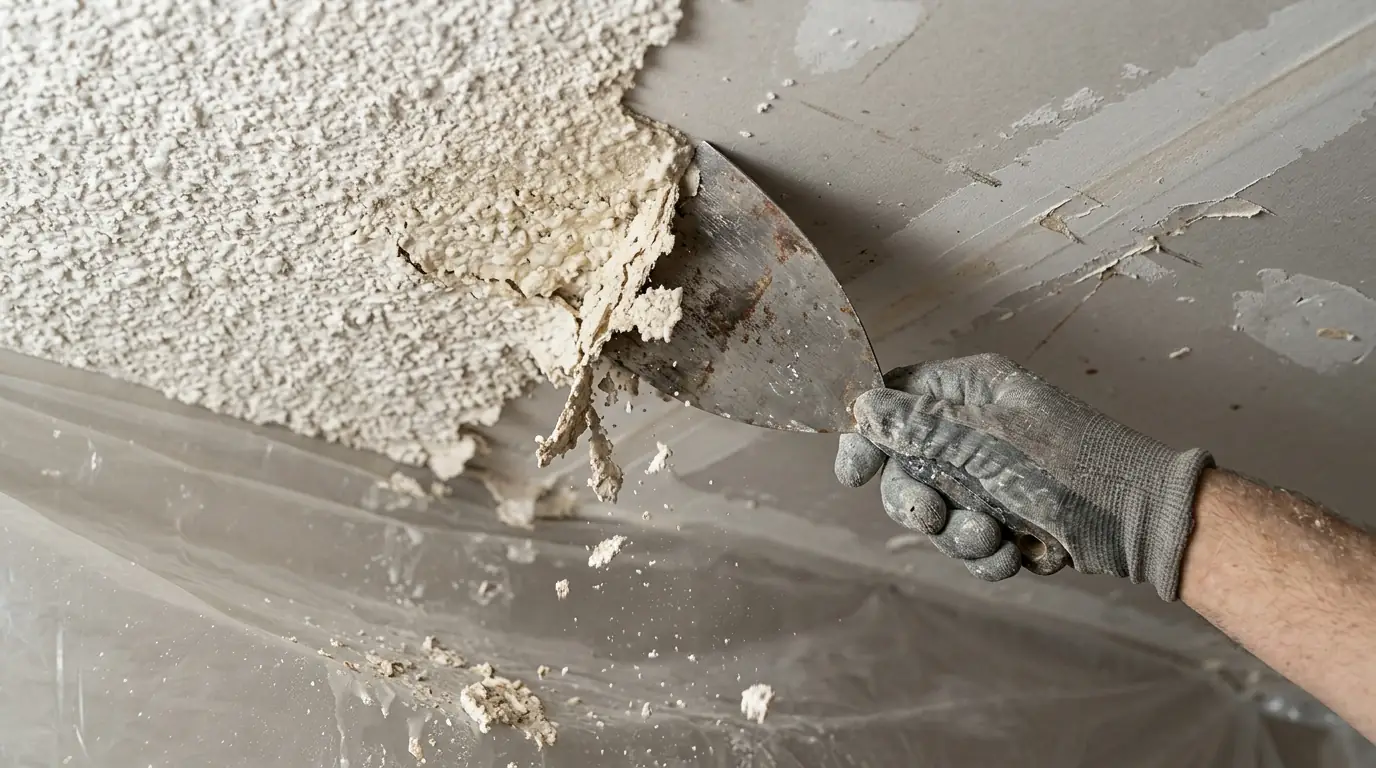
Drywall under popcorn was often hung and taped quickly, since the texture would hide it. After scraping, we fix popped nails, retape loose seams and fill gouges. Then a thin skim coat of joint compound goes across the whole ceiling, usually in two passes, and is sanded smooth. We check it with a work light held at a low angle, the same way sunlight from a window will strike it, before priming.
We almost always finish a skimmed ceiling with flat ceiling paint. It reflects light evenly and hides the small variations that any hand-troweled surface has. If you'd like a light texture instead of fully smooth, a fine orange peel or soft knockdown is an option that takes less finishing time. Our ceiling painting page covers color and sheen choices for the rest of the house.
Bits of popcorn falling onto furniture or carpet mean the texture is aging and losing its bond. It will only get worse with vibration and humidity.
Old acoustic texture absorbs smoke, cooking grease and water stains, and it can't be cleaned. Removing it is often easier than trying to paint over it.
Repairs from old leaks or electrical work never blend into popcorn. A smooth ceiling makes future repairs simple to hide.
The rough surface traps dust that a vacuum or duster just knocks loose. Many homeowners with allergies are glad to see it gone.
Popcorn ceilings tend to date a house in listing photos. Removing them before you list makes rooms read brighter and newer to buyers.
If you're renovating a kitchen, replacing lights or adding recessed cans, it's the right time to remove the texture before new fixtures go in.
For homes built before the mid-1980s, we take a small sample for accredited lab testing and only start after a negative result. We also check whether the texture has been painted.
Furniture comes out, floors are covered with plastic and paper, walls are draped floor to ceiling, and lights and vents are removed or sealed so debris stays in one place.
We lightly mist small sections with water, wait for the texture to soften, then scrape it into the plastic below with a wide blade, keeping the drywall underneath intact.
Popped nails, loose tape and gouges are fixed first. Then two thin skim coats cover the whole ceiling, sanded with vacuum-attached tools to keep dust down.
A drywall primer seals the new compound evenly, then two coats of flat ceiling paint finish it. We inspect under a raking light before calling it done.
Plastic is rolled up with the debris inside it, floors and walls are vacuumed, and fixtures and vent covers go back up before the room is returned to you.
Popcorn ceiling removal is priced by square footage, ceiling height, whether the texture has been painted, and how much skim coating the drywall needs afterward. A single unpainted bedroom ceiling is about a two-day job, and a whole first floor with open stairwells takes longer. These are typical 2026 ranges for homes around Exton and Chester County, confirmed after testing and a walkthrough.
| Job | Typical range |
|---|---|
| Asbestos lab test, one or two samples | $65 to $145 |
| Bedroom ceiling, about 12 by 14 feet | $785 to $1,535 |
| Living room or family room ceiling | $1,165 to $2,235 |
| Painted popcorn, added per room | $215 to $485 |
| Vaulted or two-story ceiling, per room | $1,385 to $2,765 |
Planning ranges for 2026, not quotes. The written price comes from a walkthrough. See every service side by side on the painting costs page.
We take on popcorn ceiling removal in these towns across Chester, Delaware, Montgomery and Bucks counties. ZIP codes shown for each.
Only a lab test can tell you. Texture applied before the mid-1980s is the main concern, but age alone doesn't confirm it either way. We take a small sample, send it to an accredited lab, and share the result with you before any scraping starts.
Yes, in most cases. We seal off the room we're working in, so the rest of the house stays usable. Expect some noise and a closed door for a few days per room. A bedroom being worked on can't be slept in until the paint is dry.
Sometimes. A thin layer of new drywall screwed over the old ceiling avoids scraping, and it can make sense for painted or very damaged texture. It costs more in materials and changes trim and light fixture depths, so we compare both approaches at the walkthrough.
Yes, though harder textures like swirl and stipple are usually joint compound or plaster and don't soften the way popcorn does. In those cases we usually skim over them rather than scrape. The same testing applies to any texture applied before the mid-1980s.
We often find nail pops, cracked seams and old water stains hidden under popcorn. Small repairs are part of the skim coat. Larger damage, like a sagging section or a soft spot from an old leak, gets fixed with our drywall repair steps before we finish the ceiling.
We repaint ceilings in homes around Exton, from eight-foot bedroom ceilings in split-levels to vaulted family rooms and two-story foyers. Stains are...
Homes built around Exton and West Chester from the 1970s through the 2000s are almost all drywall, and they share the same problems: nail pops,...
We repaint the inside of homes around Exton room by room, fixing nail pops, cracked plaster and scuffed builder paint before any color goes on. You...
A brown ring on the ceiling usually shows up after a roof leak, an ice dam, an overflowing tub upstairs or a dripping air handler in the attic....
Buyers touring homes around Exton compare yours against a dozen others in the same school district, often on one Saturday. We repaint the rooms and...
Call any time. We will ask a few questions and set up a walkthrough at your home.