Plaster Repair & Painting
Stone farmhouses outside Exton and Victorian twins in West Chester and Phoenixville still have their original plaster, often horsehair plaster on...
Bathrooms wear paint out faster than any other room in a Chester County home. Steam from daily showers, splashes at the vanity and fans that barely move air all push moisture into walls and ceilings. We find where that moisture is doing damage, repair the surface and finish with paint made for wet rooms.
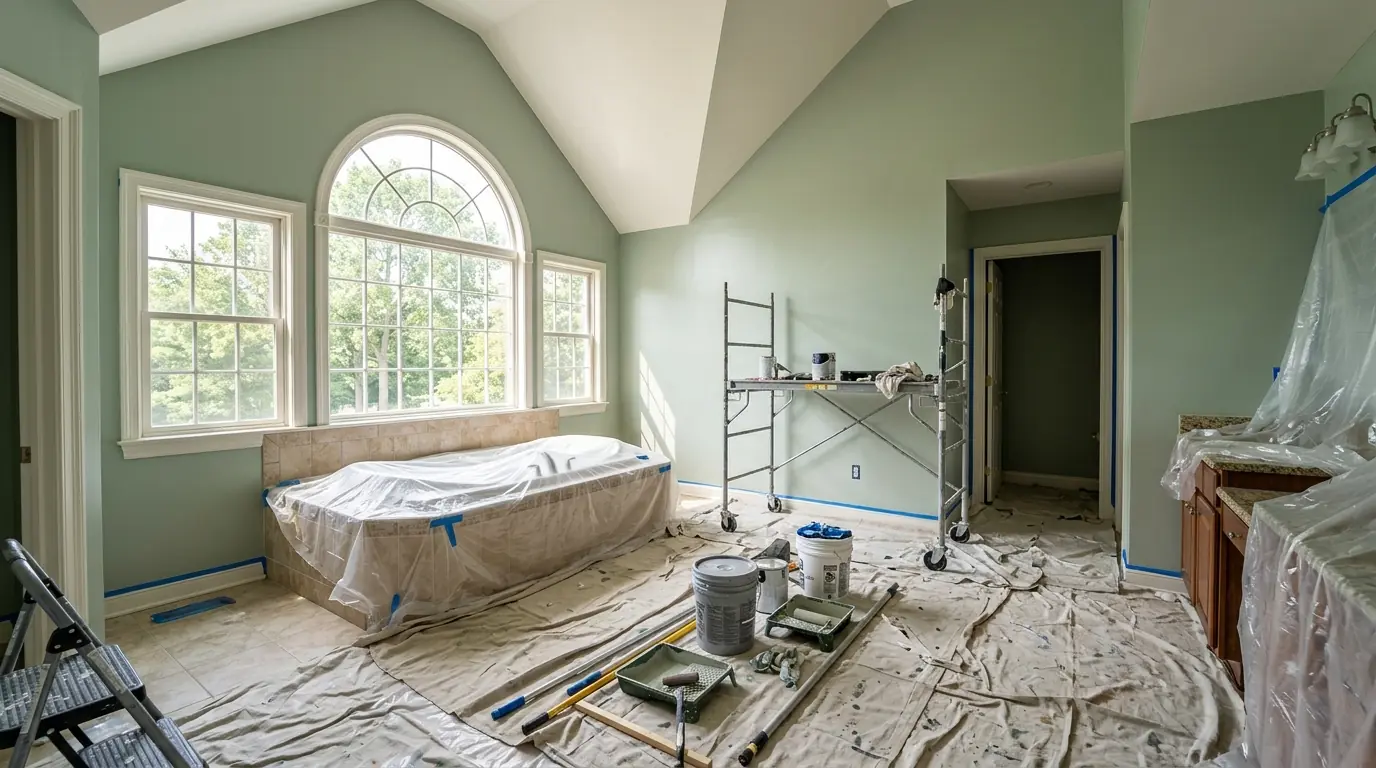
Bathroom painting means cleaning off mildew and soap film, scraping loose paint, repairing soft drywall or plaster, sealing stains, then priming and applying two coats of moisture-resistant satin or matte. Around Exton and Chester County, a powder room usually runs $395 to $685, a hall bath $640 to $1,235, and a large primary bath with a tall ceiling $1,180 to $2,370.
Bathrooms around Exton come in two very different shapes. Homes built from the 1990s onward often have a large primary bath with a soaking tub, a separate shower and a vaulted or tray ceiling where steam gathers at the high point. Older farmhouses and borough twins in West Chester or Phoenixville usually have one small bath squeezed into a former bedroom or a back corner, sometimes with horsehair plaster walls and a window that sticks. Both kinds peel and spot with mildew, but for different reasons.
In a big suburban bath, the trouble is usually air volume and weak ventilation. A single builder fan rarely clears steam from a twelve-foot ceiling, so moisture beads up top and the paint lets go there first. In an old farmhouse bath, the trouble is the wall itself, because decades of damp soften the plaster finish coat. We sort out which problem you have before choosing a primer, a patching method or a sheen.
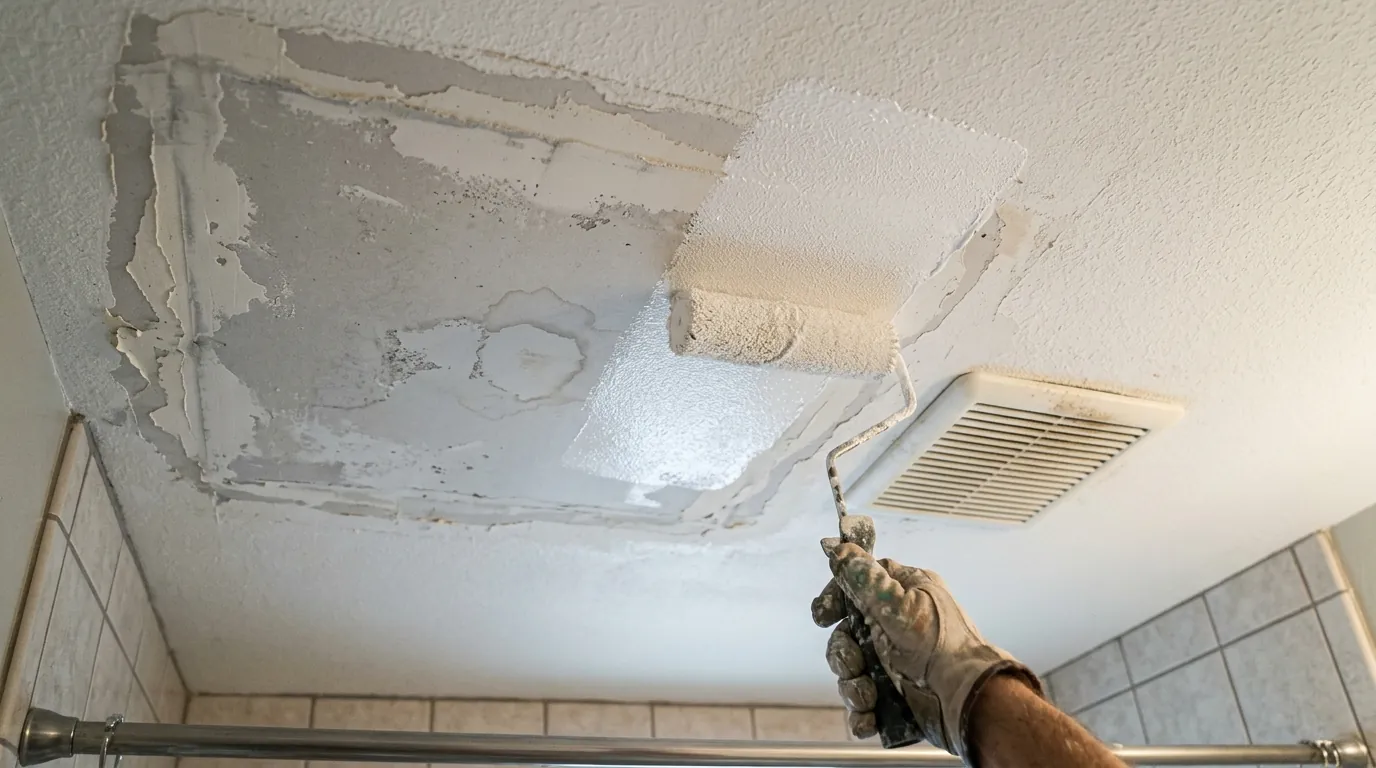
Warm, wet air rises, so the highest part of a vaulted or tray ceiling stays damp longest after every shower. Paint up there often blisters in a strip right over the tub while the walls below look fine. Many baths in the 1990s and 2000s developments around Exton and Downingtown were finished in flat builder paint, which soaks up moisture instead of shedding it. We scrape blisters back to a firm edge, skim rough spots, prime with a bonding primer and recoat the whole ceiling in a bath paint.
Ventilation matters as much as the paint does. If your fan is undersized for the room or ducts into the attic rather than through the roof or an outside wall, we'll point that out at the walkthrough. A timer switch that keeps the fan running for twenty minutes after each shower is an inexpensive change, and it does more to protect a new ceiling than any coating can manage by itself.
Many Chester County farmhouses got their first indoor bathroom long after the house was built, often tucked into a bedroom or a rear addition. The walls may be original horsehair plaster, later patched with drywall around new plumbing. Where steam has softened the plaster, paint comes away with a chalky skin attached. We consolidate that surface with a soak-in plaster sealer, cut out loose areas and fill them, then feather the patches so the wall reads as one surface. Our post on painting old farmhouse plaster covers more of what we find in these houses.
Satin is the usual pick for a hall bath that kids share, because toothpaste and splashes wipe off without leaving a shiny patch. On wavy plaster walls in an older house, satin can highlight every bump, so we often use a moisture-resistant matte that still cleans up well. Ceilings over showers get the same bath paint as the walls, never plain ceiling flat. Trim, doors and window casings go in a satin or semi-gloss enamel. Our guide to sheen in each room explains how this fits with the rest of your house.
Plenty of homes around West Chester and Malvern have only one full bath upstairs, so we plan the days around it. We paint during working hours, keep the toilet and sink usable each evening and leave the fan running overnight. In larger houses we can paint two or three baths in sequence so one is always open. If the vanity looks tired too, vanity and cabinet painting can happen the same week.
Bubbles in the ceiling paint directly above where you shower mean steam is getting behind a finish that was never made for a wet room.
Mildew that returns within weeks of scrubbing is living in the paint film and on soap residue, and it needs treatment before any new coat goes on.
If paint flakes off carrying white powder with it, the plaster face has softened from years of moisture and has to be sealed first.
Brown stains on a kitchen or family room ceiling under a bathroom point to a past leak, which needs a stain-blocking primer after it's repaired.
Paint peeling where the wall meets the tub often means the old caulk split and water has been wicking into the wall edge for a while.
Many developments around Exton were finished in the same flat beige. Repainting a dated bath in a durable satin costs far less than a remodel.
We look at the ceiling over the shower, press on soft spots, run your fan to see whether it actually pulls air, and talk through colors and sheen for walls, ceiling and trim.
Towel bars, mirrors, outlet covers and the toilet tank lid come off. Tub, toilet, vanity top, tile and flooring are covered with plastic and taped at the edges.
Walls and ceiling get a mildew cleaner and a degreaser to cut soap film. We rinse and let every surface dry completely, since primer won't grip a damp wall.
Blisters are scraped back, soft plaster gets a soak-in sealer, cracks and holes are patched, and old leak stains get a blocking primer so they stay hidden.
Walls and ceiling get two coats of bath paint, and trim and the door get enamel. We recaulk the tub line with a mildew-resistant sealant when the old bead has failed.
Fixtures go back up, protection comes off and the fan stays on. We tell you how long to wait before the first hot shower in the freshly painted room.
Condition matters more than size on a bathroom job. A sound powder room goes quickly, while a primary bath with a peeling vaulted ceiling, mildew in the corners and stained drywall can need a full day of repair before any color goes on. The ranges below reflect typical 2026 work in Chester County homes. We set a firm price at the walkthrough once we've seen your room.
| Job | Typical range |
|---|---|
| Powder room, walls and ceiling | $395 to $685 |
| Hall bath, walls, ceiling and trim | $640 to $1,235 |
| Primary bath with vaulted or tray ceiling | $1,180 to $2,370 |
| Peeling ceiling repair over a shower | $315 to $745 |
| Mildew treatment and tub recaulk | $185 to $365 |
Planning ranges for 2026, not quotes. The written price comes from a walkthrough. See every service side by side on the painting costs page.
We take on bathroom painting in these towns across Chester, Delaware, Montgomery and Bucks counties. ZIP codes shown for each.
Paint with mildewcide slows regrowth, but it can't fix a room that stays damp. We clean and treat existing mildew before priming, then use a bath paint. If the fan is weak or vents into the attic, mildew will eventually return, so we suggest fixing ventilation at the same time as the paint.
Wall tile outside the splash zone can be painted with a bonding primer and a tough two-part topcoat, and it looks good for years on a wainscot. Inside a shower, painted tile wears through from constant water and scrubbing, so we steer people away from it there.
You can use the sink and toilet the same evening. We ask that you skip hot showers for at least a day, ideally two, so the paint cures before heavy steam hits it. Run the fan and leave the door open afterward to help it along.
Not at all, though it affects time and price. Tall ceilings need a rolling scaffold set up over drop cloths, and the peak is usually where paint has failed first. We plan extra prep time up there and use the same bath paint on the ceiling as on the walls.
If your home was built before 1978, older coats on trim, doors and plaster may contain lead, especially in a bath added in the 1940s or 1950s. We test suspect areas and scrape with plastic sheeting and HEPA vacuums. See how we handle lead-safe work for the full setup.
Stone farmhouses outside Exton and Victorian twins in West Chester and Phoenixville still have their original plaster, often horsehair plaster on...
Homes built around Exton and West Chester from the 1970s through the 2000s are almost all drywall, and they share the same problems: nail pops,...
We paint kitchen and bathroom cabinets in homes around Exton, turning honey oak and tired cherry into a smooth, hard enamel finish. Doors and drawer...
We repaint ceilings in homes around Exton, from eight-foot bedroom ceilings in split-levels to vaulted family rooms and two-story foyers. Stains are...
A brown ring on the ceiling usually shows up after a roof leak, an ice dam, an overflowing tub upstairs or a dripping air handler in the attic....
Call any time. We will ask a few questions and set up a walkthrough at your home.