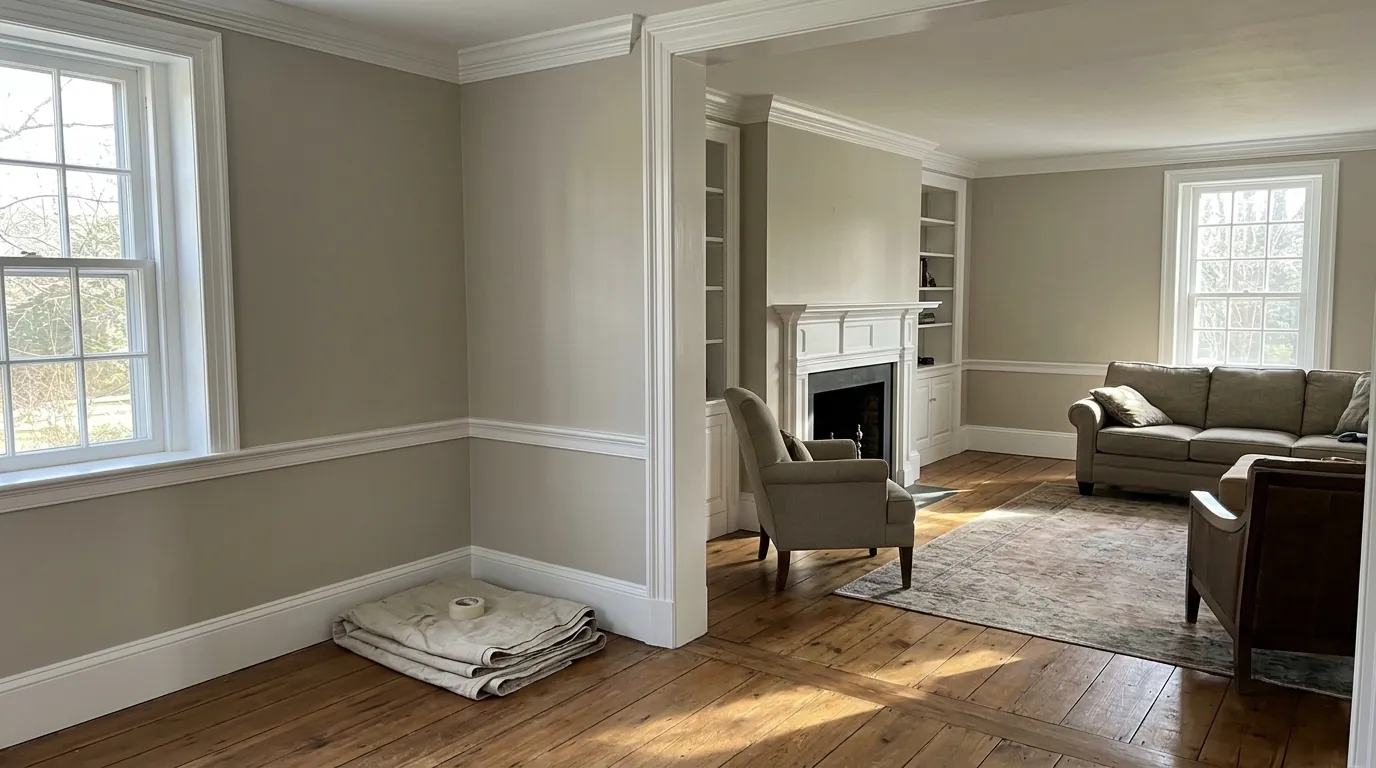
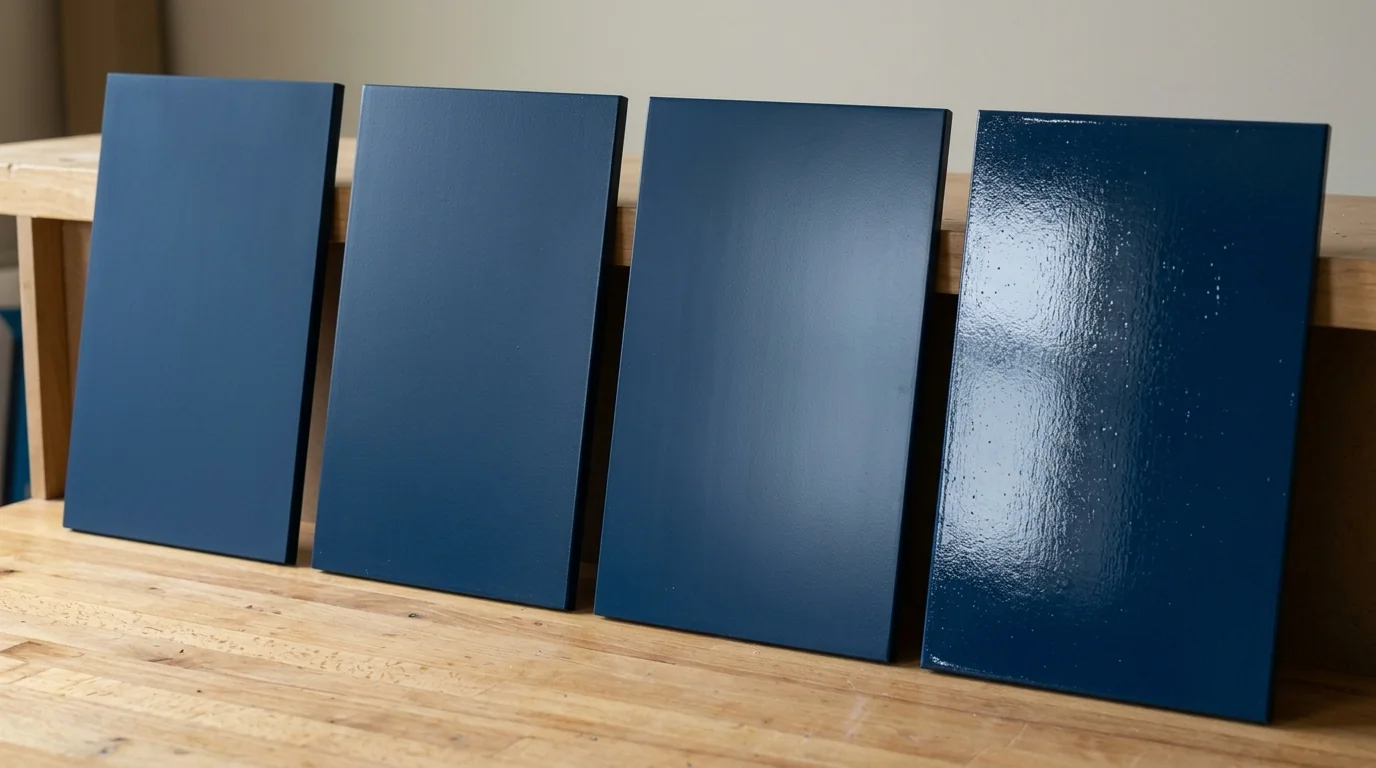
- Higher sheen cleans more easily but shows every dent, patch and roller mark.
- Matte or eggshell suits most living spaces; satin earns its place in kitchens, baths and kids' rooms.
- Ceilings almost always look right in flat.
- Trim and doors take more abuse, so they usually get satin or semi-gloss.
What sheen actually changes on your wall
Sheen is how much light the dried paint reflects. From least to most shiny, the usual ladder is flat, matte, eggshell, satin, semi-gloss and gloss. Names vary by brand, so one company's eggshell can look close to another's satin. That's why we always brush out a sample on your actual wall rather than trusting the label on the can. The light coming through your windows changes how every sheen reads.
Two things move as you go up the ladder. Washability improves, because a tighter, smoother film lets grime wipe off without burnishing. Flaw visibility rises too, because light skims across the surface and picks out every bump, patch and roller lap. Most sheen decisions come down to balancing those two in each room. The same color will also look slightly darker and richer in a higher sheen, which surprises a lot of people.
Living rooms, dining rooms and bedrooms
For the main rooms, matte or eggshell covers most needs. Matte gives a soft, even look and hides small dings, which helps on the long walls of a 2000s great room where a low window throws light across the drywall. Modern washable mattes clean far better than the chalky flats of twenty years ago, so they handle light family use. Dining rooms with chair rails often pair matte above with a tougher sheen below.
Eggshell is the safer pick if you have kids, dogs or a lot of traffic past the walls. It wipes clean easily and still looks calm in lamplight. In bedrooms, matte is usually fine for adults, while a child's room does better in eggshell because of crayons, toys and sticky hands. A typical bedroom repaint, walls only, often runs $485 to $860 depending on size, ceiling height and repairs.
Kitchens, bathrooms and laundry rooms
Rooms with steam, grease or splashes need a tougher film. Satin is our usual choice for kitchen walls and bathroom walls, because it sheds moisture and lets you wipe off spatter without leaving a shiny patch. Pair it with a paint made for humid rooms in a bathroom with a shower, especially in our sticky Pennsylvania summers when the air barely dries out. The behind-the-stove wall benefits from satin even in a lightly used kitchen.
Small powder rooms without a shower can go eggshell if you prefer a softer look. Laundry rooms and mudrooms in newer Chester County homes take wet boots, bags and dog leashes, so satin holds up better there too. Split-level homes often have a lower-level family room off the garage that sees similar abuse. If your bathroom has peeling over the tub, the fix is usually ventilation and prep, not just more sheen, which we cover on our bathroom painting page.
Ceilings, trim and doors
Ceilings almost always go flat. A flat ceiling hides seams, nail pops and the slight waves common in older drywall and plaster, and it doesn't throw glare from overhead lights or recessed cans. Even a two-story foyer in a newer home looks better in flat, since any shine shows roller marks from below. The exception is a bathroom ceiling over a shower, where a moisture-resistant ceiling paint or a low-sheen bath paint helps.
Trim, baseboards and interior doors take shoes, vacuums and hands every day, so they usually get satin or semi-gloss. Semi-gloss gives the crisp, traditional contrast many colonials and farmhouses are known for. Satin reads a little more modern and shows fewer brush marks on older, wavy trim. Whichever you choose, keep it consistent through a floor so doors and casing match. Our trim and baseboard work uses enamel made to level out smooth.
Old plaster and wavy walls in farmhouses
Stone farmhouses and older borough homes often have horsehair plaster with gentle waves, patched cracks and corners that were never quite square. That character is part of the house, but a shiny finish will spotlight every repair and every old ridge. On those walls, we usually recommend matte, or eggshell at most, and save higher sheens for the woodwork. The contrast between soft walls and crisp trim suits these houses well.
Raking light from deep-set windows in thick stone walls makes the choice even more important. A wall that looks fine at noon can show every ripple in late afternoon sun. Before you commit, look at a sample at different times of day, and check it with the lamps on at night. Our post on painting old farmhouse plaster goes deeper into repairing and priming those surfaces before any paint goes on.
A quick room-by-room cheat sheet
Use this as a starting point, then adjust for how your household actually lives. A quiet guest room and a playroom with three kids under eight don't need the same paint, even if they're the same size and color. Think about who uses each room, what touches the walls and how the light falls. A home office with a dog bed in the corner may need tougher walls than you'd expect.
If you're unsure, go one step more washable than you think in high-traffic rooms, and one step flatter than you think on imperfect walls. That rule of thumb covers most homes we see around Exton, Malvern and Phoenixville. When a room falls in between, a sample patch about two feet square on the actual wall settles it faster than any chart, and we're glad to roll a few out during the walkthrough.
- Living and dining rooms: matte or eggshell
- Adult bedrooms: matte; kids' rooms: eggshell
- Kitchens, full baths, laundry and mudrooms: satin
- Powder rooms: eggshell or satin
- Ceilings: flat
- Trim, doors and stair parts: satin or semi-gloss