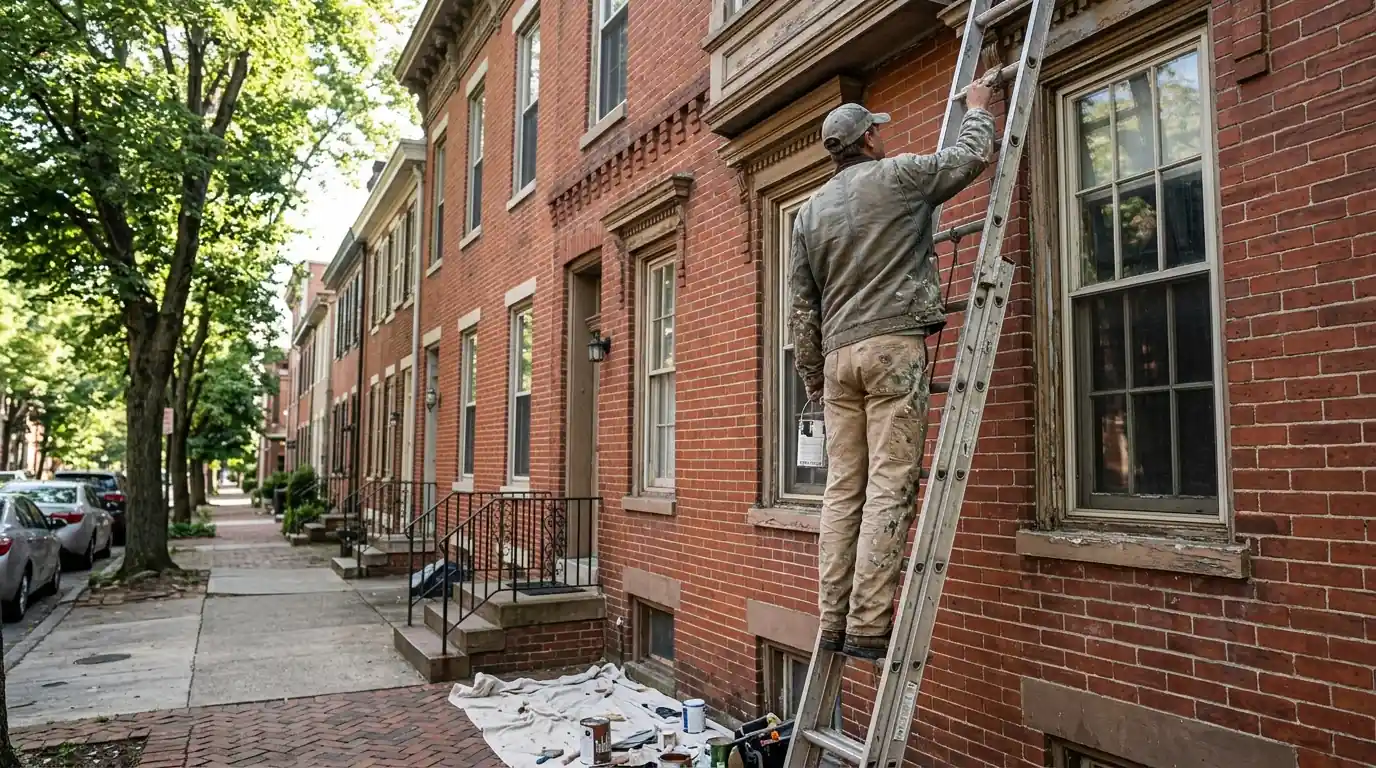
- Call your borough first and ask whether your address is inside the historic district.
- Ask specifically about new colors, new materials and painting masonry that has never been painted.
- Start the conversation in winter so any decision lands before the spring painting window.
- Repairing original wood usually keeps an old house looking right and keeps the job simpler.
Is your street actually inside the historic district?
The first question is a simple one, and it's the one people skip. Historic district lines in a borough don't always follow what feels old. A brick row on one block may sit inside the district while a nearly identical Victorian twin two streets over sits outside it. Living in the borough doesn't automatically put you in the district, and an old house outside it may have no exterior oversight at all.
So before you buy a single sample quart, call the borough office or check its website for the district map. In both West Chester and Doylestown, a historic architectural board, often called HARB, reviews exterior changes inside the district. Write down who you spoke with, the date and what they told you. That note saves a lot of guessing later, and we'll ask about it at the walkthrough so the plan lines up with it.
What to ask the borough before you change anything outside
We won't tell you what your borough requires, because the answer can depend on the property, the borough's current ordinance and how the board reads it. What we can do is help you ask the right questions so you get a clear answer the first time. Rules can also change over the years, so even a neighbor's experience from a few summers ago may not hold today. Treat the borough as the only reliable source.
Keep the conversation concrete. Describe the house, the parts you want to paint and the colors or materials you have in mind, and ask how they'd like that information sent. If the borough wants photos, color chips or a short written description, we can help you pull those together after our visit. These are the questions we'd suggest asking, in roughly this order, so nothing gets missed on the first call.
- Does repainting in the existing colors need anything from the borough?
- Does a new body, trim or door color need approval?
- Does painting brick or stone that has never been painted count as a change?
- Does replacing wood trim, shutters or porch parts with PVC or composite need approval?
- What do you need from me, and how far ahead should I start?
Fitting the borough's process into a short painting season
Exterior paint around here goes on well from roughly mid-spring into fall, with humid summers and freeze-thaw winters squeezing both ends. If your project needs a decision from the board, that step has to happen before we can put you on the exterior calendar. We can't predict how long your borough will take, so the safe move is to start early and leave slack. A rushed decision in June can push the work into a cold, damp November.
A practical rhythm looks like this. Have us out for a walkthrough in late winter, settle the scope and colors, then take your questions to the borough while it's still cold. If the answer comes back quickly, you're ready for spring. If it takes longer, you've still got summer and early fall to work with. Our guide to the months that work for exterior paint covers the weather side of that timing.
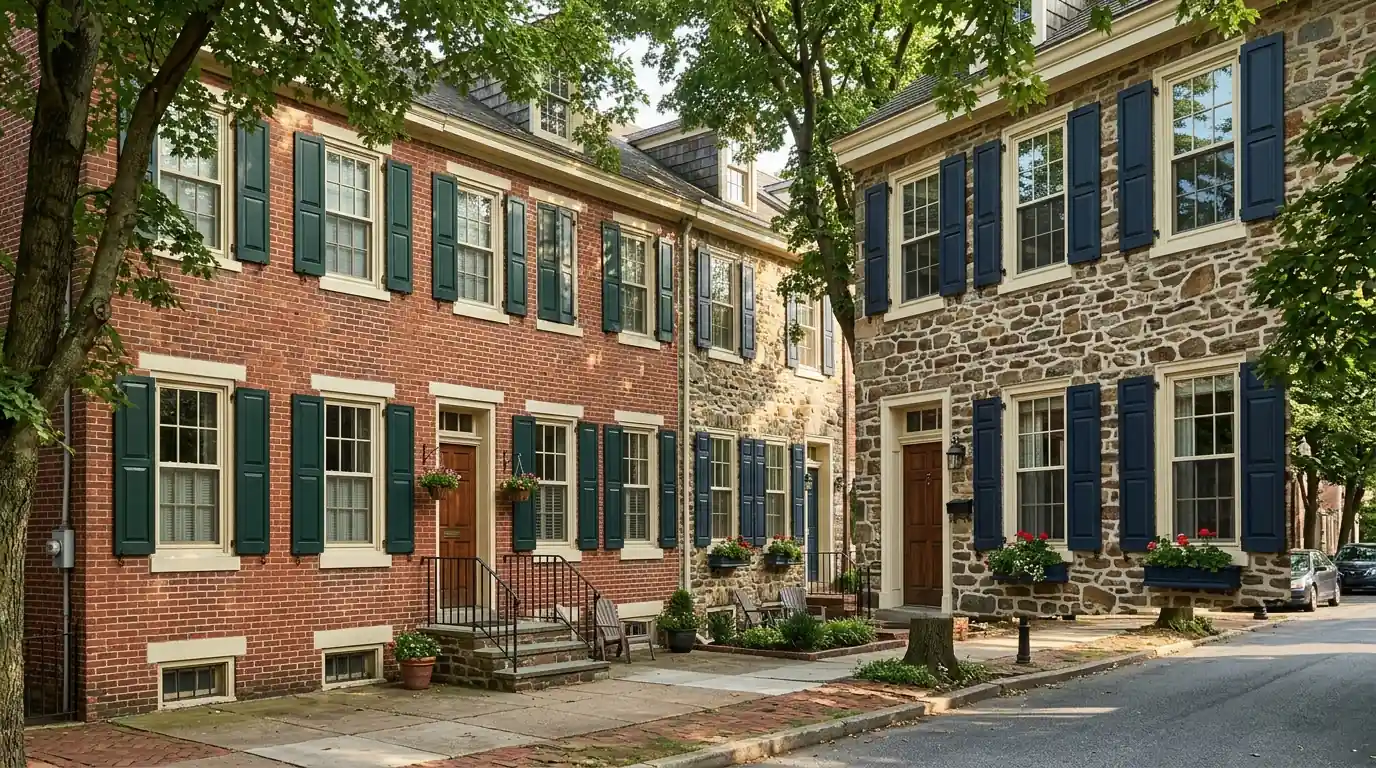
Choosing colors that suit a Victorian twin or brick row
Borough houses tend to look right in colors that respect their age. Brick rows usually carry painted cornices, window trim and doors rather than painted brick, so most of the color decision happens on wood. Victorian twins often have more trim to work with, which opens up a body, trim and accent scheme. The other half of a twin matters too, since the pair reads as one building from the street.
Before anything changes, we photograph the existing colors and note them, because a board or a future owner may want to know what was there. Large painted sample boards held against the brick in daylight tell you far more than a small chip from the store. Look at them in the morning and late afternoon. If you want a second opinion on the palette, our color consultation visit works through it on site.
Keeping original wood and brick in good shape
Many borough houses still have original wood clapboard, sash windows, porch columns and cornice work. Replacing those parts with modern materials can be a change the borough cares about, and it often looks wrong on a 19th century facade anyway. Repair usually makes more sense: scraping loose paint, consolidating soft spots with epoxy, patching in new wood only where rot goes deep, then priming and painting. Old-growth wood often outlasts its replacement.
Brick that has never been painted deserves a pause. Once paint goes on, getting it back off is slow and costly, and paint can trap moisture in soft old brick and mortar. If your brick is already painted, keeping it painted is usually the easier path. For a typical borough row front, scraping, priming and repainting the wood trim and cornice often runs $2,870 to $5,640, depending on height, access and how much rot turns up.
Lead paint is almost a given on these houses
Nearly every house in these historic districts was built long before 1978, so we treat the old paint layers as containing lead unless testing says otherwise. That changes how the work is done, not whether it can be done. We contain the work area with plastic sheeting, avoid open-flame burning and dry power sanding, collect paint chips at the end of each day and clean up with HEPA vacuums and wet wiping.
This matters even more on a narrow borough lot where your neighbor's yard, windows and kids are only a few feet away. We lay ground sheeting along shared walkways and keep chips out of gardens and alley drains. If you have small children or someone pregnant in the house, tell us at the walkthrough. Our lead-safe painting page explains the setup in more detail, including what happens to the debris afterward.