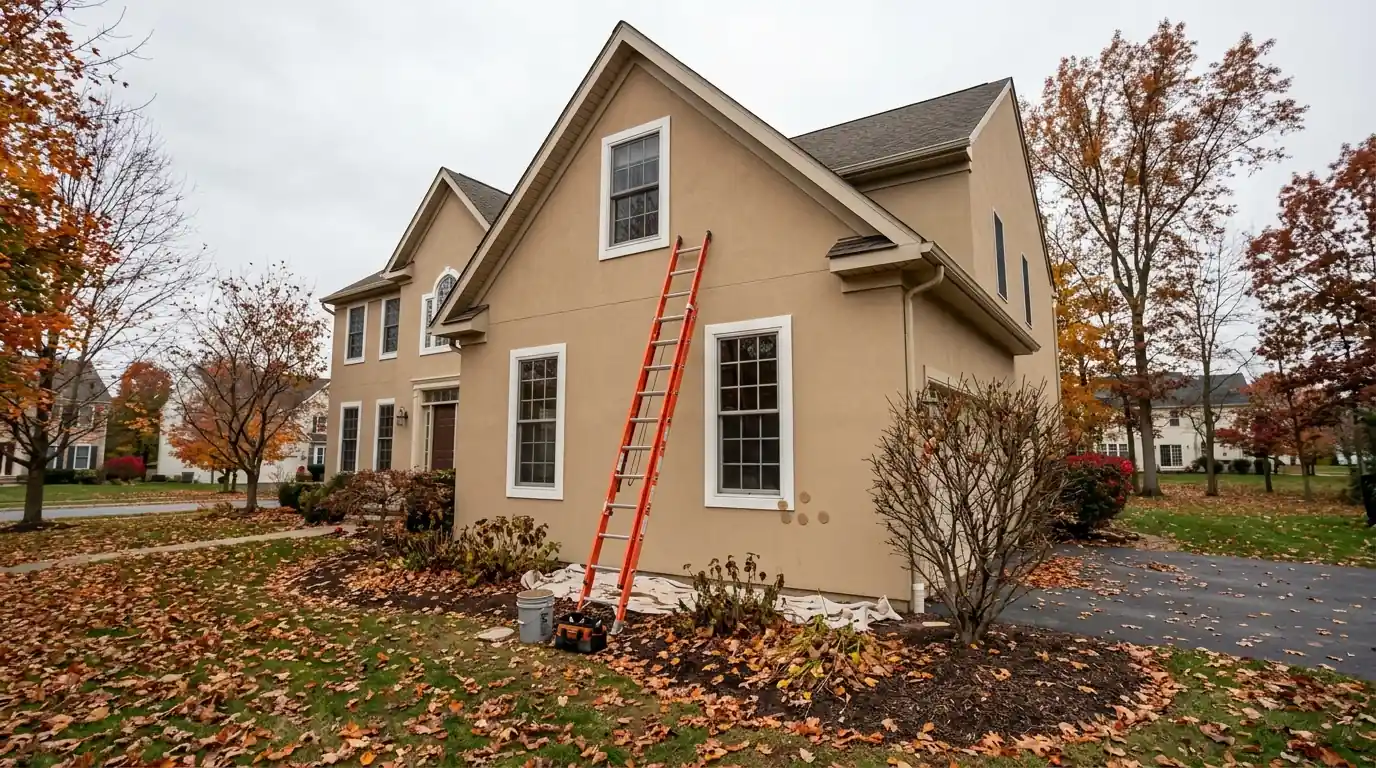
- Stucco on many 1990s and 2000s homes can trap water behind it, out of sight.
- Moisture testing by a stucco inspector should come before any repaint.
- Paint does not fix water behind stucco and can hide the stains that warn you.
- Once a wall tests dry or has been repaired, a breathable masonry paint is the right finish.
Why stucco from the 1990s and 2000s gets extra scrutiny
During the building boom of the 1990s and 2000s, many developments around Exton, West Chester, Malvern and Downingtown went up with stucco exteriors. On a lot of those homes, the details that keep water out, such as kick-out flashing at roof edges, sealant joints around windows, and drainage at the base of walls, were missed or done poorly. Water that gets past the stucco can soak the wood sheathing and framing behind it. Because the stucco stays hard and intact, damage can grow for years without anything obvious outside.
This is a widely known problem across southeastern Pennsylvania, not a rare one. That's why many buyers in Chester County now ask for stucco testing before they settle on a house from that era. For a painter, it changes the order of work. Painting a wall with wet sheathing behind it does nothing for the rot, and a fresh coat can cover the stains that would have warned you. So on stucco homes built from roughly 1990 to 2008, we ask about moisture testing before we talk about colors.
Signs that water may already be trapped behind your stucco
Some signs show up outside, and some show up inside. Outside, look closely at the corners of windows, especially the lower corners, for dark streaks or staining that runs down the wall. Cracks that run diagonally from window and door corners are worth noting. Check where a lower roof meets a two-story wall, since staining or soft spots below that junction are a classic sign of missing kick-out flashing. At the base of walls, white mineral deposits or stucco buried in soil or mulch can point to moisture.
Inside, water damage often appears long after it started. Swollen or stained window sills, drywall that feels soft below a window, baseboards pulling away, and musty smells in rooms along a stucco wall are all reasons to call an inspector. None of these prove a problem on their own, and some homes show no signs at all even when testing finds wet areas. That's exactly why testing matters more than looking.
- Dark streaks below window corners
- Diagonal cracks from window and door corners
- Stains or soft spots under roof-to-wall joints
- White deposits or damp stucco near the ground
- Soft drywall or swollen sills on the inside
How stucco moisture testing works before painting
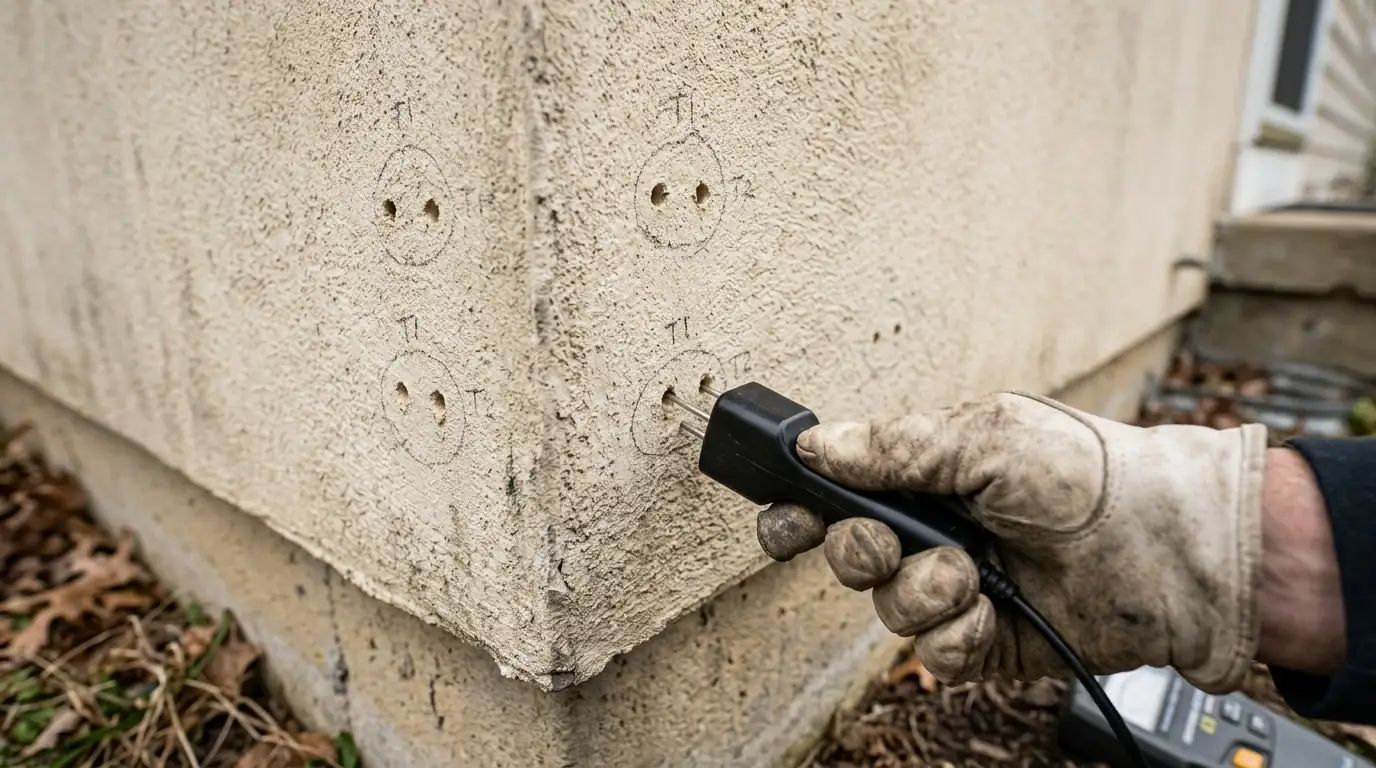
The most common method is probe testing by a stucco inspector. They drill small holes at high-risk spots like window corners, roof-wall intersections and the bottom edge of walls, then measure the moisture content of the sheathing behind the stucco. Many also note how soft the wood feels to the probe. The holes are sealed afterward with a sealant close to the wall color. A written report maps each test spot and its result, so you know which walls are dry and which are not.
Non-invasive scanning with a surface meter or infrared camera can flag suspect areas, but it can't tell you what the sheathing is doing behind three-quarters of an inch of cement. We treat probe results as the deciding factor. If the report shows dry walls, painting can go ahead. If it shows high moisture or decay, the stucco needs repair by a stucco remediation contractor first. We don't do remediation work, and we won't paint over walls that tested wet.
Why a coat of paint won't fix water behind stucco
It's tempting to think a thick waterproof coating will seal the problem away. It won't. Most water in these walls enters at windows, roof junctions and flashing details, not straight through the face of the stucco, so coating the face leaves the actual entry points untouched. Water that's already inside also needs a way to dry out. Stucco naturally lets some vapor pass through it, and a coating that blocks vapor slows that drying even further.
Heavy elastomeric coatings are the usual culprit. They bridge hairline cracks nicely, but on a wall with moisture behind it they can hold water in and even blister off. On most stucco homes around Exton, we prefer a breathable acrylic masonry paint that lets vapor escape while shedding rain. We also leave sealant joints at windows and trim in sound shape rather than painting over failed caulk. You can read more about how we handle prep on our stucco painting page.
When stucco is ready to paint and how we do it
Once a wall tests dry, or a remediation contractor has repaired and retested it, painting is straightforward. We start with a gentle low-pressure wash, since blasting stucco can drive water into the cracks you're trying to protect. Hairline cracks get a masonry crack filler, and any loose areas the inspector didn't flag get pointed out to you before we go further. Bare or patched spots get a masonry primer, then the walls get two coats of breathable acrylic finish, with the label's recoat time, often four hours or more, between coats.
Timing matters more on stucco than on siding. The surface needs a day or two to dry after washing or heavy rain, and most masonry paints call for air and surface temperatures of 50°F or higher through drying. Some low-temperature formulas go down to 35°F, but stucco stays cold and damp longer than wood, so we aim for late spring and early fall. Our post on the months that work for exterior paint covers that calendar in detail.
Questions to ask any painter about your stucco
Ask whether the painter wants to see a moisture report before starting, and what they'll do if walls test wet. A painter who's happy to start on a 2003 stucco colonial without asking about testing is skipping the most important step. Ask which coating they plan to use and whether it breathes. Ask how they'll wash the walls and at what pressure. These questions take a few minutes and tell you a lot about how the job will go.
Also ask about caulk and sealant at windows, since some painters skip those joints entirely. We're glad to look over a report you already have during our walkthrough, and we'll tell you plainly if the walls aren't ready. Keep in mind that stucco on old stone farmhouses is a different case. Lime-based stucco over stone behaves very differently from modern cement stucco over wood framing.