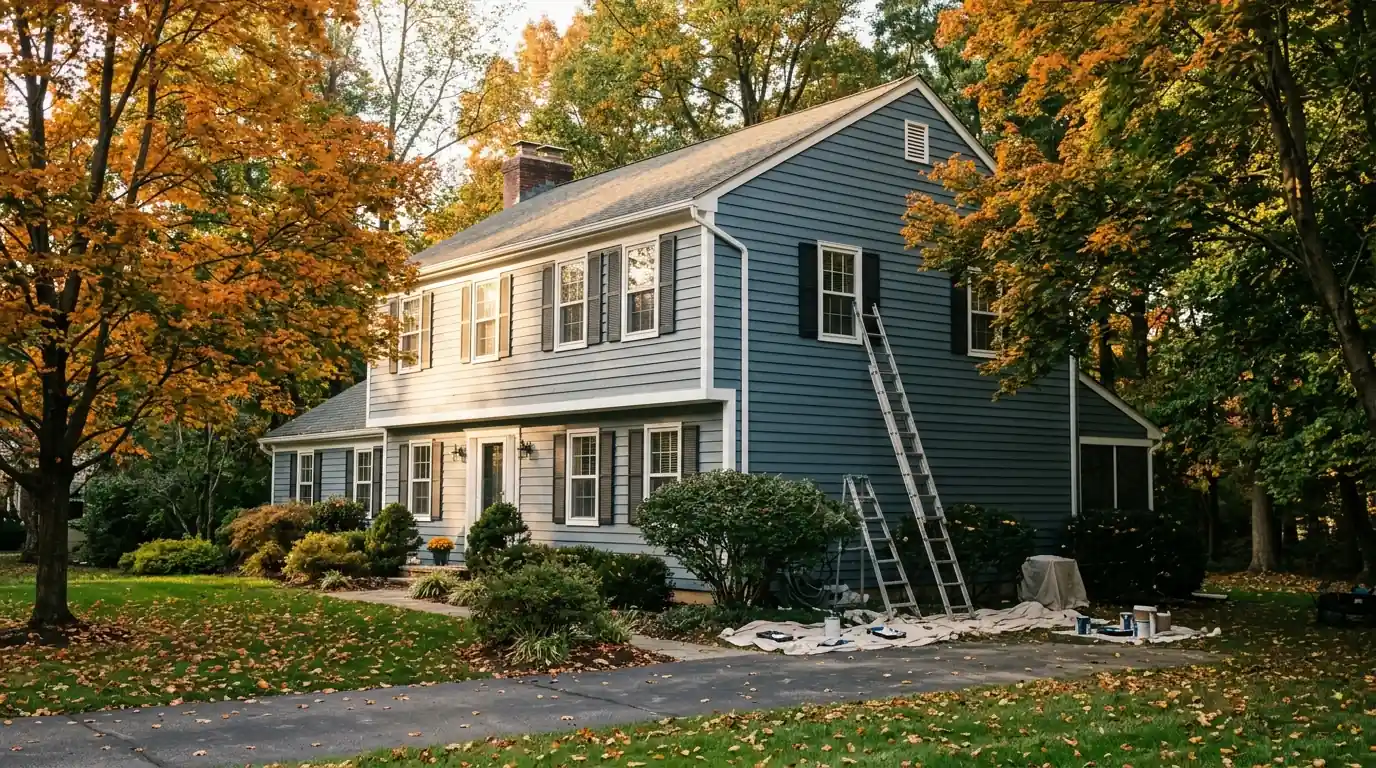
- Late May through June and September through mid-October usually give the steadiest painting weather here.
- Most latex paints need 50°F or warmer; low-temperature formulas can go down to 35°F.
- Surfaces must be dry and at least 5°F above the dew point while paint sets up.
- July and August work if painters follow the shade and avoid hot, sunny walls.
What exterior paint needs from the weather
Every can of exterior paint lists minimum conditions, and they matter. Standard acrylic latex usually needs air and surface temperatures of 50°F or higher, both while it goes on and for several hours after. Many premium lines are formulated to go down to 35°F, which stretches the season, but they still need dry surfaces and steady temperatures. Oil-based primers and enamels often want 40°F to 50°F as a minimum and dry much more slowly. Upper limits count too, and many labels warn against applying above about 90°F.
Moisture is the other half. Paint needs a dry surface, so wood that's been rained on may need a full day or more of sun to dry out. Bare siding should read under about 15 percent on a moisture meter before primer goes on. Paint also needs time before dew or rain hits it, usually several hours for latex and longer in cool weather. The surface should stay at least 5°F above the dew point, or condensation settles on the fresh film and can leave streaks or weak adhesion.
Spring around Exton: a slow start, then a good stretch
Chester County's last frost usually comes around late April, but nights in the 30s and 40s can hang on into early May. Afternoons can be warm enough to paint while nights still drop too low for the paint to cure well, especially on north walls. Spring also brings frequent rain, which keeps siding and trim wet. For those reasons, we treat April as a prep month, good for washing, scraping and carpentry, rather than a reliable painting month.
From late May through June, conditions usually line up. Daytime highs sit in the 70s and low 80s, nights stay above 50°F more often than not, and summer humidity hasn't peaked. Long daylight lets us start after the dew burns off and still finish coats with plenty of drying time before evening. That's why late spring dates fill up fast. If you want a June start, calling in winter or early spring gives you the widest choice of weeks.
Painting through July and August heat and humidity
Midsummer around Exton isn't off limits, but it takes planning. Highs often reach the upper 80s and low 90s, and dark siding in full sun runs far hotter than the air. Paint applied to a hot surface dries too fast, which leaves lap marks and poor flow, and it can blister when moisture gets trapped under a quick skin. Humid nights also slow curing and bring heavy morning dew, so the usable hours each day shrink at both ends.
The answer is to follow the shade. We paint west and south walls in the morning and east walls in the afternoon, after the sun has moved off them. We start later on mornings with heavy dew and stop early enough that fresh paint gets a few hours before evening humidity climbs. Pop-up thunderstorms are common in July, so we watch radar closely and avoid starting a wall that can't be finished and set up before a storm arrives.
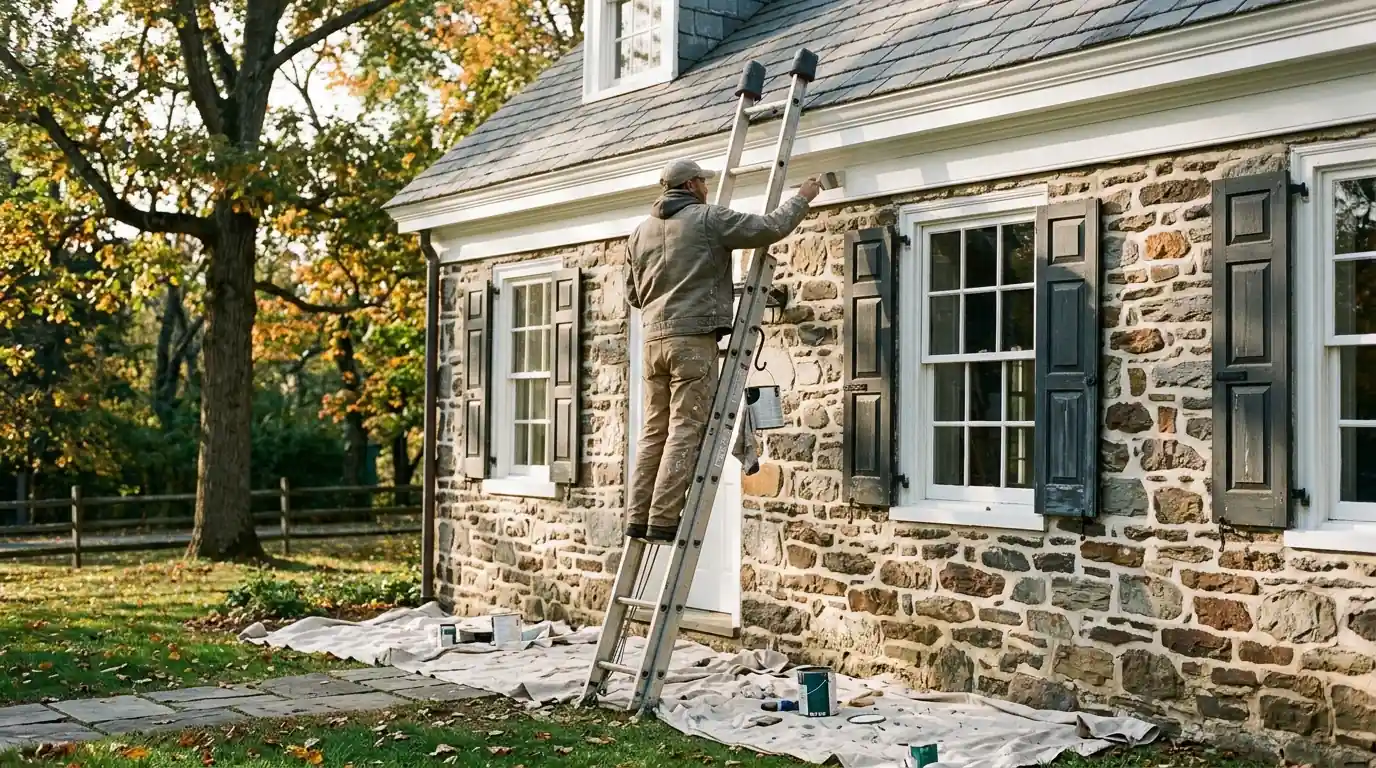
Why September and early October are often the sweet spot
Early fall is usually the steadiest painting weather of the year here. Humidity drops, highs settle into the 60s and 70s, and rain tends to come in fewer, longer events instead of daily storms. Wood has had a whole summer to dry out. For most of September and into the first half of October, conditions on a typical Chester County house sit comfortably inside what latex paint needs, from the first coat of primer to the final coat on the trim.
The catch is a shorter day. Sunrise comes later, dew lingers on shaded walls well into the morning, and temperatures fall quickly after about 4 p.m. That squeezes the hours when a wall is both dry and warm. We adjust by starting on sunny walls, wrapping up earlier, and switching to low-temperature formulas as October goes on. First frost usually arrives somewhere in mid to late October, so we plan exterior jobs to finish before then whenever we can.
Late fall and winter: what can still get done
Once nights fall regularly below freezing in November, most exterior painting stops. Low-temperature paints can handle a 35°F afternoon, but they can't handle frost forming on the film overnight. Small jobs, like a front door, shutters taken down and painted in a garage, or a sheltered porch ceiling, can sometimes fit into a mild stretch. Our front door painting work often fills those November gaps.
Winter is still useful time. It's the right season for a walkthrough, color decisions and getting on the spring calendar. If you live in a borough historic district, such as parts of West Chester or Doylestown, it's also a good time to check with your borough about any approval needed for exterior changes. For stucco homes from the 1990s and 2000s, winter is a good window to arrange moisture testing, which our post on painting stucco in Chester County explains.
Recoat times and drying windows on a typical exterior job
Weather doesn't just decide the day we start; it shapes the gaps between coats. Most acrylic latex can be recoated in about four hours at 70°F with moderate humidity, but cool, damp days can stretch that to the next morning. Oil-based primers on bare wood typically need 24 hours before topcoating, sometimes more in fall. Low-temperature paints cure slowly, so even when they're dry to the touch they stay vulnerable to rain for longer.
That's why a two-coat exterior on a colonial around Exton can take longer than its square footage suggests. We schedule primer on bare wood early in the week, leave margin for a rain day, and avoid putting a second coat on late in the afternoon when dew is coming. For the full scope of how we handle siding, trim and prep, see our exterior house painting page, and you can compare typical figures on our pricing page.