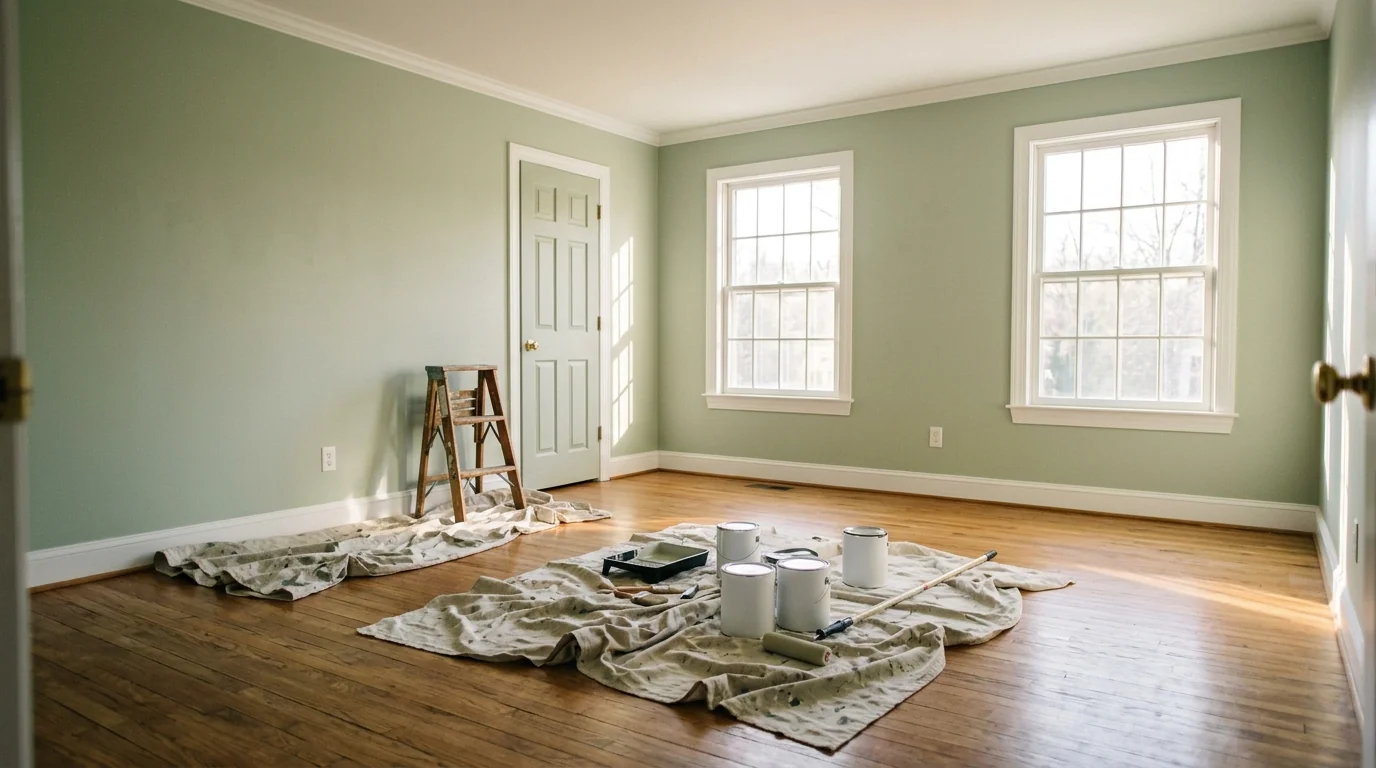
- A 12 by 12 bedroom, walls only, usually runs $465 to $830 depending on prep and color.
- Trim, doors and ceilings often add 40 to 70 percent to a walls-only price.
- Plaster repair in older farmhouses and borough twins is the biggest swing factor we see.
- Real numbers come from a walkthrough, because prep is hard to judge from photos.
Typical price ranges for common rooms around Exton
Most interior jobs we price in Chester County fall into a handful of patterns. A standard 12 by 12 bedroom with walls only, two coats, and a moderate color change usually lands between $465 and $830. Add the ceiling, baseboards, window casings and one door, and that same room tends to run $735 to $1,280. A family room with a cathedral ceiling in a 1990s Exton or Downingtown development often sits higher, around $1,140 to $2,180, because of the ladder and plank work at fourteen to eighteen feet.
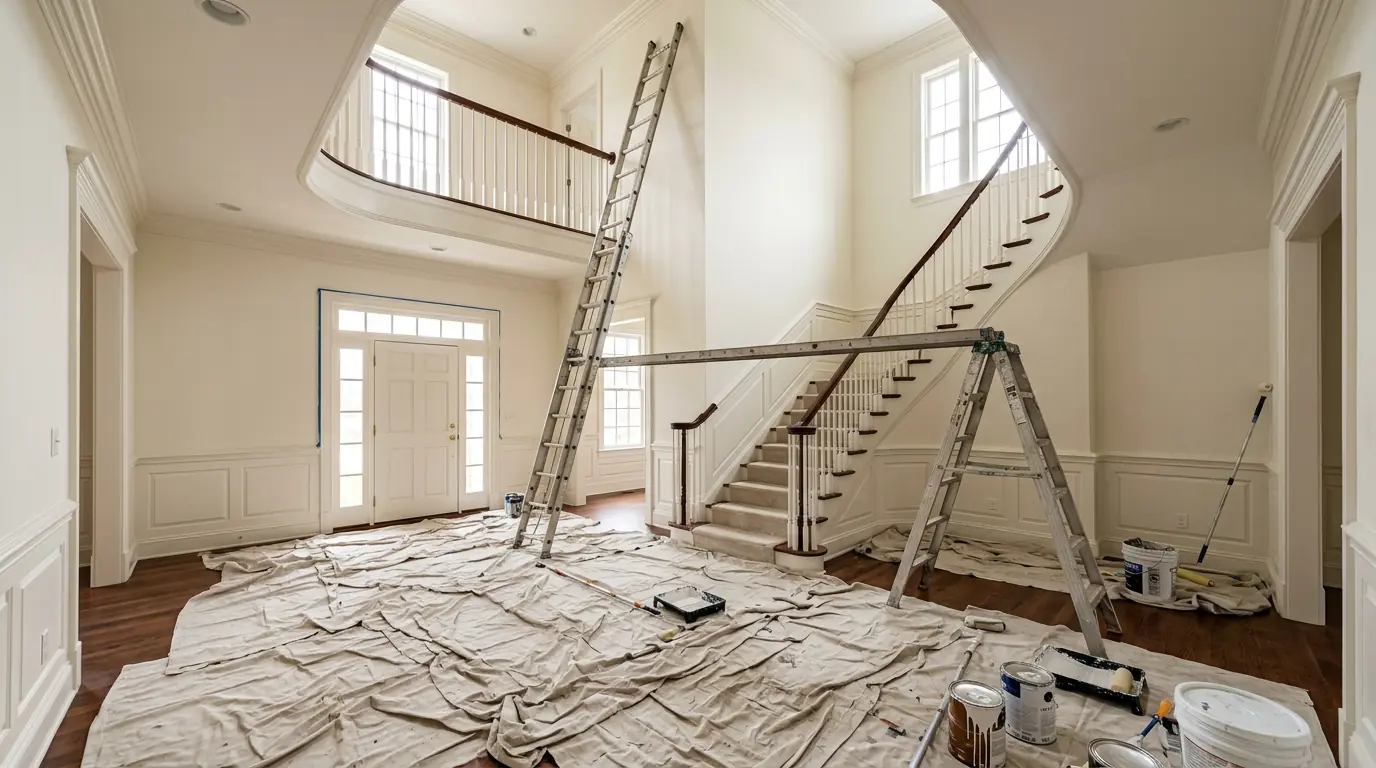
Bigger scopes scale, but not perfectly. A whole interior of a 2,400 square foot colonial, with walls, ceilings and trim, commonly runs $7,860 to $13,940. Kitchens cost less than their size suggests because cabinets cover most of the wall space, unless the cabinets are part of the job. Stairwells cost more than their size suggests, since the tall wall needs special ladders and careful protection of treads and railings. These are typical ranges that depend on the house, never a quote.
- Bedroom, walls only: $465 to $830
- Bedroom with ceiling and trim: $735 to $1,280
- Two-story foyer or stairwell: $890 to $1,740
- Kitchen walls, cabinets excluded: $415 to $760
- Full interior of a 2,400 square foot colonial: $7,860 to $13,940
Why plaster walls in older homes cost more to paint
Houses built before about 1940 in West Chester, Phoenixville and the older parts of Downingtown usually have plaster walls instead of drywall. Plaster holds up well, but a century of settling leaves hairline cracks, loose spots near door frames, and old patches that never quite matched. Each of those needs to be opened, filled with setting compound, sanded and primed before finish paint goes on. That prep can double the hours in a single room, and it's the most common reason two similar bedrooms end up priced far apart.
Stone farmhouses add another layer. Plaster applied directly over fieldstone often shows damp spots on exterior walls, and old calcimine coatings on ceilings will peel through new paint if they aren't washed off first. We price those rooms only after seeing them, and we explain the prep line by line so you can decide what to fix now. If your walls fall into this group, our guide to painting old farmhouse plaster walks through what that prep actually looks like.
How color, sheen and trim choices change the number
Going from a beige wall to a deep navy, or from a dark red dining room back to white, often needs a tinted primer plus two finish coats. That extra coat adds roughly 15 to 25 percent to the labor on those walls. Sheen matters too. Flat and matte finishes hide plaster flaws and touch up easily, while satin and semi-gloss show every lap mark, so they demand more careful sanding and cutting in. Choosing cheaper paint saves little, since materials are a modest share of an interior bill.
Trim is where many budgets surprise people. Colonial and split-level homes from the 1950s to 1980s around Exton often have stained wood trim that owners want painted white. That conversion means cleaning, scuff sanding, a bonding primer, caulking every joint, and two coats of enamel. Six-panel doors take time as well, and each one adds a noticeable amount to the total. If you're weighing whether to include trim, a typical bedroom's trim alone often runs $285 to $540 on top of the walls.
What a walkthrough catches that photos miss
We don't price interiors from photos, and the reason is practical. A picture can't show whether a wall has nail pops, whether old wallpaper sits under the paint, or whether a glossy oil coat needs a bonding primer. It also can't show how much furniture needs moving, how many outlets and switch plates come off, or whether the stairwell needs a plank setup. During a walkthrough at your home, we measure, test the existing paint, and note every repair so the price reflects the real scope.
Homes built before 1978 get one more check. If the job means sanding or scraping painted surfaces, we plan for lead-safe setup and cleanup, which adds containment time and changes the number. Our post on lead paint in older Chester County homes explains what that involves. After the walkthrough, you get a written scope listing each room and each surface, so you can trim the job to fit your budget without guessing.
Ways to keep an interior painting budget under control
The cheapest gallon of paint is not where savings come from. Labor and prep make up most of the cost, so the real levers are scope and timing. Grouping several rooms into one visit saves setup and cleanup time compared with painting one room each season. Choosing one trim white across the house cuts down on color changes and extra cutting in. Clearing small items, art and window treatments yourself before we arrive trims the hours a little as well.
Some shortcuts we usually advise against. Skipping primer over patched plaster or water stains tends to show flashing or bleed-through within months. Painting over cracked plaster without proper repair means the cracks return after the first winter of heating. If the budget is tight, it's often smarter to do fewer rooms properly this year and the rest next spring. You can see typical figures for each service on our price guide, and our interior painting page covers how we run a job.