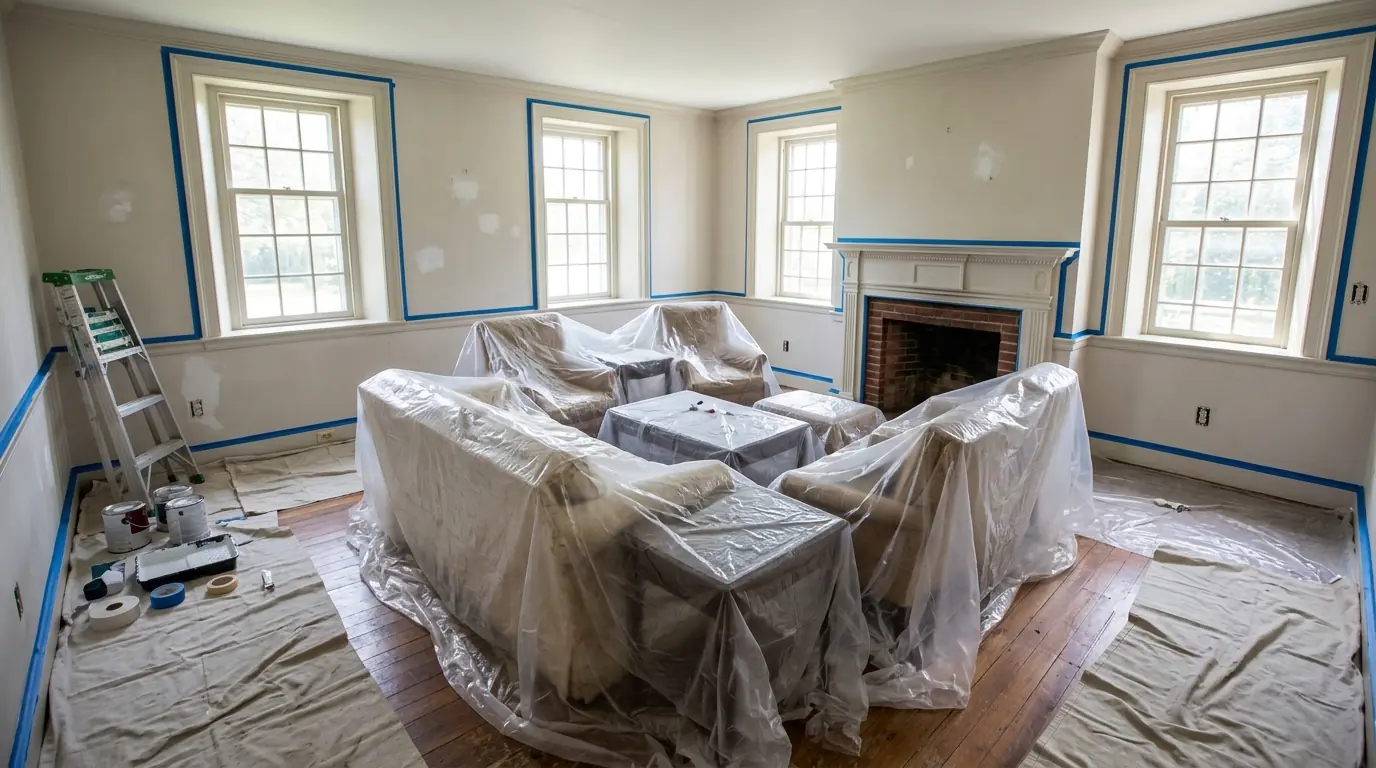
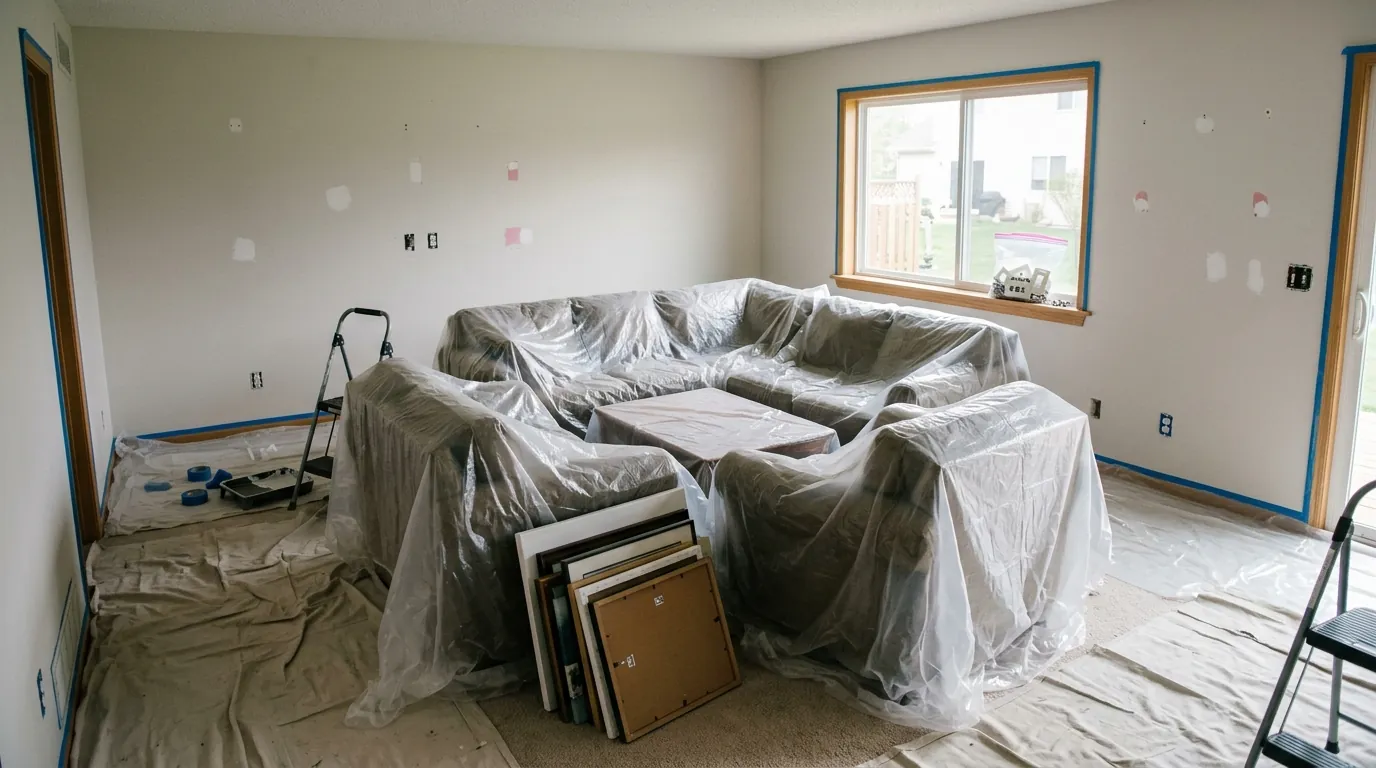
- Clear small items, wall hangings and anything breakable; leave heavy furniture for us to move and cover.
- Plan for pets, kids and work-from-home calls before the first morning.
- For exterior work, trim plants back, clear the perimeter and leave gates and outdoor water accessible.
- Tell us about anything fragile, sentimental or tricky at the walkthrough.
What to clear out of each room the weekend before
Focus on small things that are easy to break and hard to cover. Take everything off shelves, dressers and mantels. Remove pictures, mirrors, curtains and wall-mounted TVs if you're comfortable doing so; if not, leave the TV and we'll work around it. Pack lamps, plants and rugs that can be rolled up. Put valuables, medications and important papers somewhere outside the rooms we're painting, ideally behind a closed door.
Closets are easy to forget. If closets are part of the job, they need to be empty, including the floor and the top shelf. In a typical 1980s colonial with four bedrooms, that can mean moving a lot of clothing, so start early in the week rather than the night before. A spare room, the basement or the garage works well as a staging area. Label bins by room so putting things back goes quickly.
- Shelves, mantels and dresser tops cleared
- Wall art, mirrors and curtains down
- Closets emptied if they're being painted
- Valuables, medications and important papers put away
What you can leave for our painters to handle
Heavy furniture can stay. We move sofas, beds and dressers to the center of the room, cover them with plastic and drop cloths, and put them back when we're done. We also take off outlet covers and switch plates, mask floors and hardware, and patch small nail holes and cracks as part of the prep. You don't need to wash the walls first unless they're greasy from a kitchen.
A few things we'd rather you leave untouched until we've seen them, like a piano, a china cabinet full of dishes or a large aquarium. Tell us about those at the walkthrough so we can plan around them and bring the right covers. If there's water staining or soft drywall, mention it then too, since drywall repairs need drying time built into the schedule. The same goes for any crack that reopens every winter.
Planning around pets, kids and home offices
Doors will be open, ladders will be up and paint will be wet, so pets need a plan. A closed room we aren't painting, a crate or a day at a friend's house works. Cats in particular love fresh paint, open closets and the inside of drop cloths. Dogs tend to follow painters around and brush against wet trim. Let us know where the pets will be each day so nobody accidentally lets them out the front door.
If you work from home, pick a room that's being painted last or not at all, and tell us your meeting times. We can't promise silence, but we can sequence the noisier tasks like sanding and moving furniture around your calls. For pre-1978 homes, children and pregnant family members should stay away from the work area during prep; our guide to lead paint in older homes explains why.
Getting the outside ready for exterior painting
Exterior work needs clear access to every wall. Pull patio furniture, grills, planters and garden decorations about six to eight feet away from the house. Trim shrubs and tree limbs that touch the siding, since paint needs room to go on and ladders need solid footing. In the large 2000s developments around Exton and Malvern, foundation plantings have often grown right up against the siding.
Leave gates open or the latch code with us, turn on outdoor water if it was shut off for winter and move cars out of the driveway if we're painting the garage or the front. If you have an irrigation system, turn it off for the days we're painting so it doesn't spray fresh paint. Our washing step usually happens a day or two before painting, so plants nearby will get a rinse. Let us know about any fragile plantings worth covering.
- Furniture, grills and planters pulled back from the walls
- Shrubs and branches trimmed off the siding
- Sprinklers off and outdoor spigot working
- Gates open and the driveway clear
Talking through the details before day one
The walkthrough is where the job gets planned, so use it. Walk every room and wall with us and point out anything you're worried about: a stain that keeps coming back, a crack that opens every winter, a door that sticks in humid weather. Confirm colors and sheens by room, and label the paint cans or write out a list so there's no confusion on the first morning. Ask about anything you're unsure of, even small things.
Also mention HOA rules if you live in a townhome community. Many HOAs around Chester County have rules on exterior colors, work hours and where trucks can park, and some want notice before contractors start. Check with your HOA, since we can't know every community's rules, and share what you find so the schedule fits. If a color needs approval, get that settled before the start date so the crew isn't waiting on a letter.
Living in the house while we paint
Most families stay home during interior painting. We work room by room so the whole house isn't torn up at once, and we clean up at the end of each day so you can walk through without stepping on drop cloths. Low-odor paints help a lot, but crack windows when the weather allows and run a bathroom fan for the first evening. Bedrooms are usually ready to sleep in that night.
Plan simple meals if the kitchen is part of the job, and expect to leave doors open to freshly painted rooms overnight so the trim doesn't stick to the jambs. Hold off on hanging pictures for a day or two. Once we finish, keep the leftover paint somewhere that doesn't freeze, like a basement shelf, so you have a perfect match for touch-ups years later.